Manitoba — Canada's Heart
Capital: Winnipeg · Population: approximately 1.5 million · Joined Confederation: 1870
To understand Manitoba is to understand a quieter, deeper Canada. This is not a place that overwhelms with spectacle at first glance. Instead, it reveals itself slowly—through its people, its history, and the subtle grandeur of its landscapes. It is a province where culture thrives against expectation, where Indigenous and Métis histories are not footnotes but foundations, and where a long winter has shaped not only the climate, but the character of those who call it home.
The climate is famously unforgiving—and deeply defining. Winnipeg routinely experiences some of the coldest winter temperatures of any major city on Earth, with January lows dipping past -20°C and cold snaps plunging far below that. Yet the cold arrives with brilliant blue skies and dry air, creating a clarity that locals embrace rather than endure. Summers, by contrast, are lush, hot, and fleeting—marked by thunderstorms, long daylight hours, and a sense that every warm evening must be used well.
A Compact History
Long before Manitoba became a province, it was—and remains—the homeland of Cree, Anishinaabe, Dakota, and Assiniboine peoples. The Red River Valley became one of the most culturally significant meeting places in North America, where trade, language, and identity intersected over centuries.
Out of this landscape emerged the Métis Nation, a distinct people whose culture blended Indigenous and European traditions into something entirely new. Their political and cultural leadership shaped the early history of the region, culminating in the Red River Resistance led by Louis Riel. That moment, in 1870, forced Canada to recognize Manitoba as a province—though the promises made to its original inhabitants were only partially kept.
The decades that followed transformed Manitoba rapidly. Immigration from Eastern Europe—particularly Ukrainian, German, and Mennonite communities—reshaped its towns and cities. Winnipeg, at the turn of the 20th century, was one of the fastest-growing cities on the continent, a gateway to the West and a hub of commerce, labour, and political activism. The Winnipeg General Strike of 1919 remains one of the defining events in Canadian labour history, echoing far beyond the city’s borders.
Major Cities of Manitoba
Manitoba is not a province of sprawling urban competition — it has one undisputed metropolis and a handful of smaller cities each anchoring their own corner of the province. From the rivers of Winnipeg to the subarctic shores of Hudson Bay, the towns listed below form the human geography of the Keystone Province.
Winnipeg
Population: ~855,000 · Capital
The provincial capital and by far Manitoba's largest city, built at the confluence of the Red and Assiniboine Rivers. Winnipeg houses the Canadian Museum for Human Rights, the Royal Winnipeg Ballet, one of Canada's oldest and most intact Victorian warehouse districts, and a restaurant and live-music scene that reliably surprises visitors expecting nothing.
Brandon
Population: ~55,000 · Westman Region
Manitoba's second city sits where the Assiniboine River cuts through the rolling Westman Prairie, 200 kilometres west of Winnipeg. Brandon is an agricultural service centre, the home of Brandon University and its nationally recognized School of Music, and the host of the Royal Manitoba Winter Fair — one of the largest agricultural exhibitions on the Prairies.
Steinbach
Population: ~17,000 · Southeast Manitoba
One of Canada's fastest-growing small cities, Steinbach sits in the southeast corner of the province about 60 kilometres from Winnipeg. Its roots are Mennonite — the Mennonite Heritage Village here is one of the finest open-air heritage museums in western Canada — and its economy today is anchored by manufacturing, retail, and a booming residential sector driven by families priced out of Winnipeg.
Portage la Prairie
Population: ~14,000 · Central Plains
Named for the historic portage route between the Assiniboine River and Lake Manitoba, Portage la Prairie sits at the geographic heart of the province on the Trans-Canada Highway. It is a quiet, workmanlike city of grain elevators and canola processors, with the Delta Marsh at its northern edge serving as one of the most important waterfowl staging areas in North America.
Selkirk
Population: ~11,000 · Interlake
The "Catfish Capital of the World" sits on the Red River just north of Winnipeg, guarding the lower river with the old Fort Douglas earthworks and a giant fibreglass catfish statue on Main Street. Selkirk is the commercial hub of the lower Interlake and the gateway to Lake Winnipeg's east shore communities — and its Saturday market by the river is as pleasant a way to spend a summer morning as Manitoba offers.
Thompson
Population: ~13,000 · Northern Manitoba
Built from scratch in the 1950s to house workers at the newly discovered Thompson Nickel Belt, Thompson is the capital of northern Manitoba in everything but official designation. It sits at the edge of the boreal forest, 740 kilometres north of Winnipeg, and serves as the supply and government services hub for dozens of First Nations communities that lie beyond it. The Vale nickel operations and the University College of the North both anchor life here.
Flin Flon
Population: ~5,000 · Northwest Manitoba / Saskatchewan border
Flin Flon straddles the Manitoba-Saskatchewan border on a landscape of exposed Canadian Shield granite — a mining city that looks like no other in the country. Named after the fictional sci-fi hero Josiah Flintabbatey Flonatin (whose paperback novel was found in a prospector's camp), it produced hockey players in extraordinary numbers for a city of its size, including Reggie Leach and Bobby Clarke.
Churchill
Population: ~900 · Hudson Bay
The most remote city on this list and the most famous per capita. Churchill sits on the tundra edge of Hudson Bay at the end of the only railway line in northern Manitoba, accessible year-round only by air or rail — there is no road. From October to November it is the Polar Bear Capital of the World; in summer the Churchill River estuary fills with thousands of beluga whales; and in winter the town sits beneath the auroral oval for some of the most reliable northern lights on the planet.
Winnipeg

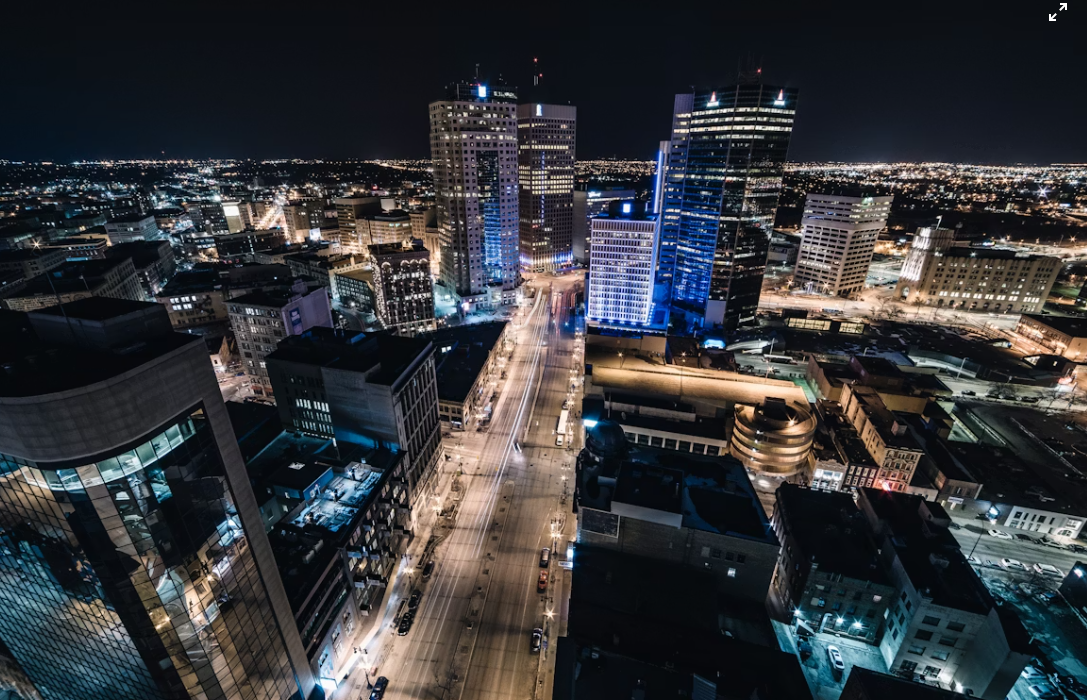
Winnipeg is a city of contradictions—and that is precisely its strength. Built at the meeting point of the Red and Assiniboine Rivers, it has long been a crossroads: of trade routes, of cultures, and of ideas. Today, with a metro population of roughly 855,000, it remains the beating heart of the province.
The city’s reputation often lags behind its reality. What visitors discover instead is a place of remarkable depth—architecturally rich, culturally ambitious, and fiercely self-aware. Winnipeg does not try to imitate Toronto or Vancouver. It has built something distinctly its own.
Why does Winnipeg have such a strong arts scene?
Isolation, winter, and history have combined to create one of the most vibrant arts ecosystems in Canada. When temperatures drop and daylight shortens, the city turns inward—and creates. The result is a concentration of institutions and talent that feels disproportionate to its size.
From ballet to experimental theatre, from orchestral music to indie rock, Winnipeg’s cultural output is relentless. It is a city where artists stay—not because it is easy, but because it is possible. Costs are lower, communities are tight-knit, and audiences are engaged. On any winter night, you are likely to find something ambitious happening behind an unassuming door.
What are Winnipeg's best neighbourhoods?
The Exchange District stands as one of North America’s most intact historic warehouse neighbourhoods—its early 20th-century buildings now filled with galleries, cafés, and creative studios. It is the architectural memory of a boomtown that once rivaled any in the West.
The Forks, where the rivers meet, is older still—a gathering place used by Indigenous peoples for thousands of years. Today it is the city’s social centre, equally alive in summer markets and winter skating trails.
Osborne Village and Corydon Avenue offer a more contemporary energy—dense, walkable, and alive with patios in the warmer months. Across the river, St. Boniface preserves the province’s Francophone heritage, its quiet streets and institutions telling a different, equally important story.
Is Winnipeg dangerous?
Winnipeg’s crime statistics are often cited without context. The reality is more nuanced. Like many cities, crime is concentrated in specific areas and circumstances. For visitors exploring the central districts, cultural attractions, and major neighbourhoods, the experience is overwhelmingly safe. Awareness, as in any city, is the key.
What's the Canadian Museum for Human Rights?
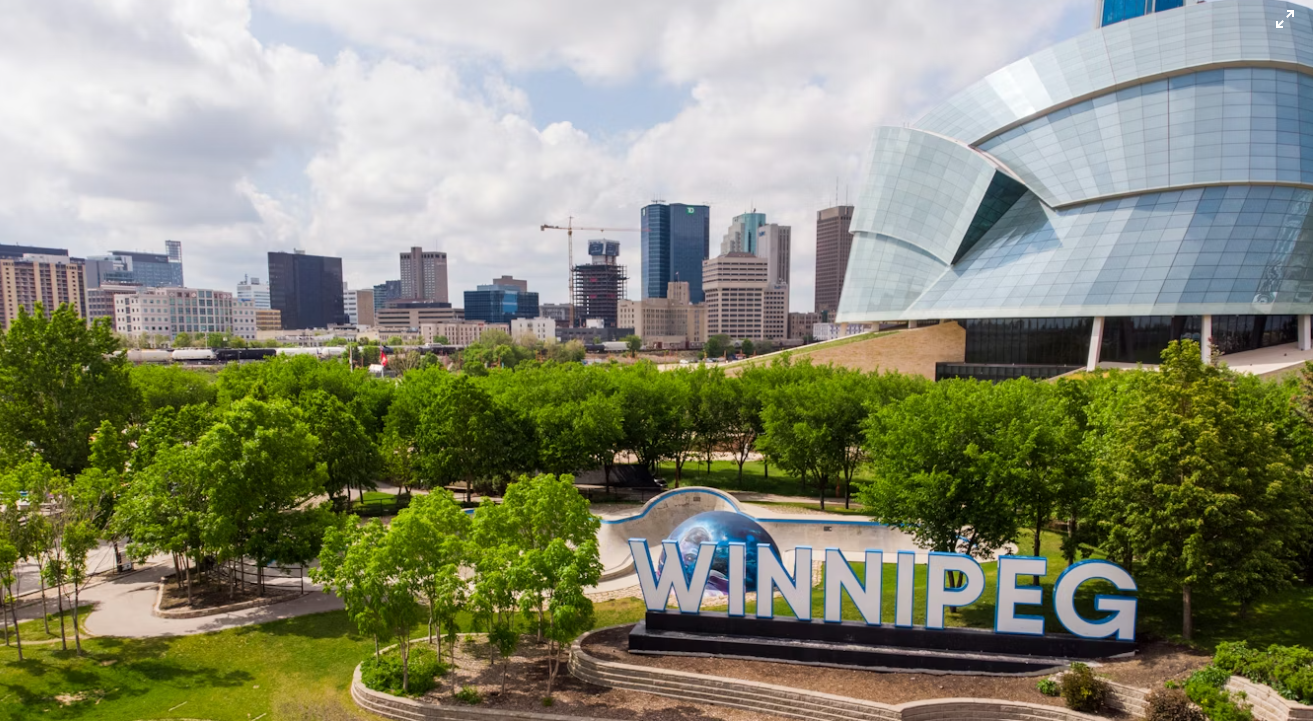
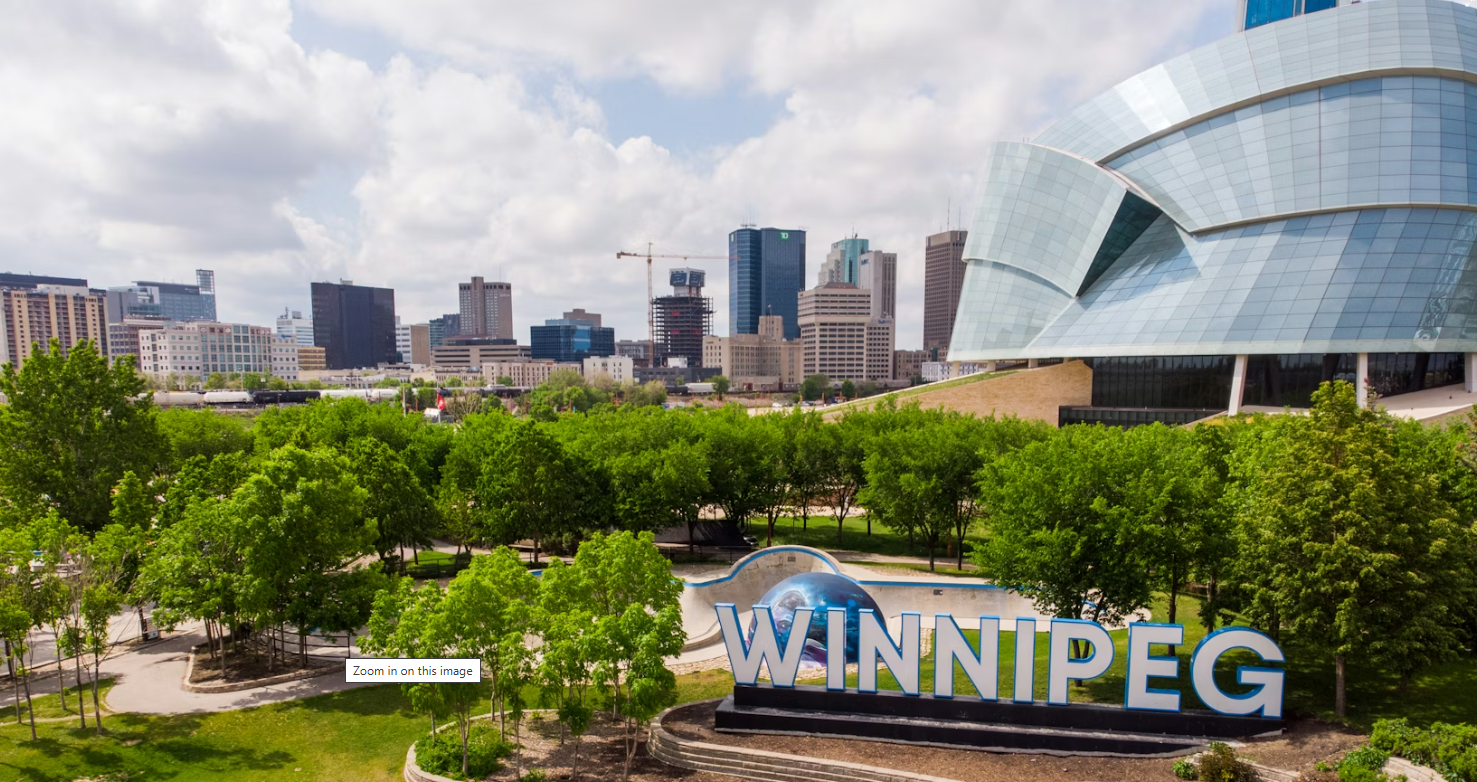
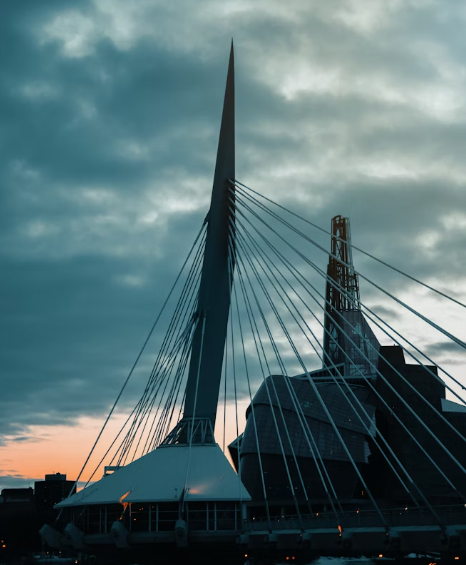
Few buildings in Canada make as immediate an impression. Rising in spirals of glass and pale stone at The Forks, the museum is both architectural landmark and moral statement. Inside, the experience is deliberately challenging—tracing global human rights struggles while confronting Canada’s own history. It is not a casual visit, but it is an essential one.
How expensive is Winnipeg?
Affordability remains one of Winnipeg’s defining advantages. Housing costs are among the lowest for major Canadian cities, and everyday expenses—from dining to transportation—are noticeably more manageable. For many, it represents a rare balance: urban amenities without the financial strain found elsewhere in the country.
Most Popular Museum: Canadian Museum for Human Rights
The Canadian Museum for Human Rights, which opened in 2014 at The Forks in downtown Winnipeg, is the only national museum outside the National Capital Region and one of the most architecturally significant buildings in Canada. Designed by Antoine Predock, the glass-and-Manitoba-Tyndall-limestone tower rises 100 metres above the junction of the Red and Assiniboine rivers — a deliberate beacon over the place where humans have gathered for 6,000 years. The building alone justifies a visit; the collection inside raises the stakes considerably.
The eleven permanent galleries move from the foundational stories of Indigenous rights in Canada — the residential school system, treaty rights, the ongoing land claims process — through the Holocaust, South African apartheid, labour rights, LGBTQ2S+ rights, and the evolution of international human rights law. The tone is not triumphalist; the museum is clear that rights are fragile, contested, and perpetually at risk. The Connecting Gallery high in the tower, accessible by a series of alabaster ramps that gradually bring visitors toward the light, is the emotional climax of the building and one of the most effectively designed museum sequences in the world.
Your Best 5 Days in Winnipeg
Winnipeg gets underestimated constantly, which is partly why Winnipeggers love it so defensively. The city has excellent museums, a great restaurant scene, the most genuinely diverse cultural calendar in the Prairies, and a river-junction geography that gives it a physical identity most Prairie cities lack. It is cold in winter — very cold — but the arts calendar runs year-round, and the Exchange District is one of the best-preserved late-Victorian commercial neighbourhoods in North America.
The Forks & Canadian Museum for Human Rights
Start at The Forks — the historic river junction that has been a gathering place for millennia and is now a public market, skating trail, hotel, and park complex in one. Give the Canadian Museum for Human Rights a full four hours; start at the Indigenous Perspectives gallery and work your way up. Dinner at Deer + Almond on Sherbrook Street, consistently the most creative cooking in the city.
Exchange District & Manitoba Museum
Walk the Exchange District — fourteen blocks of Edwardian-era commercial architecture centred on Portage and Main (not the windy corner itself but the streets north and east of it). The Manitoba Museum on Main Street covers the province's natural and human history with a reconstructed Nonsuch ketch (the 17th-century vessel whose voyage to Hudson Bay initiated the fur trade) as its centrepiece — a full-scale replica ship inside a museum building is as good as museum theatrics get. Lunch at The Tallest Poppy on Sherbrook.
Assiniboine Park & Zoo
Assiniboine Park is Winnipeg's great green lung — 400 acres of English-style park with the Leo Mol Sculpture Garden, the Pavilion Gallery, and the Assiniboine Park Zoo. The Journey to Churchill exhibit in the zoo is the best polar bear experience in North America outside of Churchill itself — and considerably cheaper than getting to Churchill. Afternoon: walk the park's English garden and the Leo Mol bronze collection. Dinner in Osborne Village.
St. Boniface & the French Quarter
Cross the Provencher Bridge into St. Boniface — the largest francophone community in western Canada, and the home of Louis Riel's grave, the old Saint-Boniface Basilica ruins (kept as a dramatic roofless façade since the 1968 fire), and the Musée de Saint-Boniface, Manitoba's oldest museum housed in the oldest stone building in western Canada. Lunch at La Vieille Gare. Afternoon at the St. Boniface Museum or the Festival du Voyageur grounds (February only, but the grottes and snow sculptures are worth the cold).
Winnipeg Art Gallery — Qaumajuq & Departure
The Winnipeg Art Gallery's Qaumajuq addition, opened in 2021, holds the world's largest public collection of contemporary Inuit art — over 14,000 objects in a purpose-built vault visible from the gallery floor through glass walls. The WAG's main collection is strong in Canadian and Manitoba artists, and the prairie landscape paintings from the Group of Seven are displayed in the context of the Indigenous territories they depicted. YWG airport is 10 minutes from downtown.
Manitoba's Hall of Icons
The province's legendary winters and vast horizons have served as a crucible for some of the world's most influential figures in music, film, art, and sport. These icons represent the grit and brilliance forged in the "Keystone Province."
Neil Young
WPView on Wikipedia →Before becoming an international rock icon, Neil Young was a Kelvin High School student in Winnipeg. It was here he formed his first stable band, The Squires, playing community clubs across rural Manitoba. His connection to the province's vast skies remains a recurring motif in his legendary discography.
Terry Fox
WPView on Wikipedia →Born in Winnipeg in 1958, Terry Fox's legacy as Canada’s greatest hero began on the prairies. After losing his leg to cancer, he embarked on his 1980 Marathon of Hope to raise money for research. His courage continues to inspire millions through the annual Terry Fox Run.
Anna Paquin
IMDbView on IMDb →Born in Winnipeg, Paquin achieved global fame at age 11 as the second-youngest Academy Award winner for *The Piano*. She later became a staple of modern cinema as Rogue in the *X-Men* series and Sookie Stackhouse in *True Blood*.
Jonathan Toews
WPView on Wikipedia →A native of Winnipeg, Toews led the Chicago Blackhawks to three Stanley Cups as captain. A member of the prestigious Triple Gold Club, he made a celebrated return to his roots in 2025 by joining the Winnipeg Jets.
Adam Beach
IMDbView on IMDb →Raised on the Dog Creek First Nation, Adam Beach is a proud member of the Saulteaux nation. His career began at the Manitoba Theatre for Young People in Winnipeg and led to major Hollywood roles in *Windtalkers* and *Suicide Squad*.
Cindy Klassen
WPView on Wikipedia →One of the most successful speed skaters of all time, Klassen won five medals at the 2006 Torino Olympics alone. With six career Olympic medals, she is tied as the most decorated Canadian Olympian in history.
Leo Mol
WPView on Wikipedia →The internationally renowned sculptor spent much of his life in Winnipeg. His legacy is immortalized in the Leo Mol Sculpture Garden in Assiniboine Park, which houses hundreds of his bronze works depicting life, faith, and local history.
The Weakerthans
WPView on Wikipedia →Led by poet-singer John K. Samson, this band captured the "bittersweet essence" of the city. Their iconic lyrics in songs like "One Great City!" have become part of the cultural fabric of Winnipeg's identity.
Margaret Laurence
WPView on Wikipedia →Born in Neepawa, Manitoba in 1926, Laurence transformed her hometown into the fictional Manawaka of The Stone Angel, A Jest of God and The Diviners. Two-time Governor General's Award winner and one of the foundational voices of Canadian literature; the Margaret Laurence Home in Neepawa is now a literary museum.
The Guess Who & Bachman-Turner Overdrive
WPView on Wikipedia →Two of the most successful Canadian rock bands of the 1970s came out of one Winnipeg high school class. Burton Cummings and Randy Bachman wrote American Woman in the city; Bachman went on to form BTO and write Takin' Care of Business. The North End sound shaped a decade of Canadian radio.
Louis Riel
WPView on Wikipedia →The Métis leader, founder of Manitoba, and complicated father of the province. His leadership of the Red River Resistance in 1869–70 forced Confederation to recognize Manitoba; his execution by the Canadian government in 1885 made him a martyr to generations of Métis and francophone Canadians. His grave is on the grounds of the St. Boniface Cathedral.
Nia Vardalos
IMDbView on IMDb →Born in Winnipeg, Vardalos wrote and starred in My Big Fat Greek Wedding — the highest-grossing romantic comedy in cinema history at the time of its 2002 release. She honed her writing as a member of Toronto's Second City after starting on Winnipeg's improv stages.
Regional Cuisine: What Manitoba Actually Eats
Manitoba's table is a layered one: bison and pickerel and saskatoon berries from the land itself, then a century of Ukrainian, Mennonite, Icelandic, Filipino and First Nations cooking layered on top. Winnipeg's restaurant scene has quietly become one of the most interesting in the country, partly because rents have stayed low enough to let chefs experiment, and partly because Manitobans have always taken their food seriously even when nobody else was paying attention.
Pickerel (Walleye)
The provincial fish, pulled from Lake Winnipeg and a thousand smaller lakes. Pan-fried in butter with a dusting of flour and a squeeze of lemon, served with new potatoes and dill. The Maples Surf and Turf in Winnipeg does a refined version; any small-town Saturday-night fish fry does the original. Don't call it walleye; in Manitoba, it's pickerel.
Pyrohy & Holopchi
The Ukrainian half of the prairie kitchen. Pyrohy (potato-and-cheddar dumplings) and holopchi (cabbage rolls) appear at every church-basement supper from Stuartburn to Dauphin. The annual Canada's National Ukrainian Festival in Dauphin every August serves more pyrohy in three days than most provinces eat in a year.
Vínarterta
The Icelandic-Canadian wedding cake — seven thin layers of almond-and-cardamom shortbread cemented together with prune filling, sliced thin. New Iceland (the Gimli–Riverton corridor north of Winnipeg) is the only place in the world where vínarterta is still a living tradition rather than a museum piece. Find it at Amma's Tearoom in Gimli or the Icelandic Festival every August.
Bannock
The cross-cultural bread of the prairies — a flat, rich, slightly sweet quickbread that became staple food for First Nations, Métis and settlers alike. Modern Indigenous chefs at Feast Café Bistro on Ellice Avenue are reclaiming bannock as the centre of a contemporary Indigenous cuisine; their bison-and-bannock burger is the menu's signature.
Pickerel Cheeks
A Manitoba specialty within a specialty: the small, tender pieces of meat from the cheek of a large pickerel, often served deep-fried as a starter. Sold by the pound at fish markets in Selkirk and Gimli; ordered with reverence at the better fish restaurants in Winnipeg. The texture is closer to scallop than to fish.
Schmoo Torte
The defining Winnipeg Jewish dessert, invented at the old Lindy's Restaurant in the 1950s. Angel-food cake layered with whipped cream, caramel and pecans. Served at bar mitzvahs, anniversaries, and the long Sunday brunches of the city's North End. Most Winnipeg bakeries still know how to make one if you ask.
Top 10 Restaurants in Manitoba
Winnipeg's restaurant scene has spent the past fifteen years quietly outpacing its reputation. The city has the right combination of factors — affordable rent, a serious immigrant pantry stretching from the Philippines to Eritrea, and a generation of cooks who trained elsewhere and came home — and the result is a dining culture that punches well above the population's weight. Outside the perimeter, the small-town diners and Hutterite-influenced country kitchens add a quieter layer that's worth the drive.
Deer + Almond
Mandel Hitzer's restaurant in the Exchange District is the room that put Winnipeg on the national map — the same kitchen behind the famous RAW:almond pop-up on the frozen river every winter. The menu is small-plate, globally-influenced, and changes constantly. The bone marrow donuts and the foie gras dish are the dishes regulars order before they look at the menu.
Bistro 7 1/4
On the French side of the river, Bistro 7 1/4 serves the most credible classic French cooking in the prairies — duck confit, steak tartare, escargots, a serious wine list — in a small Provencher Boulevard storefront with about thirty seats. The room is dim, candle-lit, and the kind of place where regulars order without looking at the menu.
Segovia Tapas Bar
Adam Donnelly's Osborne Village tapas bar has been serving the city's best Spanish food since 2008. The plates are small, the room is loud, and the sangria is the kind that makes Tuesday nights feel like Saturday. The croquetas, the patatas bravas, and the daily fresh fish are the introductions; the longer the meal goes, the better it gets.
Peasant Cookery
Talia Syrie's Exchange District restaurant in the Forks-area Cube building runs an in-house charcuterie program, makes its own pasta, and sources directly from a network of Manitoba farms. The dining room is exposed brick and warm wood; the cooking is unfussy European with prairie ingredients. The boudin and the housemade sausages are why locals come back.
Resto Gare
Set in a converted 1913 Canadian National Railway station in St. Boniface, Resto Gare has the kind of room — high ceilings, original wood, a 1940s passenger car as a private dining room — that you don't find in most cities. The cooking is solid French bistro, the wine list takes Burgundy seriously, and Sunday brunch with eggs Benedict in a former waiting room remains one of the city's nicest small rituals.
Clementine Cafe
Chef Chris Gama's daytime restaurant in the Exchange has been one of the hardest brunch reservations in the country since it opened. The cooking is creative without being precious — duck-fat fried potatoes, wild-mushroom toast, savoury Dutch baby pancakes — and the line outside on weekends is genuine. Get there early or expect to wait.
Pizzeria Gusto
On Academy Road, Pizzeria Gusto runs a wood-fired oven, makes its own dough with a seventy-two-hour cold ferment, and produces the most seriously Italian pizza in the prairies. The room is bright and family-friendly, the wine list runs deep on Italian regions, and the antipasti — burrata, prosciutto, marinated peppers — set up the pies that follow.
Hermanos Restaurant & Wine Bar
An Argentine steakhouse in the Exchange District, Hermanos works a wood-fired grill that turns out the best ribeyes in town. The empanadas and the chimichurri-heavy starters are the warm-up; the asado-style cuts of beef, simply seasoned and grilled hard, are the reason to book. The wine list leans Malbec, and rightly so.
Sushi Gen
An unassuming room on Pembina Highway, Sushi Gen has quietly become the city's serious sushi destination — the omakase counter is small, the fish is flown in directly, and the chef Yo Hashimoto's training shows in the rice and the knife work. Reservations for the counter are essential and sometimes weeks out.
Mottola Grocery
Chef Talia Syrie's casual West End all-day spot is where the city's restaurant industry eats on its own time — sandwiches built on house-baked bread, soups, daily pastas, and a wine fridge with bottles to take home. It's the kind of corner restaurant that makes a neighbourhood feel like a real one.
Whose Land Are You On?
Manitoba is the homeland of First Nations and Métis peoples whose presence here long predates the line on the map that became the province in 1870. The province's very name — from the Cree manitou-wapow, "the strait of the Great Spirit" — is Indigenous, and so are the names of most of its rivers, lakes and largest landmarks.
Treaty 1: The Red River Heartland
Treaty 1, signed at Lower Fort Garry in 1871, was the first of the numbered treaties — the agreements that defined the Crown's relationship with First Nations across the prairies. It covers the southeastern corner of the province, including Winnipeg itself. Treaty 1 territory is the traditional land of the Anishinaabe, Cree, Oji-Cree and Dakota peoples.
The Red River Métis
Manitoba is the homeland of the Métis Nation in a way that no other province quite is. The buffalo hunt, the Red River cart, the sash, the fiddle-and-jig dance traditions — these are not folk-museum pieces here. They are still part of how families celebrate. The Festival du Voyageur in St. Boniface every February is the largest francophone-Métis winter festival in western Canada; the Manitoba Métis Federation, headquartered on Henry Avenue in Winnipeg, is the political body recognized by both federal and provincial governments.
The Northern Treaties (5 and 10)
The northern two-thirds of the province, including Churchill, falls under Treaties 5 and 10 — the territory of Cree and Dene peoples. Many northern reserves are accessible only by ice road or air, and self-government negotiations are continuing.
Where to Engage Respectfully
The Manitoba Museum's Indigenous galleries (recently redesigned in collaboration with First Nations curators) are the best introduction in the city. The Canadian Museum for Human Rights at The Forks is built on land that has been a meeting place for thousands of years and treats the history seriously. The Forks itself, where the Red and Assiniboine Rivers meet, has been gathering people for some six thousand years; an interpretive trail walks visitors through the layered story.
Your Best 5-Day Stay in Manitoba
Most travellers pass through Manitoba on the way somewhere else. They shouldn't. Five days here, divided between Winnipeg's surprisingly serious arts scene, the Lake Winnipeg shoreline, and a long-haul stretch into the boreal north, will leave you with stories none of your friends have heard. The itinerary below assumes you fly into YWG and rent a car for at least Days 3 and 4.
Winnipeg — The Forks & the Exchange District
Land at YWG by mid-morning, drop bags at a downtown hotel (the Inn at the Forks or the Fort Garry are the picks), and walk straight to The Forks. Spend the afternoon at the Canadian Museum for Human Rights — the architecture alone is worth the visit, and the Indigenous Perspectives gallery is essential.
Dinner in the Exchange District: Deer + Almond on Princess Street (small-plates, locally sourced) or Peasant Cookery on McDermot. End the night at the King's Head pub or, if you're there in the right week, a show at the Royal Manitoba Theatre Centre — Canada's oldest English-language regional theatre.
Winnipeg — St. Boniface, Osborne, and the Art Gallery
Cross the Esplanade Riel pedestrian bridge to St. Boniface and start at the ruins of the old St. Boniface Cathedral — Louis Riel is buried in the churchyard. Walk back along the Provencher to a bakery breakfast at La Belle Baguette. Spend the late morning at the Winnipeg Art Gallery — the Inuit Art Centre, which opened in 2021, holds the largest public collection of Inuit art in the world.
Lunch at Feast Café Bistro on Ellice (Indigenous chef Christa Bruneau-Guenther's bison burger is the order). Afternoon stroll through Osborne Village; coffee at Little Sister; dinner at Forth Café and a nightcap at the Hut, the city's late-night cocktail room.
Drive Up Lake Winnipeg — Gimli & the Interlake
Pick up a rental and drive an hour north on Highway 9 to Gimli, the heart of New Iceland. The harbour, the Viking statue, and Amma's Tearoom for vínarterta and coffee. Lunch on smoked goldeye at Lake Winnipeg Visitor Centre. Continue north to Hecla Provincial Park — the Hecla Village Heritage Home Museum tells the Icelandic immigration story; the boardwalk through the marsh is one of the best birding walks in the province.
Sleep at Lakeview Hecla Resort if you can stretch the budget, or drive back to Gimli for a quieter night by the water.
Riding Mountain — The Bison and the Boreal
A long but rewarding drive: 3 hours west to Riding Mountain National Park, the upland that rises out of the prairie like a ship out of the sea. Stop at Wasagaming townsite for lunch and a walk on the Clear Lake boardwalk, then take the Lake Audy Bison Enclosure loop for a near-guaranteed sighting of plains bison from the safety of your car.
If you're up for one more push, the drive on to Brandon (1 hour) gives you a smaller-city alternative for the night, with dinner at Forbidden Flavours or the Double Decker pub for the prairie's best Sunday roast.
Choose Your Ending: Churchill or Home Through Spruce Woods
The honest version of Day 5 is a choice. Option A: fly from Winnipeg to Churchill (2½ hours, expensive, weather-dependent) for an afternoon polar-bear-buggy tour in October–November or a beluga whale tour in July–August. There is nowhere else like Churchill on Earth, and a single day there is worth the trip.
Option B: drive back to Winnipeg via Spruce Woods Provincial Park and the Spirit Sands desert (yes, sand dunes on the Manitoba prairie — a startling geological accident). End your trip with a Sunday brunch at Stella's Café, an evening stroll along the Assiniboine River, and a sunset at the Esplanade Riel before flying home.
Five Days in Winnipeg
Winnipeg is colder, weirder, and considerably more interesting than Canadians who haven't been here generally credit. Five days in the city alone covers the Forks, Saint Boniface, the Exchange District, the human-rights museum, the Folklorama or Folk Festival depending on when you arrive, and at least one Jets game or one of the city's overachieving concert venues. Stay downtown near the Forks or in the Exchange District for walkability.
The Forks & the Canadian Museum for Human Rights
The Forks — where the Red and Assiniboine Rivers meet — has been a meeting place for 6,000 years. The market hall, the river walk, and the Children's Museum all live here. The Canadian Museum for Human Rights, the only national museum outside Ottawa, is the dominating architectural presence — Antoine Predock's spiral of basalt and Tyndall stone, with a half-day's worth of galleries inside.
Lunch at the Forks Market food hall (the Manitobah Mukluks store on the upper level is a worthwhile detour). Walk across the Esplanade Riel pedestrian bridge to Saint Boniface for late afternoon. Dinner at Resto Gare in the converted train station on Provencher Boulevard.
The Exchange District & the Royal Manitoba Theatre Centre
The Exchange District is a 30-block national historic site of intact 1890s-1910s warehouse architecture — the city's first boom captured in stone. Walk Albert and Bannatyne, with stops at Across the Board Game Café and the Plug-In Institute of Contemporary Art.
The Manitoba Museum on Rupert Avenue holds the Nonsuch — a full-size replica of the 1668 Hudson's Bay Company ship, built in a building constructed around it. Allow three hours. Dinner and a play at the Royal Manitoba Theatre Centre on Market Avenue, where the John Hirsch Mainstage runs a strong programme October to April.
Assiniboine Park & the Zoo
Assiniboine Park is the city's centrepiece — 1,100 acres of gardens, forest, and conservatory, with the Pavilion Gallery (Walter J. Phillips, Clarence Tillenius, the city's beloved painters) as the cultural anchor. The Leaf, the new tropical biome, is the recent showpiece.
Assiniboine Park Zoo's Journey to Churchill — the 10-acre arctic exhibit with live polar bears rescued as orphans — is the only sub-arctic predator exhibit in the world. Allow two hours. Dinner at Deer + Almond on Princess Street, where chef Mandel Hitzer's tasting menu is the city's most ambitious.
Saint Boniface, Riel House & the French Quarter
Saint Boniface is the city's francophone neighbourhood — the largest French-speaking community west of the Quebec border. The Saint Boniface Cathedral facade, the only surviving wall after the 1968 fire, frames the modern church behind it; Louis Riel is buried in the cemetery in front. The Saint Boniface Museum, in the oldest building in Winnipeg (1846), holds the local history collection.
Lunch at Chez Sophie or the Sage Café for crêpes and bowls. Afternoon at Riel House National Historic Site, the family farmhouse where the Métis leader's body was returned after his hanging. Dinner back across the river at Segovia Tapas Bar in the Osborne Village.
FortWhyte Alive, the Polar Bear Exhibit & Departure
FortWhyte Alive, on the city's southwest edge, is a 660-acre nature reserve with bison, prairie wetlands and the Aurora hangar — winter cross-country skiing and a sod house exhibit on the prairie homesteaders. Two hours.
If you have time, the Royal Canadian Mint on Lagimodière Boulevard runs hourly tours showing the production line that mints currency for 75 countries; the gift shop sells the only legal-tender Canadian banknotes you can buy at face value. YWG Richardson Airport is 20 minutes from downtown and one of the most efficient mid-sized airports in the country.
Churchill
In the far north of the province, where the boreal forest gives way to tundra, lies Churchill. This small town on the shores of Hudson Bay has become one of the most famous eco-tourism destinations in the world. It is the Polar Bear Capital of the World, a place where these magnificent animals gather in the autumn to wait for the sea ice to form.
But Churchill is more than bears. In the summer, the Churchill River is filled with thousands of beluga whales—gentle, vocal "canaries of the sea" that come to the warm estuary waters to feed and give birth. And throughout the winter, Churchill offers some of the best views of the Aurora Borealis on the planet, as it sits directly under the auroral oval.
Sports Teams & Athletic Culture
Sports in Manitoba are not a pastime — they are a civic religion, and Winnipeg is the cathedral. The city has punched well above its population weight for decades, sustaining professional franchises in three major leagues while developing elite players out of neighbourhood rinks, backyard diamonds, and the kind of cold that builds toughness by necessity. When the Jets came back in 2011 after a 15-year absence, the celebration was the most unambiguous expression of collective joy Winnipeg had seen in a generation.
Winnipeg Jets — NHL
The Jets returned to Winnipeg in 2011 when the Atlanta Thrashers franchise was purchased and relocated by True North Sports & Entertainment. What followed was one of the most remarkable fan-market love stories in modern professional sports. Canada Life Centre (formerly Bell MTS Place, formerly the MTS Centre) downtown seats just over 15,000, and sellouts were a near-nightly reality from the first home game. The team draws its identity from the city's military heritage — the Royal Canadian Air Force's 400-series squadrons were nicknamed the Jets — and the blue-and-white colour scheme has become as deeply embedded in Winnipeg's visual identity as the river. In the 2024–25 season the Jets won the Presidents' Trophy as the NHL's best regular-season team, and the city's streets were alive with anticipation on playoff nights. Jonathan Toews, a native Winnipegger, joined the team in 2025, completing a homecoming that fans had imagined for years.
Winnipeg Blue Bombers — CFL
The oldest professional sports franchise in Manitoba, the Blue Bombers have played Canadian Football since 1930 and won the Grey Cup eleven times — most recently in 2019 and 2021, back-to-back championships that ended a 29-year title drought and sent Portage and Main into the kind of chaos the intersection had not seen since the 1919 General Strike (of a considerably happier sort). IG Field, rebuilt and expanded on the footprint of the old Canad Inns Stadium in the Fort Rouge neighbourhood, holds 33,000 and fills for every home game. The Bombers' offence and the CFL's particular rules — three downs, a wider field, a single point for an uncaught kick — make for a faster, more open game than the NFL, and Winnipeg understands it in its bones.
Manitoba Moose — AHL
The Jets' American Hockey League affiliate, the Moose have been Winnipeg's developmental league franchise since 2015. Playing out of Canada Life Centre on nights the Jets are on the road, the Moose offer a chance to see tomorrow's NHL players at a fraction of the ticket price. The team has a loyal following among serious hockey fans who appreciate watching prospects develop in real time — goalies, centremen, and defencemen who will be familiar names on Jets rosters within two or three years.
Winnipeg Goldeyes — American Association
Baseball came back to Winnipeg in 1994 when the Goldeyes were founded as an independent minor-league club. Shaw Park — now rebranded as Blue Cross Park — sits on the north bank of the Assiniboine just west of The Forks, and its location is one of the most beautiful in minor league baseball: you can see the downtown skyline over the left-field wall and smell the river on a warm July evening. The Goldeyes have won multiple American Association championships and have done something rare in the baseball world: built a genuinely local fan culture in a hockey city, particularly among families with young children who find a summer evening at the ballpark an affordable and relaxed alternative to the intensity of a Jets game.
Valour FC — Canadian Premier League
Winnipeg's professional soccer club joined the Canadian Premier League at its founding in 2019. Valour FC plays out of IG Field on a natural grass surface configured for soccer, and the club has become a genuine presence in Winnipeg's sporting conversation. The CPL's focus on Canadian player development resonates in a city that already takes youth sport seriously, and the club's connection to the local amateur soccer infrastructure means it draws from, and feeds back into, a broad community base. Attendance has grown steadily as the league has matured and as soccer's generational growth in Canadian cities works its way into ticket-buying demographics.
Hockey as Civic Culture
Beyond the professional franchises, hockey is woven into the fabric of Manitoba life at every level. The province has produced NHL players at a per-capita rate that routinely ranks among the highest in Canada — names like Jonathan Toews, Dustin Byfuglien, and a long list of contributors to the game's history. Community rinks operate in virtually every town of any size; outdoor shinny on flooded school yards and river surfaces is a winter ritual; and the Manitoba Junior Hockey League and AAA minor hockey system form the talent pipeline that feeds the entire professional structure above it. In a province where winter arrives hard and stays long, the skating rink is not just a sports venue — it is the community living room.
Culture
Manitoba's culture is a tapestry of Indigenous, Francophone, and immigrant influences. From the Festival du Voyageur to the Winnipeg Folk Festival, the province celebrates its diversity and history through vibrant year-round events.
Education & Post-Secondary Institutions
Manitoba's universities and colleges have a habit of punching above their weight. The province's research universities anchor a system that also includes one of the country's strongest French-language post-secondary institutions, a polytechnic that trains most of the province's tradespeople, and a small handful of regional universities serving the north and the rural west. Tuition runs lower than the national average and Winnipeg in particular has one of the highest concentrations of international students per capita in Canada.

University of Manitoba
Western Canada's first university and still the province's largest. The Fort Garry campus, on the south bank of the Red River, holds about 30,000 students across faculties of medicine, agriculture, engineering, law and the Asper School of Business. The U of M is the only Manitoba institution in the U15 group of Canadian research universities and runs the country's leading Indigenous health research programme through Ongomiizwin.
University of Winnipeg
A small, urban university on Portage Avenue with a strong reputation for the liberal arts, Indigenous studies, environmental science and a famously low student-to-faculty ratio. Originally a federation of Wesley and Manitoba Colleges with roots back to 1871, U of W produces a disproportionate share of the province's journalists, teachers and political staff.
Université de Saint-Boniface
The oldest post-secondary institution in western Canada and the only fully French-language university west of Quebec. USB anchors the cultural life of St. Boniface, runs Manitoba's French-language teacher training programme, and is a hub for Métis and francophone scholarship across the prairies.
Red River College Polytech
Red River College Polytech — known universally in Winnipeg simply as "Red River" — is the province's largest and most impactful post-secondary institution by employment outcomes. With nearly 30,000 students enrolled across
The gateway to Manitoba for virtually every traveller arriving from outside the province is Winnipeg James Armstrong Richardson International Airport (IATA: YWG), a facility that has aged gracefully through several expansions and now handles roughly four million passengers a year. The terminal sits about ten kilometres west of downtown Winnipeg, and on a clear day the vast prairie sky above the runways gives arriving passengers their first proper sense of the flatness and scale that defines this part of the country. Air Canada, WestJet, Flair Airlines, and Sunwing all operate scheduled services out of YWG, giving Winnipeg competitive fares on its major routes. A non-stop flight to Toronto Pearson takes around two hours and thirty minutes; Calgary is roughly two hours; Vancouver is about two hours and forty-five minutes. During summer, charter carriers add seasonal service to southern sun destinations, and the airport's southern terminal handles those flights with a minimum of fuss. ▶ Watch: The Ultimate Churchill Adventure — Getting There and Beyond — Kensington Tours The airport does not have a rail link to downtown Winnipeg — a persistent gap in the city's transit infrastructure that has been debated for years without resolution. The most practical option for most visitors is the Winnipeg Transit Route 15 bus, which runs along Portage Avenue and deposits passengers near the city centre for a standard fare; the journey takes between thirty and forty minutes depending on traffic. Taxis from the stand outside the arrivals hall run approximately $25 to $35 to Exchange District or The Forks. Rideshare apps operate in Winnipeg and are generally a few dollars cheaper than metered cabs. Car rental desks from all the major agencies are located on the arrivals level, and driving is genuinely the most practical choice if you plan to explore anywhere beyond the downtown core — Manitoba is a large province and a car unlocks everything from Riding Mountain to the Whiteshell. Flying beyond Winnipeg into Manitoba's north is an experience that sharply reframes what you thought you knew about Canada. Thompson Airport (YTH) serves the Hub of the North and receives scheduled flights from Winnipeg via Calm Air, the regional carrier that connects most of Manitoba's northern communities. From Thompson, Calm Air continues north to Churchill Airport (YYQ), the small airstrip that serves what is arguably the most extraordinary wildlife destination in the country. Churchill has no road connection to the rest of Manitoba's highway network — the only rail line that once carried passengers was suspended after 2017 flooding damaged the track, and while repair work brought freight service back, the practical reality is that flying is now the primary way most visitors reach Churchill. Return fares from Winnipeg to Churchill can run anywhere from $600 to over $1,200 depending on season and booking window, so budgeting for airfare is an essential part of planning any polar bear or northern lights trip to the town on the western shore of Hudson Bay. Adventure Canada and various tour operators offer package deals that bundle Churchill flights with accommodation and tundra vehicle tours during the October–November polar bear migration window, and these packages often represent better value than booking components separately. For summer visits focused on beluga whales in the Churchill River estuary, prices tend to be somewhat lower and availability more generous. Manitoba has long traded on its reputation as one of the more affordable provinces in which to live in Canada, and that reputation still holds — at least in comparison to Toronto, Vancouver, or Calgary. Winnipeg routinely appears near the top of Canadian affordability indices for renters, though the gap has narrowed considerably since the early 2020s as housing demand outpaced new supply. A one-bedroom apartment in a decent Winnipeg neighbourhood — say River Heights, Osborne Village, or St. Vital — typically runs between $1,200 and $1,600 per month in 2024. Two-bedroom units in the same areas land between $1,550 and $2,100. The Exchange District, with its restored warehouses and walkable streets, commands a small premium. For renters willing to live in the north end or in the older parts of the West End, prices drop noticeably, though prospective tenants should visit neighbourhoods in person before committing. Manitoba's second city, Brandon, sits about two hours west of Winnipeg along the Trans-Canada Highway and offers a noticeably different cost profile. One-bedroom apartments there run roughly $950 to $1,200 per month, and home ownership remains accessible in a way that feels almost quaint to anyone accustomed to major-market prices. A detached house in Brandon can be purchased for $280,000 to $380,000 — numbers that require a double-take if you've spent time reading real estate listings in the country's larger cities. Portage la Prairie, Steinbach, Selkirk, and Morden all offer similarly affordable housing for those willing to commute to Winnipeg for work or to find employment within their own communities. Rural property values drop further still, and it is genuinely possible to purchase acreage in the Interlake or the Parkland region for prices that would be unimaginable anywhere in Ontario or British Columbia. Groceries, utilities, and services in Winnipeg are broadly in line with other mid-sized Canadian cities. Manitoba's provincial sales tax sits at seven percent, applied on top of the federal GST, meaning a combined tax rate of twelve percent on most goods and services — slightly lower than Ontario's thirteen percent HST but higher than Alberta's PST-free environment. Gasoline in Winnipeg tends to be cheaper than in Vancouver or Toronto, and natural gas heating, which most Winnipeg homes rely on through the long winter, is metered by Manitoba Hydro at rates that are among the lowest on the continent. Electricity rates are similarly competitive thanks to the province's substantial hydroelectric generating capacity. For recent arrivals from central Canada or British Columbia, the overall cost-of-living adjustment to Winnipeg is almost always a pleasant surprise. Manitoba sits squarely in the heart of the continent, far from any moderating oceanic influence, and its climate reflects that geography with a frankness that first-time visitors find either bracing or alarming. The province experiences one of the most extreme continental climates in Canada — which is to say, one of the most extreme continental climates anywhere in the inhabited world. Summer afternoons in Winnipeg can push past 35°C with enough humidity to make the air feel thick and heavy; winter nights in January routinely see windchills of -40°C or colder. The range between the hottest recorded summer temperature and the coldest recorded winter temperature in Winnipeg spans nearly 80 degrees Celsius. If you find that statistic hard to absorb, spend a week here in July and then again in February and it will make complete physical sense. June through August in Manitoba is genuinely glorious, with long days, reliable sunshine, and temperatures that turn Lake Winnipeg's Grand Beach into one of the most popular freshwater beaches in the country. Winnipeg averages more sunshine hours per year than Vancouver or Toronto, which surprises most people hearing it for the first time. The caveat that every Manitoban will mention, usually within the first thirty seconds of discussing summer, is mosquitoes. The combination of snowmelt, low-lying wetlands, and warm temperatures creates ideal breeding conditions for what locals have elevated into something between a civic joke and a minor religion. June and early July are peak mosquito season; bring repellent containing DEET, invest in a head net if you plan to hike, and know that after a week or two you will largely stop noticing them the way locals do. By mid-August the worst of it has passed. Manitoba winters are not for the faint of heart, but they are also not as miserable as the raw statistics suggest — and the reason is that the province is genuinely dry. Unlike Ottawa or Montreal, where damp cold cuts through layers and settles in the bones, Winnipeg's cold is dry enough that properly dressed people function perfectly well at -25°C. The city's indoor infrastructure is impressive: the Winnipeg Walkway connects several downtown buildings, heated bus shelters are the norm, and the culture of heavy parkas, wool-lined boots, and layering is so deeply embedded that locals regard inadequately dressed newcomers with a mixture of amusement and concern. Churchill, in the subarctic north, averages -28°C in January and sits in genuine polar bear territory — the season for viewing bears on the tundra runs October and November, when freeze-up is underway and the animals are heading toward Hudson Bay ice. The northern lights are visible from Churchill and much of northern Manitoba from September through March on clear nights, and Winnipeg itself offers surprisingly good aurora viewing during strong geomagnetic events. Healthcare in Manitoba is administered under the Manitoba Health, Seniors and Long-Term Care system, and new residents must register for a Manitoba Health Card — formally the Manitoba Health Insurance Plan (MHSIP) — before they can access publicly funded services without paying out of pocket. Registration is handled online or at any Service Manitoba location, and the process is straightforward: you will need proof of identity (a passport or birth certificate), proof of Canadian citizenship or eligible immigration status, and proof of Manitoba residency such as a lease agreement or utility bill. The standard waiting period before coverage takes effect is three months from the date you establish residency in the province, which means new arrivals should carry private health insurance during that gap. Many employers in Manitoba provide group health benefits that bridge this period, and it is worth confirming coverage arrangements before you let that private policy lapse. Winnipeg is the medical hub for the entire province and for a significant portion of northwestern Ontario and rural Saskatchewan. The Health Sciences Centre on William Avenue is one of the largest hospitals in western Canada and the only level-one trauma centre in Manitoba; it operates the province's primary transplant programme and houses a children's hospital with a national reputation in paediatric oncology and cardiac surgery. Grace Hospital, St. Boniface Hospital — with its strong cardiac and stroke programmes — and the Concordia and Victoria hospitals round out Winnipeg's acute care network. Wait times for non-emergency specialist appointments in Winnipeg are broadly comparable to other mid-sized Canadian cities: longer than you would like, shorter than the horror stories you may have read about remote communities. Brandon's Brandon Regional Health Centre is a competent regional facility that handles most general and emergency needs for the southwestern part of the province. The further north you travel in Manitoba, the more starkly the healthcare picture changes. Communities along the Hudson Bay rail corridor and in the far north rely on nursing stations staffed by nurse practitioners, with physician visits on a rotating schedule. Medevac services operated by Ornge and provincial contractors connect remote communities to Winnipeg's hospitals for serious cases, but the distances involved — Churchill is nearly 1,000 kilometres from Winnipeg — mean that health emergencies in the north carry a logistical complexity that residents of southern cities rarely have to consider. Thompson serves as a regional health hub for the north, with a hospital that handles a wider range of procedures than the smaller nursing stations. Anyone planning extended travel to Churchill or northern Manitoba is well advised to ensure their travel insurance covers medical evacuation. Manitoba's outdoor landscape divides cleanly into three zones that each reward a different kind of traveller: the southern agricultural plain, the Canadian Shield country of the Whiteshell and Nopiming in the east, and the boreal forest and tundra that stretches north toward Hudson Bay. The province has worked steadily at developing its trail systems, provincial park infrastructure, and ecological reserves over the past two decades, and the result is a network of outdoor destinations that remains pleasantly uncrowded by the standards of the more famous parks in British Columbia or Alberta. ▶ Watch: Close Encounters with Polar Bears in Churchill — Nat Hab Adventures Riding Mountain National Park rises out of the Manitoba plain about three hours northwest of Winnipeg like a mirage — a forested plateau standing some 470 metres above the surrounding farmland, holding elk, black bear, wolf, and the largest free-roaming bison herd in the province within its 2,973 square kilometres. The townsite of Wasagaming on the south shore of Clear Lake is a charming, slightly time-warped summer resort community where families have been renting the same lakeside cabins for three generations. The hiking network through the park is extensive and well-maintained: the Central Parkland Trail covers 75 kilometres through boreal forest; the Gorge Creek Trail drops into a dramatic river valley; and the Bald Hill Trail rewards the effort with views across the parkland that seem impossible given how flat everything looked on the highway. Parks Canada's Riding Mountain page has current trail conditions and campsite booking information. The Whiteshell is Manitoba's most visited provincial park and sits about ninety minutes east of Winnipeg on the Ontario border, where the prairie gives way abruptly to the ancient granite of the Canadian Shield. Falcon Lake, West Hawk Lake (the deepest lake in Manitoba, formed by a meteor impact), and the series of smaller lakes connected by the Whiteshell River are popular with canoeists, kayakers, and anglers targeting walleye and northern pike. The Mantario Trail is the Whiteshell's crown jewel for serious hikers: a 63-kilometre backcountry route through Shield wilderness that requires a permit and a minimum of three to four days to complete properly. It is one of the most underrated long-distance hiking trails in Canada and sees a fraction of the traffic of comparable routes in Ontario or Alberta. Grand Beach Provincial Park, on the eastern shore of Lake Winnipeg about an hour north of Winnipeg, deserves special mention for its beach: a long crescent of fine white sand backed by dunes that rise several metres above the waterline, with water temperatures that reach a genuinely swimmable 22–24°C in July. It is one of the finest freshwater beaches in Canada, and on a hot August weekend it is packed with every family in Winnipeg who can get there. Wapusk National Park protects the largest known polar bear maternity denning area in the world along the western shore of Hudson Bay south of Churchill. The park is not accessible independently — there are no roads and no trails — and visits are arranged exclusively through licensed operators who hold permits to enter. Churchill itself is the staging ground for the park's two main wildlife spectacles: the October–November bear migration, when hundreds of polar bears congregate near the town waiting for sea ice to form on Hudson Bay, and the July beluga whale aggregation in the Churchill and Seal Rivers, when thousands of white whales come to calve and feed in the warm estuarine water. Tundra Buggy tours, run primarily by Frontiers North Adventures, are the dominant way to see bears; the converted school bus platforms give passengers an elevated view over the willows and sedge while keeping a safe distance from animals that can weigh over 400 kilograms. Getting around Manitoba requires a frank acceptance that this is a big, sparsely populated province where public transit beyond Winnipeg is essentially non-existent and the car is king. Winnipeg itself has a functioning bus network operated by Winnipeg Transit, with a rapid transit corridor along Pembina Highway connecting the University of Manitoba campus to downtown, and a second BRT route running along a dedicated corridor that has expanded incrementally over the past decade. The service is adequate for getting around the city's main corridors but stops being practical once you want to explore beyond them. For visitors based in Winnipeg, a rental car or the combination of rideshare apps and occasional bus travel will cover most needs. Manitoba's highway network radiates outward from Winnipeg in all directions and is generally well-maintained, though winter driving on provincial highways requires genuine respect for conditions that can deteriorate rapidly. The Trans-Canada Highway (Highway 1) runs east–west through the province, connecting Winnipeg to Brandon in the west (210 kilometres) and to the Ontario border at West Hawk Lake in the east. Highway 6 runs north from Winnipeg toward Gimli, Eriksdale, and eventually Thompson — a drive of roughly 750 kilometres that takes you through the Interlake's mixed farmland and boreal transition zone before arriving in the mining city of Thompson. From Thompson, the highway continues north only to Gillam; beyond that, road access ends and the communities of the far north are served exclusively by air and seasonal winter roads. Via Rail operates the Canadian, the transcontinental train that passes through Winnipeg's Union Station three times a week in each direction on its route between Toronto and Vancouver. The train is a genuinely romantic way to arrive in or depart from Winnipeg, and the station itself — a Beaux-Arts building on Main Street whose grand hall has been restored — is one of the finest railway stations in the country. The Hudson Bay Route, the freight and occasional passenger rail line north to Churchill, has had a complicated decade following the 2017 flooding that damaged the track north of The Pas. Repair work restored freight service, and the Winnipeg–Churchill rail journey of approximately 50 hours remains a bucket-list experience for rail enthusiasts, though schedules are limited and the service should be confirmed well in advance. Winter roads — ice roads built across frozen lakes and muskeg — connect remote First Nations communities in the north to the highway network each winter, typically from January to March, and form a critical supply lifeline for communities that would otherwise depend entirely on expensive air freight for goods that cannot be flown economically. Manitoba's most iconic landmarks cluster in two places that are about as different from each other as it is possible to imagine: downtown Winnipeg, which holds some of the country's most important cultural institutions, and Churchill, the remote subarctic town on Hudson Bay that has become one of the most distinctive wildlife destinations on earth. Between those two poles is a province full of quieter wonders — the limestone caves at Steep Rock, the petroforms of Whiteshell Provincial Park, the Ukrainian cultural heritage of Dauphin — that reward the traveller who leaves the Trans-Canada and starts exploring the secondary roads. ▶ Watch: Visit Churchill: The Polar Bear Capital of the World — Arctic Kingdom The Forks, where the Red and Assiniboine rivers converge, has been a meeting place for over six thousand years — first for Indigenous peoples, then for fur traders, then for the waves of settlers whose descendants make up modern Winnipeg's famously diverse population. Today the site holds a market building, restaurants, the Oodena Celebration Circle, skateparks, the Canadian Museum for Human Rights, and the new Tache Promenade along the riverbank. The Canadian Museum for Human Rights is the centrepiece: designed by American architect Antoine Predock, the building rises in white Tyndall limestone and glass above the river junction and houses a permanent collection that traces human rights struggles from the Holocaust to residential schools to the LGBTQ rights movement. It is one of only a handful of national museums located outside of Ottawa and it is, by any measure, one of the most important museum experiences in Canada. The Johnston Terminal and The Forks Market next door bring a more casual energy — weekend farmers' markets, food trucks in summer, the skating ribbon on the river in winter. Churchill sits at the end of the Hudson Bay rail line, 1,000 kilometres north of Winnipeg, and it has built an identity around two natural phenomena that draw visitors from every continent: polar bears in October and November, and the northern lights from September through March. The bears are the famous draw — around a thousand polar bears congregate in the Churchill area each autumn, waiting for Hudson Bay to freeze so they can head out onto the ice to hunt ringed seals after a summer of fasting on land. Tundra Buggy tours run by Frontiers North Adventures and other licensed operators take small groups into the tundra management zone south of town, where bears walk within metres of the vehicles with a casual indifference to human observers that takes a few minutes to stop feeling surreal. Lower Fort Garry National Historic Site, about an hour north of Winnipeg on the Red River, is the other great heritage landmark: a fully intact stone fur trade fort from the 1830s, the oldest stone fur trade fort in Canada still standing in its original form, where costumed interpreters bring the Hudson's Bay Company era to life with a seriousness of purpose that makes it one of the finest living-history experiences in the country.Airports & Getting There
Getting Downtown from YWG
Northern Manitoba: Thompson and Churchill
Cost of Living & Housing
Brandon and Rural Manitoba
Everyday Expenses
Climate & Seasonal Weather
Summer: Heat, Sun, and the Mosquito Question
Winter: Cold, Dry, and Surprisingly Manageable
Provincial Healthcare & Documentation
Hospitals and Specialist Services
Rural and Northern Healthcare
Outdoor Activities & Provincial Parks
Riding Mountain National Park and the Parkland Region
Whiteshell Provincial Park and the Shield
Wapusk National Park and Churchill Wildlife
Travel Logistics & Transportation
Highway Travel and Long-Distance Routes
Rail and Winter Roads
Major Landmarks & Iconic Destinations
The Forks and Downtown Winnipeg
Churchill: Polar Bears and the Northern Lights
Videos Worth Watching
Manitoba's Churchill is one of the most spectacular wildlife destinations on the planet. These videos show why it belongs on any serious bucket list.
Major City Videos
Promotional films for the major cities within this province.