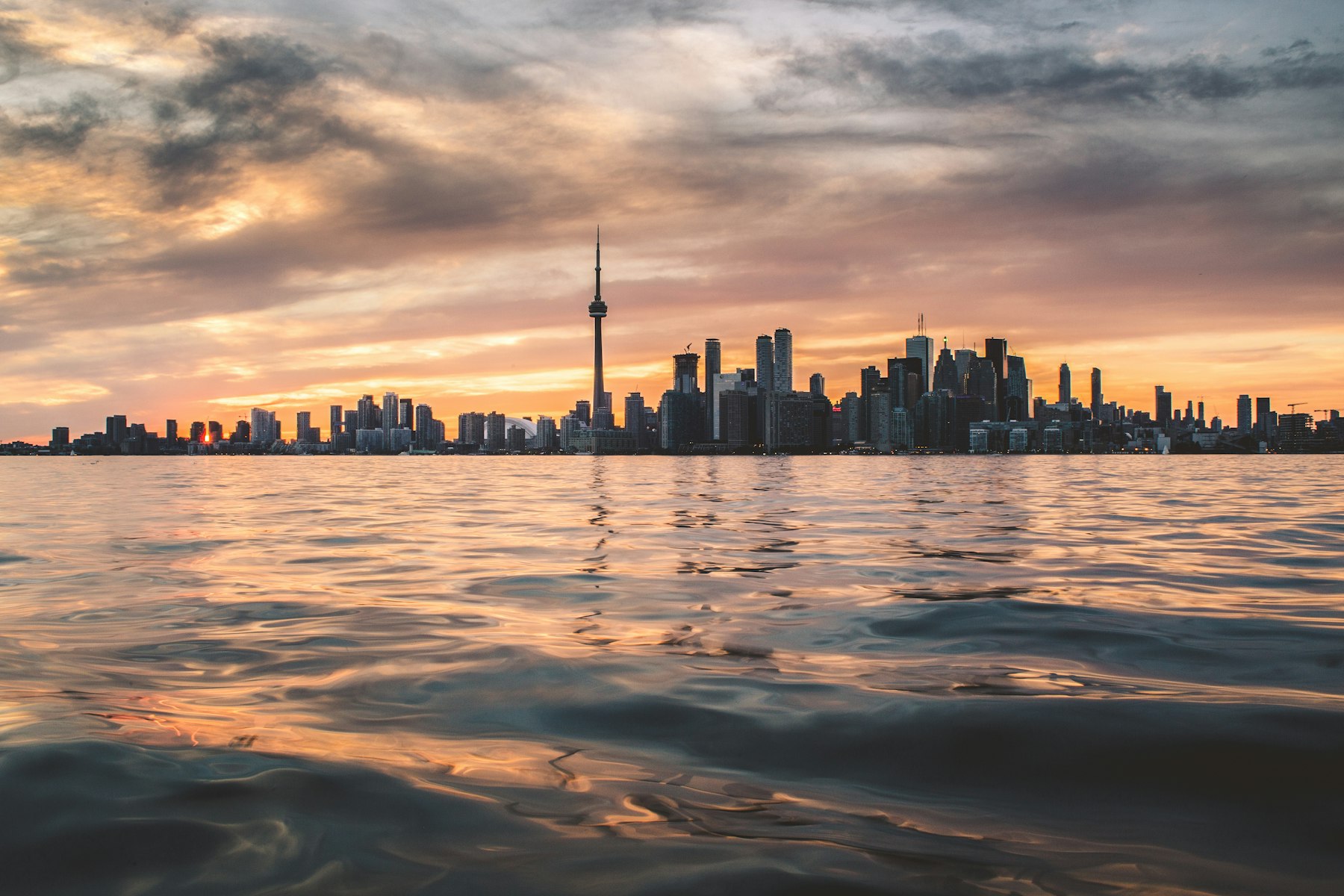

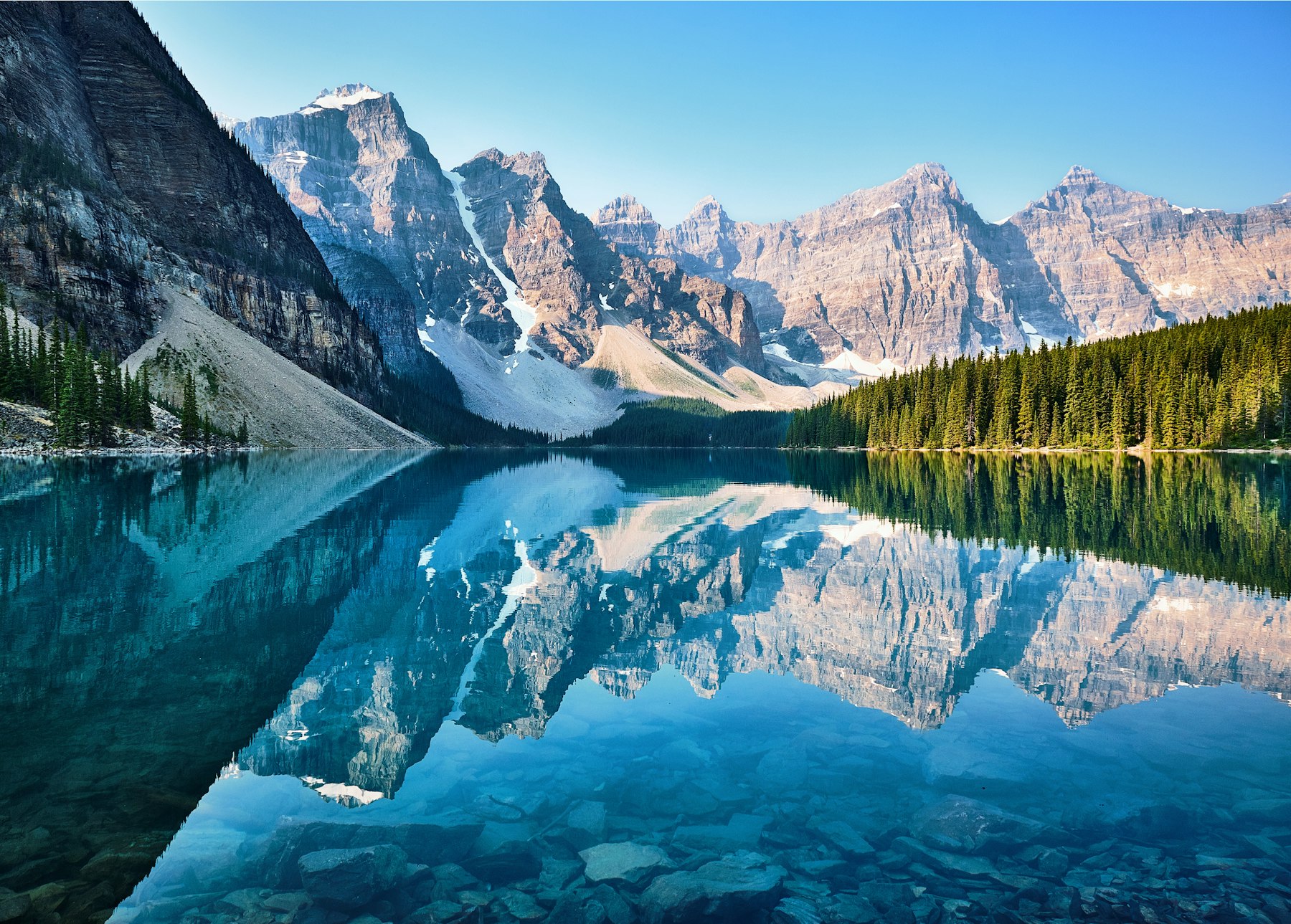
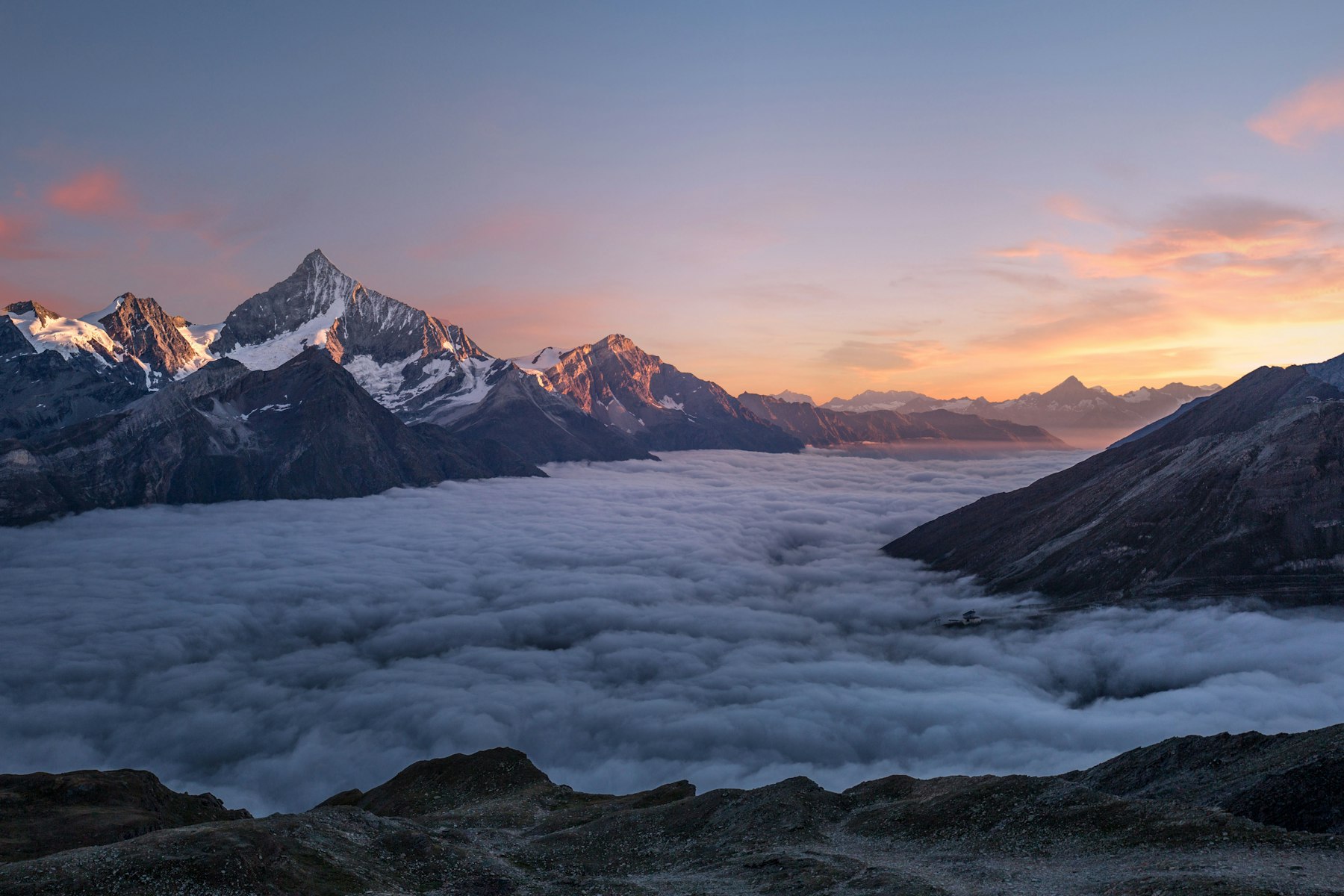
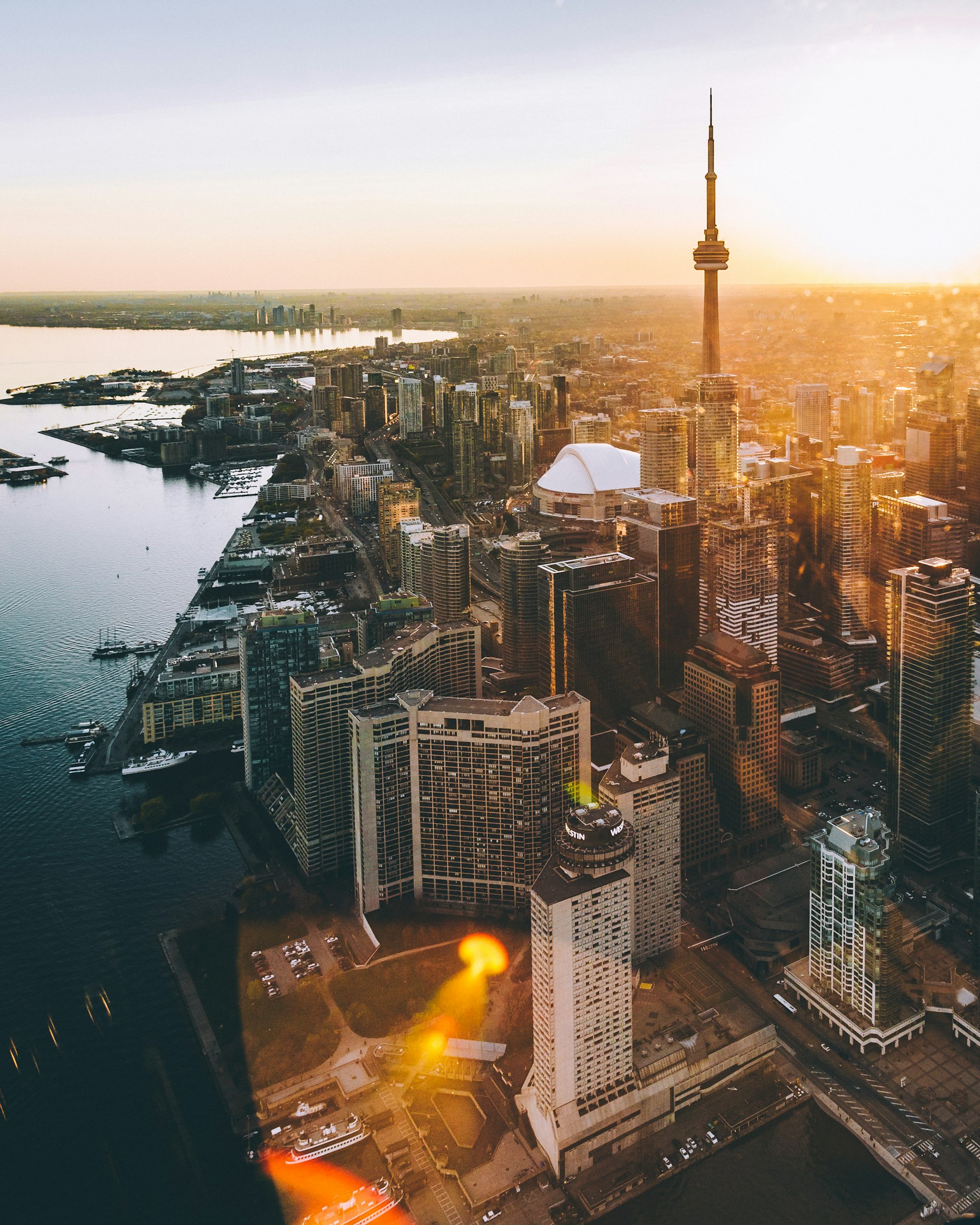
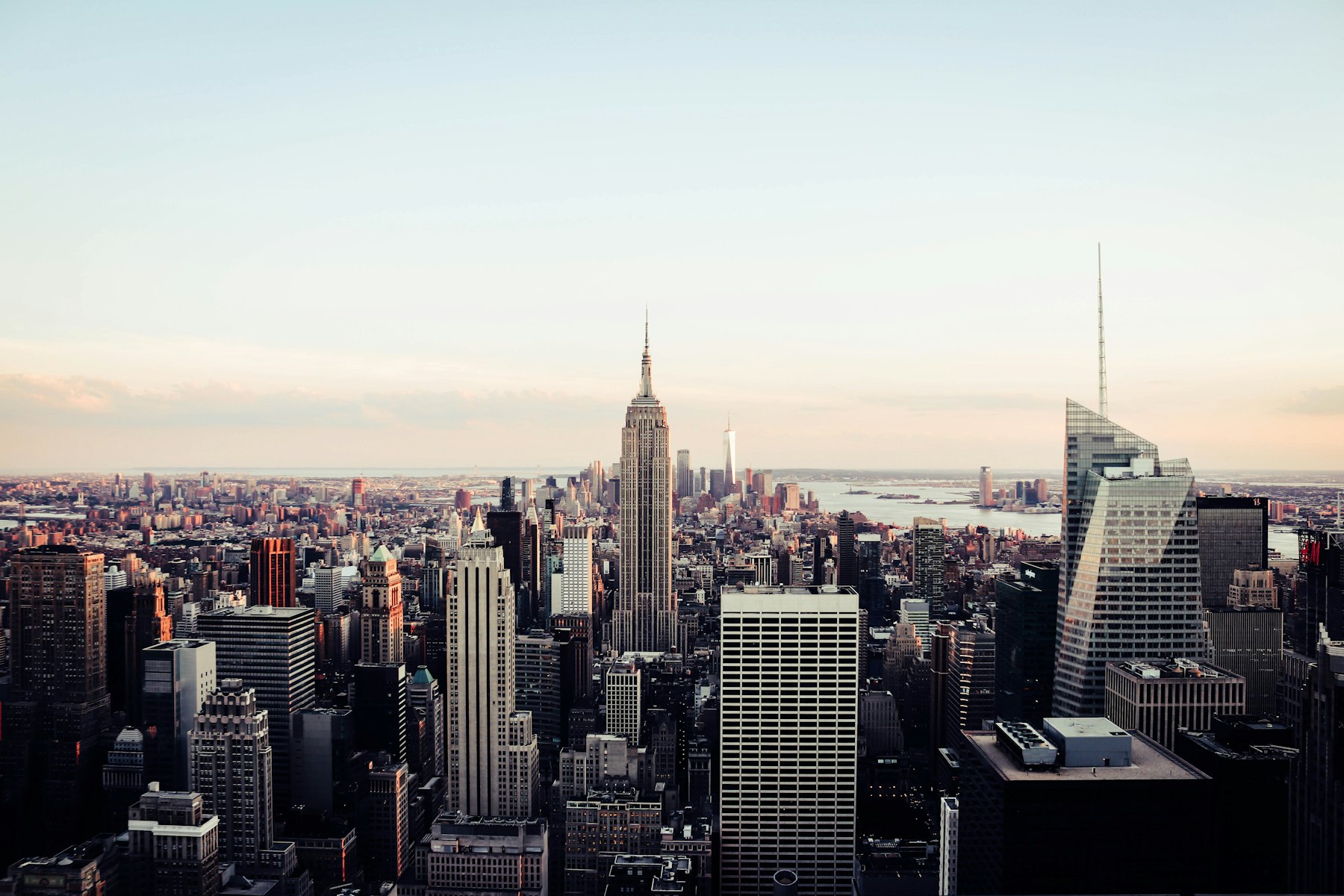
Ontario is the easiest province to underestimate, partly because so much of its story is the country's story. The federal government sits here. The largest banks, the largest stock exchange, the largest city, the busiest port and the busiest airport are all here. Most of Canada's films, television and English-language publishing are produced here. For a certain kind of visitor — the one who flies into Toronto, takes a train to Ottawa and leaves — it's possible to think you've seen Canada when you've really only seen the southern tenth of one province.
- Capital
- Toronto
- Population
- ~15.9 million
- Joined Confederation
- 1867 (founding)
- Languages
- English (majority), French (official-services province-wide)
- Time Zones
- Eastern (most of province); Central (far northwest)
- Sales Tax
- 13% HST
- Drinking Age
- 19
- Land Area
- 1,076,395 km² (larger than France & Spain combined)
A wide-angle overview
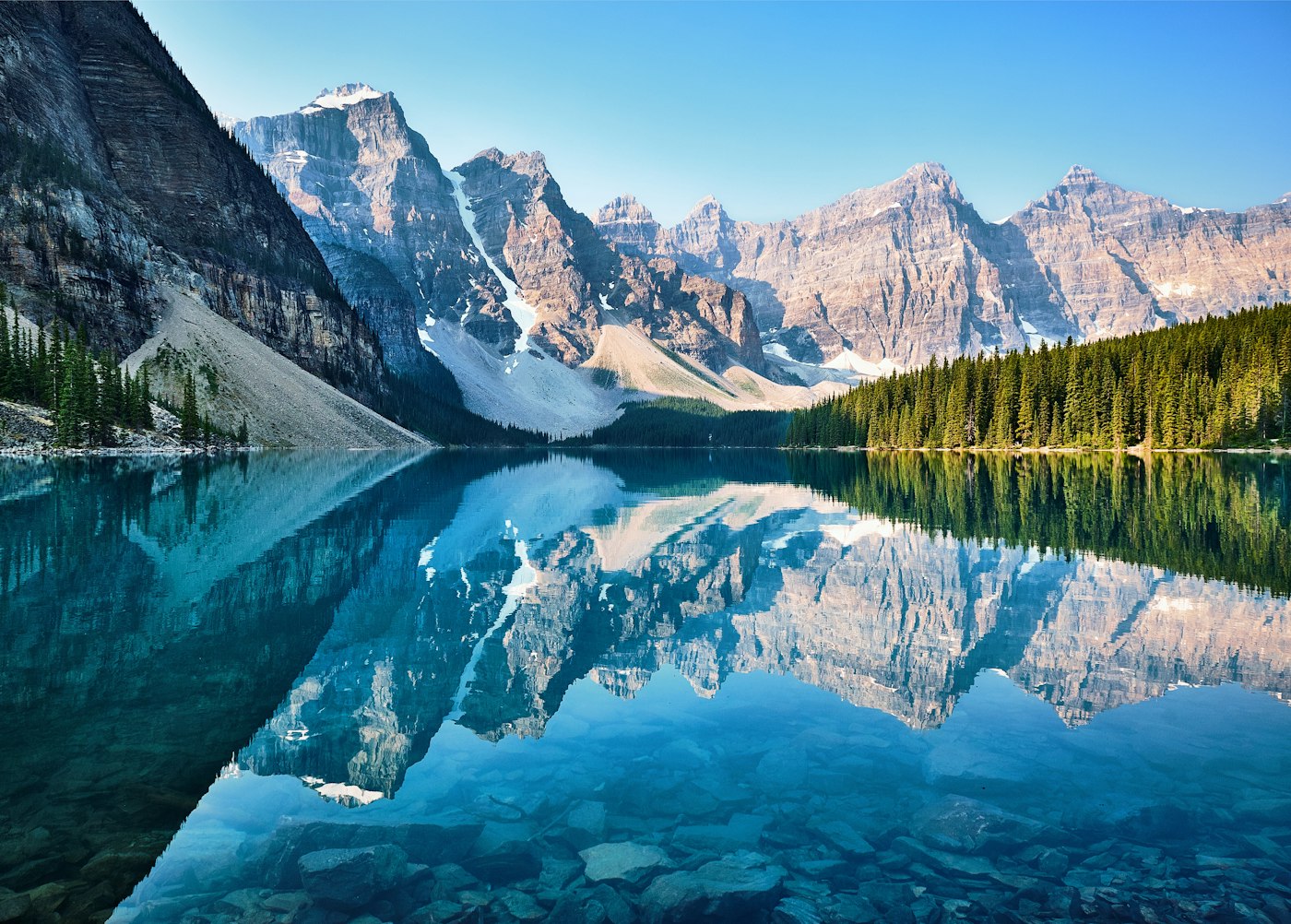
You can happily spend a month in Ontario without running out of things to do. The province is enormous — bigger than France and Spain combined, fully one-tenth the size of the European Union, and stretching some 1,690 km from Pelee Island in the south to Fort Severn on Hudson Bay in the north. The geography is the reason Ontario has never quite felt like one place to the people who live in it. South of Highway 7 you find the lakes-and-farmland Ontario most foreigners picture: Lake Erie, Lake Ontario, the Bruce Peninsula, Niagara wine country, the Greenbelt around Toronto, and a long deciduous forest that turns gold and orange in October. North of there the Canadian Shield takes over — granite, jack pine, blueberries and an inexhaustible supply of lakes — and eventually surrenders to the boreal forest and finally to the treeless Hudson Bay Lowlands.
Ontario produces about 38 percent of Canada's GDP. The economy used to be almost entirely industrial: steel in Hamilton, autos in Windsor and Oshawa, agricultural processing across the south. That base has shrunk over the last thirty years but it has not disappeared, and it has been overlaid with a financial sector centred on Bay Street, a research-heavy university and hospital system, a film and television industry that uses Toronto as a stand-in for Chicago and New York, and a tech belt running from Waterloo through Mississauga into Toronto's downtown.
Politically, Ontario has been the swing province in Canadian federal elections for decades. Its provincial parliament, called Queen's Park, sits in downtown Toronto. The current Progressive Conservative government under Doug Ford has held office since 2018 and was re-elected in 2022 and again, on a smaller margin, in early 2025; the New Democratic Party and the Ontario Liberals are the principal opposition. Ontario's politics tend to be less ideological than its neighbours' — it is a province that elects centrist governments of either stripe and replaces them when their welcome wears out.
Demographically, Ontario is the most diverse province in Canada by a wide margin. Over half of the population of Toronto, Mississauga, Brampton and Markham was born outside Canada. Roughly 5 percent of the province speaks French at home, concentrated in eastern Ontario (Ottawa, Cornwall, Hawkesbury) and the northeast (Sudbury, Timmins). There are 134 First Nations in the province, and Indigenous communities are a significant share of the population in the north.
A compact history
The land that is now Ontario was home to the Anishinaabe (Ojibwe and Mississauga), the Haudenosaunee (Iroquois Confederacy), the Wendat (Huron) and the Cree long before Europeans arrived. French coureurs des bois, Jesuits and traders began moving through the region in the early 1600s; the mission village of Sainte-Marie among the Hurons, near what is now Midland, was founded in 1639 and abandoned a decade later after a devastating Iroquois raid. The fur trade rerouted the area's economy for the next 150 years.
After Britain took the territory from France in 1763 and again after the American Revolution sent tens of thousands of Loyalists fleeing north, the colony of Upper Canada was carved out in 1791. Its capital was first Newark (now Niagara-on-the-Lake) and then York, which a fire in 1813 partly burned and which was renamed Toronto in 1834. The War of 1812 was fought across the south of the colony; the burning of York was the act that loosely justified the burning of Washington in retaliation a year later.
The Rebellion of 1837 against the colonial elite, the union of the Canadas in 1841, and finally Confederation in 1867 produced the province as we have it now. The next century built the industrial base — railways through the Shield, hydroelectric dams on the Niagara River, the steel mills of Hamilton, the auto plants of Oshawa and Windsor — and pulled large rural populations into the cities. Postwar immigration from Italy, Portugal, the Caribbean, Hong Kong, South Asia, Eastern Europe and (more recently) the Philippines, Nigeria, India and Iran rebuilt Toronto and the cities around it into something that does not look much like the Ontario of 1950.
The deindustrialisation of the 1990s and 2000s hit the province's manufacturing belt hard. Cities like Windsor, St. Thomas and Welland have only recently begun to recover. The Greater Toronto Area, by contrast, kept growing through every recession of the last forty years and now adds more population each year than every Atlantic province combined.
Toronto
- Metro population
- ~6.7 million
- Foreign-born
- ~50% (highest of any major OECD city)
- Best months to visit
- Late May – early October
- Average 1-bed rent (2026)
- CAD $2,300 – $2,800 downtown
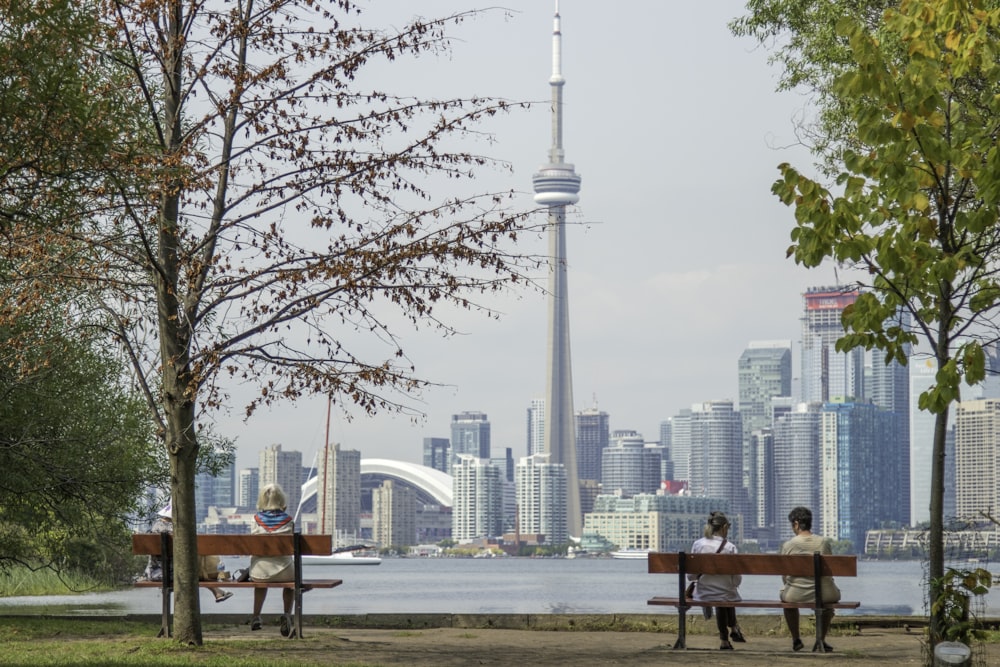
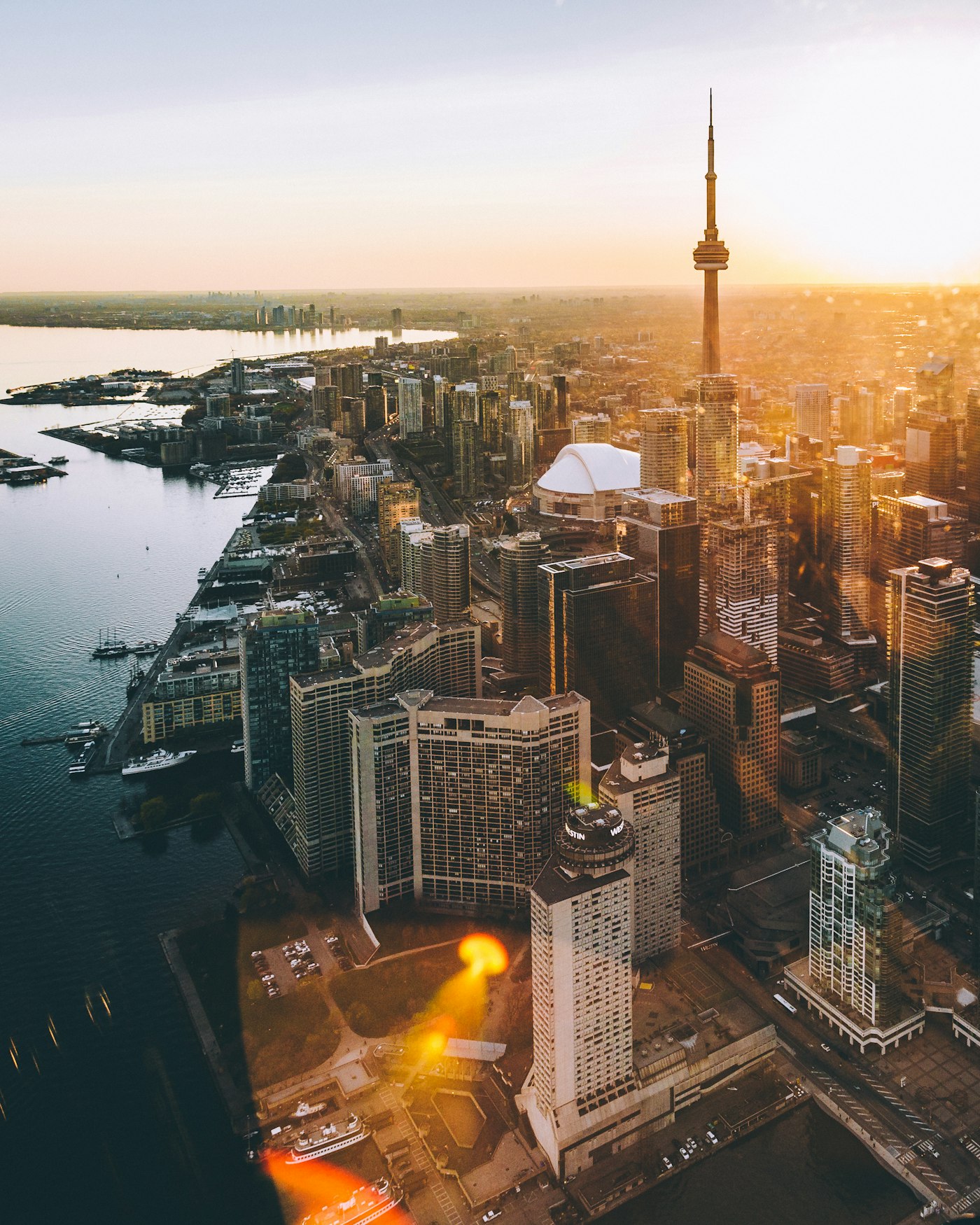
Toronto is Canada's largest city, the capital of Ontario, and by most measures the fourth-largest metropolitan area in North America after Mexico City, New York and Los Angeles. About 6.7 million people live in the Greater Toronto Area. More than half were born outside Canada, which makes Toronto one of the most foreign-born cities in the world — ahead of London, New York and Sydney by a margin that surprises people. The city's identity is built on that fact rather than around it. Walking from Bloor Street north to Eglinton on a Saturday morning you will pass through Korean, Greek, Italian, Iranian and Filipino main streets without ever leaving residential Toronto.
The downtown core sits between Bloor Street in the north and Lake Ontario in the south, and between roughly Bathurst Street in the west and the Don River in the east. Inside that box you'll find the Financial District (office towers, the underground PATH walkway, the big banks), the Entertainment District (theatres, bars, the CN Tower, the Rogers Centre), Chinatown (still very active on Spadina), Kensington Market (the scruffy, affectionate heart of the city), and the Distillery District (cobblestoned and very photogenic, if a bit packaged).
Outside the core the character changes quickly. The Annex is old academic Toronto, all red-brick houses and second-hand bookstores. Leslieville and Riverside are the east end's coffee-and-stroller belt. Little Italy on College Street has not been predominantly Italian for thirty years but it is still where to go for an espresso at midnight. Parkdale is where to go for Tibetan food. The Beaches (or "the Beach," depending on who you ask) is a lakefront neighbourhood with a boardwalk that feels almost like a small town. Scarborough and North York, outside downtown, are where the city's true food culture lives — Korean in North York, Sri Lankan and Chinese in Scarborough, South Asian along Gerrard East.
Post-secondary education in Toronto
The University of Toronto is the dominant institution, with around 97,000 students across three campuses (St. George downtown, Scarborough, and Mississauga). It is the highest-ranked Canadian university by almost every international measure and it operates in close partnership with the city's hospital network on University Avenue, which is one of the densest concentrations of biomedical research in North America. Toronto Metropolitan University (formerly Ryerson, renamed in 2022) sits beside the Eaton Centre and has a strong journalism, engineering and business profile. York University, in the northwest of the city, is the country's third-largest university, with the Schulich School of Business and Osgoode Hall Law School. OCAD University, the country's oldest art and design school, occupies the building with the legs on Dundas Street West.
Tuition for domestic Ontario students at U of T runs roughly CAD $7,000–$15,000 per year depending on program; international tuition is several times that, often $50,000–$70,000 for engineering or business. Add roughly $20,000–$28,000 for living costs in the city. The financial aid offices are useful and the OSAP provincial loan program is the standard tool for domestic students. Acceptance to U of T's competitive faculties — engineering, computer science, the Rotman commerce program — is genuinely difficult, with high-90s averages required from Ontario high schools.
Housing & cost of living in Toronto
Painfully expensive, in short. As of early 2026 a one-bedroom apartment rents for roughly CAD $2,300 to $2,800 per month in the downtown core; closer to $1,900 to $2,200 in the inner suburbs (Scarborough, North York, Etobicoke); and $1,600 to $1,900 in the outer suburbs along the GO Train lines. The benchmark price for a detached house inside the old city limits is well over CAD $1.5 million; condo prices have softened from the 2022 peak but a downtown one-bedroom condo still asks roughly $650,000 to $800,000.
Groceries and restaurants are in line with other large North American cities, but everything carries 13 percent HST, which is a surprise if you have arrived from Alberta or from a U.S. state with no sales tax. A weekly grocery bill for two people runs roughly $150–$220 if you shop carefully at No Frills or FreshCo and rises sharply if you default to Loblaws or Whole Foods. Transit is a $3.35 fare or $156 monthly pass on the TTC. Hydro (electricity) and natural gas together usually run $90–$180 a month for a one-bedroom. Internet from one of the big providers is $80–$110, though smaller resellers like Beanfield, TekSavvy and Carry can save you a third of that.
The practical upshot is that a single person in Toronto needs roughly CAD $55,000–$70,000 after tax to live comfortably without a car; a family of four in a three-bedroom anywhere within the old city limits is looking at $130,000+ after tax just to keep its head above water. Wages have risen but not as fast as rent, which is the underlying reason Toronto's politics have become more focused on housing than anything else over the past decade.
Cultural scene, food & tourist attractions
The CN Tower was the world's tallest free-standing structure from 1975 until the Burj Khalifa overtook it in 2007. It still defines the skyline. The observation deck is honestly worth the money on a clear day — you can see the spray of Niagara Falls on the horizon — and the glass floor is more convincing than you expect. Book online in advance on summer weekends. The Rogers Centre next door is home to the Toronto Blue Jays and, before that, was a regular setting for the SkyDome roof to fail spectacularly in the 1990s.
The Royal Ontario Museum on Bloor Street is the country's largest museum and has a strong dinosaur and East Asian collection. The Art Gallery of Ontario, redesigned by Frank Gehry in 2008, is the major fine-art museum and is unmissable for the Group of Seven and Inuit galleries. Casa Loma, a Gothic Revival mansion on the escarpment above the Annex, is the city's most photographed building after the CN Tower.
For food, Toronto's strengths are in the immigrant neighbourhoods rather than the downtown chef-driven scene. The best meals in the city are usually under $25 a head: a roti at Vena's Roti House on Eglinton, a banh mi on Spadina, the karaage on Yonge Street north of the 401, the Sri Lankan rice and curry on Pharmacy Avenue, the Ethiopian on the Danforth's east end. The festival calendar fills the summer — Pride at the end of June (one of the largest in the world), the Caribbean Carnival in early August, Taste of the Danforth in mid-August, and the Toronto International Film Festival across the second weekend of September, which is the only time of year the entire downtown core is given over to a single event.
Sports & recreation
Toronto is the only Canadian city with a team in all four major North American leagues plus the WNBA. The Toronto Maple Leafs (NHL) play at Scotiabank Arena and have not won a Stanley Cup since 1967, which is a recurring topic of conversation. The Toronto Raptors (NBA) won the championship in 2019 and have made the playoffs almost every year since. The Toronto Blue Jays (MLB) won back-to-back World Series in 1992 and 1993 and have been variously competitive since. Toronto FC (MLS) won the league in 2017. The Toronto Argonauts (CFL) play at BMO Field. The Toronto Tempo, the WNBA expansion franchise, begins play in 2026 at Coca-Cola Coliseum.
Outside professional sport, the city's recreational geography is shaped by its ravines — a network of forested river valleys that runs through the middle of Toronto and contains roughly 11,000 hectares of trails. The Don Valley, the Humber, Taylor-Massey Creek and the lakeshore Martin Goodman Trail are all accessible by bike from downtown. In winter, the Bentway under the Gardiner Expressway has a free outdoor skating loop, and Nathan Phillips Square in front of City Hall has the postcard ice rink. Skiing is at Blue Mountain near Collingwood, two hours north.
The honest take
Toronto is one of the great immigrant cities of the world, and it is also a city that has spent the last fifteen years pricing out the people who built it. The transit system is overstretched. The rental market is unforgiving. The downtown is more visibly troubled by drug poisoning and homelessness than it was a decade ago. None of that erases the case for being here — the food, the universities, the job market, and the deep, quiet pleasure of a city where everyone is from somewhere else — but you should arrive with eyes open and a plan for housing.
Most Popular Museum: The Royal Ontario Museum
The Royal Ontario Museum — universally known as the ROM — stands at Bloor and Avenue Road as one of the largest museums in North America and quite possibly the most eclectic. Its Daniel Libeskind-designed crystal addition, which erupted from the original Edwardian facade in 2007, remains one of the most polarizing and talked-about pieces of architecture in the country. Inside, the arguments dissolve quickly: you are simply overwhelmed by the breadth of it. Ancient Egypt and Nubia, the Tang Dynasty, medieval arms and armour, West African masquerade costumes, a full-scale replica of a mosque interior, and — of course — the dinosaurs. The Dinosaur Gallery, with its towering mounted skeletons, has been making children stop mid-sentence for decades.
The ROM's collection spans over thirteen million objects and specimens across forty-five galleries. That number sounds like a statistic until you spend a full afternoon and realise you've covered perhaps a fifth of what you wanted to see. The Friday Night Live series has turned the institution into something of a social venue as well — adults sipping wine under a blue whale fossil is very much a Toronto thing. Budget at least three hours; most people leave wishing they had another three.
Your Best 5 Days in Toronto
Toronto rewards slow travel. The city sprawls magnificently and its neighbourhoods — each with a distinct personality — are the real attraction. Five days lets you breathe between landmarks rather than sprint past them.
Waterfront & the Islands
Start at Harbourfront Centre, where public art and food trucks line the lake's edge. Take the ferry to Toronto Islands for an afternoon of cycling, swimming at Hanlan's Point beach, and skyline views that explain why locals are so attached to this city. Return for dinner in the Distillery District's Victorian industrial landscape, now repurposed into galleries, restaurants, and craft breweries.
Museums & Midtown
Spend the morning at the Royal Ontario Museum — arrive when it opens to beat school groups to the dinosaur gallery. Walk south along Philosopher's Walk to the Gardiner Museum of ceramic art, a quieter gem directly across the street. Afternoon: stroll the leafy Annex neighbourhood and browse the independent bookshops on Bloor Street West.
Kensington Market & Chinatown
These two adjacent neighbourhoods form one of Canada's most vivid urban canvases. Kensington Market is part vintage clothing, part global street food, part impromptu music venue — it's best experienced on a weekday morning before the weekend crowds arrive. Walk east into Chinatown for dim sum, then continue to the Art Gallery of Ontario (AGO), whose Frank Gehry renovation gave its Canadian art collection the space it always deserved.
East End: Leslieville, the Beaches, Danforth
Take the Queen streetcar east to Leslieville for brunch at one of the neighbourhood's beloved spots — this stretch of Queen East has become one of the best eating destinations in the city. Continue down to the Beaches for a walk along the boardwalk. In the evening, head north to the Danforth for Greek food; the stretch near Pape and Chester stations has been feeding Toronto well for generations.
CN Tower, St. Lawrence Market & Goodbye
No trip to Toronto ends without ascending the CN Tower — the queues move quickly and the glass floor remains genuinely unnerving. Afterward, walk east to St. Lawrence Market, one of the finest food markets in North America and a Saturday morning institution. Pick up supplies for the journey home: a peameal bacon sandwich from Carousel Bakery is non-negotiable. If you have time, wander through Old Town to catch some of the city's earliest surviving architecture before heading to the airport.
Ottawa

- Metro population
- ~1.55 million (with Gatineau)
- Languages
- English & French (effectively bilingual)
- Average 1-bed rent (2026)
- CAD $1,750 – $2,100
- Best season
- Late spring through autumn; February for Winterlude
Ottawa is Canada's capital, a city of about 1.1 million on the Ontario side of the Ottawa River, which here forms the border with Quebec. Across the river, on the Quebec side, is the city of Gatineau; together they form the National Capital Region, with around 1.55 million residents. It is a smaller, calmer, more bureaucratic city than Toronto, with longer winters and a much greener summer. The federal government is the dominant employer; the tech corridor in Kanata, the universities (Carleton, Ottawa, Saint Paul) and the hospitals make up most of the rest.
Queen Victoria chose Ottawa as the capital in 1857, largely as a compromise. It sat on the border between English-speaking Upper Canada and French-speaking Lower Canada; it was further from the American border than Toronto, Montreal or Kingston; and it was not any of the cities that had been lobbying for the role, which annoyed everyone equally. The choice was unpopular at the time but has worn well.
The shape of the city follows the river. Parliament Hill sits on a bluff in the centre, with the Gothic Revival Parliament buildings looking out across the water to the Quebec side. The Rideau Canal — a UNESCO World Heritage site — cuts down through downtown to the Ottawa River, and in winter its seven-kilometre downtown stretch becomes the world's largest naturally frozen skating rink, the Rideau Canal Skateway. In summer the same path becomes the city's main pedestrian-and-cycle artery.
Post-secondary education in Ottawa
The University of Ottawa, in the city's downtown, is one of the largest bilingual universities in the world — you can complete almost any degree in either French or English. It has Canada's largest law school and is the country's leading research institution in health and biomedical sciences when measured by federal funding per faculty member. Carleton University, just south of downtown by the Rideau Canal, is the city's other major university and has a particular strength in journalism, public affairs, and aerospace engineering. Algonquin College in the west end is the largest college in eastern Ontario, with strong applied programs in IT, hospitality, the trades, and animation.
Tuition is comparable to other Ontario universities (roughly $7,500–$13,000 per year for domestic students). The cost of student living — rent, food, transit — runs roughly 20 percent below Toronto, which is a large part of why both Ottawa universities are popular with out-of-province students.
Housing & cost of living in Ottawa
Ottawa is not cheap, but it is meaningfully more affordable than Toronto. A one-bedroom downtown rents for roughly CAD $1,750–$2,100 per month; in inner neighbourhoods like Hintonburg, Westboro or Vanier you can sometimes find them for $1,550–$1,750. The benchmark price for a single-family home inside the Greenbelt is around $700,000–$850,000, less than half of Toronto. Property taxes are higher than Toronto's as a percentage of value, which surprises buyers from out of province.
Salaries in the federal public service are set on a national scale, which means Ottawa is one of the better cities in Canada to be a mid-career federal employee — the salary is the same as in Toronto or Vancouver but the cost of living is markedly lower. Tech salaries in Kanata have caught up with Toronto in the last few years and continue to rise. Healthcare wages are negotiated provincially and are in line with the rest of Ontario.
Cultural scene, food & tourist attractions
Parliament Hill is the obvious draw. The Centre Block is closed for a decade-long restoration that began in 2019 and is now expected to wrap around 2031, but the West and East Blocks are open for free guided tours if you book ahead through the Visitor Welcome Centre. The Changing of the Guard happens daily on the front lawn from late June through late August at 10 a.m.
Beyond Parliament, Ottawa has a remarkable concentration of national museums for a city its size. The Canadian Museum of History (across the river in Gatineau, with one of the most important Indigenous art galleries in the country), the National Gallery of Canada (the big glass building behind the giant Maman spider sculpture), the Canadian War Museum, the Canada Aviation and Space Museum, and the Canadian Museum of Nature each easily fill a half-day. The annual Tulip Festival in mid-May, a gift from the Dutch royal family in thanks for Canada's role liberating the Netherlands, fills Commissioners Park with around a million bulbs.
The food scene is younger than the city's reputation suggests. Hintonburg and Wellington West have become Ottawa's restaurant rows; Beckta, Riviera, and the Atelier tasting menu represent the high end, while shawarma in Centretown and the Vietnamese in Chinatown represent the everyday. Beavertails, the deep-fried pastry, was invented in Killaloe near here and is a fixture along the canal in winter.
Sports & recreation
The Ottawa Senators (NHL) play at the Canadian Tire Centre in Kanata; ownership changes in 2023 have prompted serious discussion of an eventual downtown arena, possibly at LeBreton Flats. The Ottawa Redblacks (CFL) play at TD Place in the Glebe and won the Grey Cup in 2016. The Ottawa Charge of the PWHL (Professional Women's Hockey League) play at TD Place's arena and have been a quiet success since the league's launch in 2024.
Recreationally, Ottawa is one of the best cycling cities in North America. The pathway network along the Ottawa River, the Rideau Canal and the Rideau River is over 600 kilometres of largely off-road, paved trails. Sundays from May to October the city closes its parkways to cars for "Bikedays." Gatineau Park, fifteen minutes from downtown across the river, has 50 km of cross-country ski trails in winter and excellent hiking and lake-swimming in summer.
The honest take
Ottawa has a reputation as a quiet city, and the reputation is half-earned. It will not match Montreal for nightlife or Toronto for restaurants. What it offers, increasingly, is a workable middle-class life: a 25-minute commute, an affordable house, a 600-kilometre cycle network, two strong universities, and a federal job market that pays a national wage. For families and for mid-career professionals it is one of the best deals in Canada.
Most Popular Museum: The Canadian War Museum
Ottawa is a city of museums — it hosts more per capita than almost anywhere in Canada — and choosing the most popular is genuinely difficult when the Canadian Museum of History sits just across the river in Gatineau and the National Gallery commands its own limestone hill. But the Canadian War Museum, with its angular green-roofed building half-buried into the earth along LeBreton Flats, draws visitors with a gravitational pull that goes beyond curiosity. It is, by any measure, one of the finest war museums in the world.
The building itself is designed to unsettle. The Regeneration Hall is a long, low corridor that terminates in a narrow window aligned to illuminate the Peace Tower on November 11th at exactly 11:00 a.m. — a detail of breathtaking architectural intention. Inside, the galleries trace Canada's military history from pre-Confederation conflicts through to Afghanistan and modern peacekeeping, without flinching from complexity. The LeBreton Gallery houses the world's largest collection of surviving military vehicles, including a German Tiger tank that still commands the room entirely. Allow three to four hours and expect to leave with more questions than you arrived with.
Your Best 5 Days in Ottawa
Ottawa is the capital Canada sometimes undersells. It's a genuinely beautiful city — federal buildings along the Rideau Canal, the Gatineau Hills across the river, tulips in spring and skating in winter — and its museum density alone justifies a week.
Parliament Hill & ByWard Market
Begin at Parliament Hill with a guided tour of the Centre Block — book in advance, as spaces fill quickly. The Peace Tower observation deck offers a commanding view of the Ottawa River valley. Walk down to ByWard Market for lunch; this is the oldest farmers' market in Canada and the beavertail pastry stands are not optional. Spend the afternoon exploring the surrounding Lowertown neighbourhood.
Museum Row
Dedicate the full day to museums. Start at the Canadian Museum of Nature for its magnificent dinosaur and mammal galleries, then walk to the National Gallery of Canada for the Rideau Street Chapel interior alone — it was rescued from a wrecking ball and reassembled inside the gallery. End the day at the Canadian War Museum. Three major institutions in one day requires focus but is thoroughly achievable.
Rideau Canal & Gatineau
Walk or cycle the canal path south toward Dow's Lake, which is particularly beautiful in the spring tulip festival. In the afternoon, cross the river to Gatineau to visit the Canadian Museum of History — its curvilinear Douglas Cardinal architecture, designed to echo the river-carved landscape, is itself worth the trip. The Grand Hall's collection of Pacific Northwest totem poles is extraordinary.
Rideau Hall & the Glebe
Visit Rideau Hall, the Governor General's official residence, where free guided tours run throughout the day. The grounds are open to the public year-round. Walk south through Sandy Hill and into the Glebe — Bank Street's most charming stretch — for afternoon coffee and independent shops. The Pretoria Bridge view of the canal at sunset is one of Ottawa's best.
Gatineau Park & Farm
Drive or take a taxi up to Gatineau Park, a wilderness preserve of over 361 square kilometres beginning just minutes from downtown. The Champlain Lookout views over the Ottawa Valley are spectacular in any season. On the way back, stop at the Canada Agriculture and Food Museum — a working farm on the experimental farm grounds that is genuinely charming and deeply underrated. It makes a surprisingly satisfying final Ottawa memory.
Hamilton

- Metro population
- ~785,000
- Distance from Toronto
- ~70 km west
- Average 1-bed rent (2026)
- CAD $1,500 – $1,800
- Big employer
- Hamilton Health Sciences (~17,000 staff)
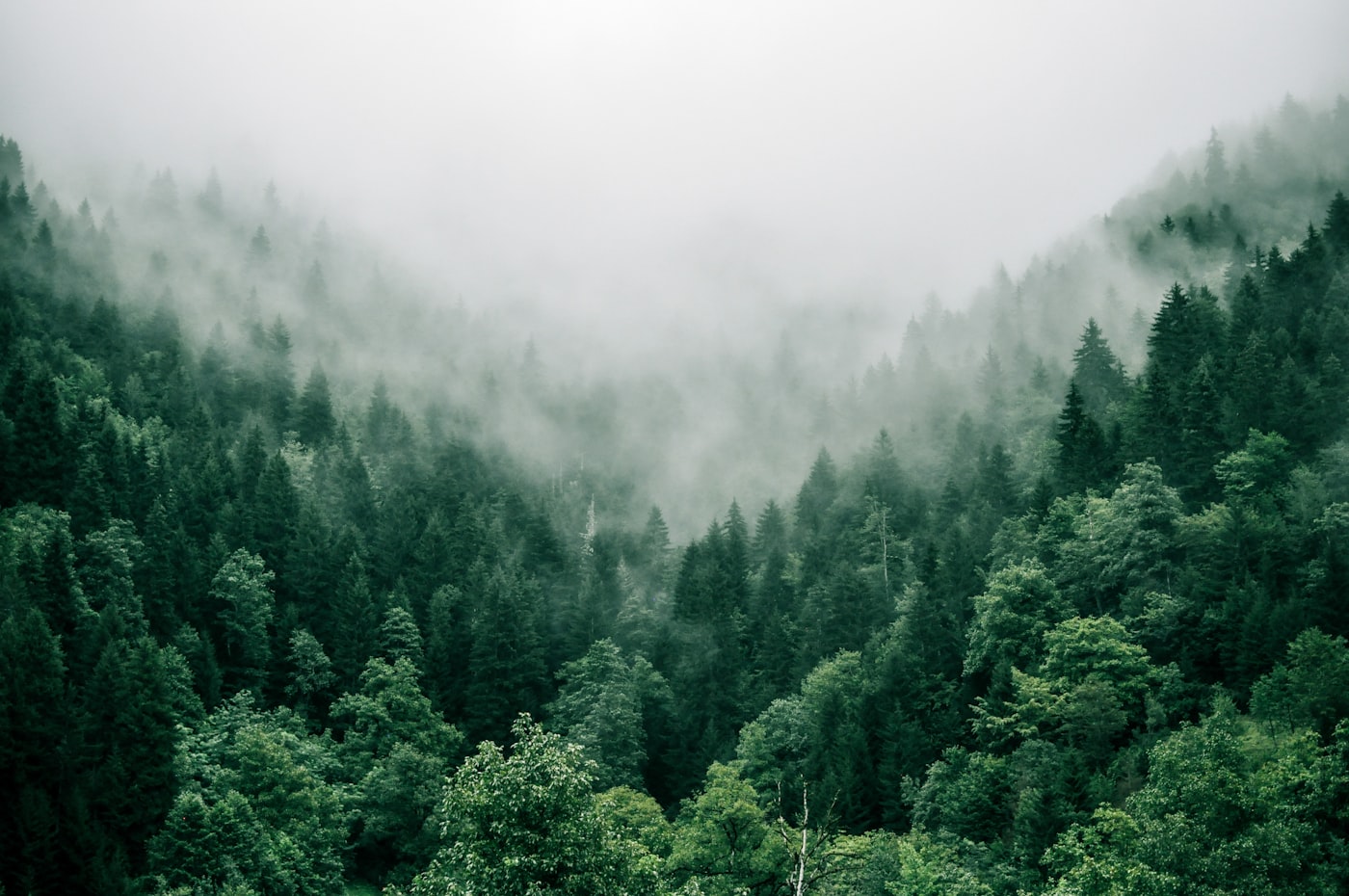
Hamilton sits at the western tip of Lake Ontario, about 70 kilometres from Toronto along the QEW. It used to be called Steeltown — the steel industry, centred on the descendants of Stelco and Dofasco, still operates and still employs several thousand people, but it is no longer the city's defining sector. Healthcare, anchored by Hamilton Health Sciences and St. Joseph's, is now the largest employer, followed by McMaster University and a fast-growing professional and creative sector that is partly the result of Toronto cost-pushed migration.
Hamilton has been having a slow renaissance since the mid-2010s. Rents are still cheaper than Toronto, a lot of Toronto artists have moved here, and the downtown streets along James North and King William have an energy that the city did not have twenty years ago. There are more than a hundred waterfalls on the Niagara Escarpment inside the city limits — Hamilton is sometimes called the Waterfall Capital of the World — and the Bruce Trail, Canada's oldest long-distance footpath, runs along the Escarpment through the middle of the city.
The city's geography is split between the "lower city" along the harbour and the "mountain" above the escarpment. Most of Hamilton's classic neighbourhoods — Westdale near the university, Locke Street, Stinson, Strathcona, the North End — are in the lower city. The mountain is more suburban and was largely built between 1955 and 1985. The two are connected by escarpment access roads that locals refer to by name.
Post-secondary education in Hamilton
McMaster University, in the city's west end, is the academic anchor. Its medical school, founded in 1965, pioneered the case-based curriculum that has since been adopted by medical schools around the world. The DeGroote School of Business, the engineering faculty (which has a particularly strong reputation in materials and biomedical engineering) and the nuclear research reactor on campus — one of only two operating university research reactors in Canada — are the other major draws. Total enrolment is about 38,000 students. Mohawk College, with two campuses in the city, is the major polytechnic and a national leader in apprenticeship training.
Housing & cost of living in Hamilton
Hamilton is no longer the bargain it was in 2015, but it remains substantially cheaper than Toronto. A one-bedroom apartment rents for roughly CAD $1,500–$1,800 in 2026; the benchmark price for a detached home in the lower city is around $750,000, perhaps $850,000 on the mountain. The cost-of-living gap with Toronto is large enough that Hamilton has, since the pandemic-era shift to hybrid work, become a viable commuter city for people whose jobs only require them downtown twice a week — the GO Train from Hamilton's West Harbour and Confederation stations runs to Union Station in roughly 65 minutes.
Cultural scene, food & tourist attractions
Walk the Dundas Peak lookout for a view over Spencer Gorge in autumn (book a parking pass in advance — it is the most popular short hike in the province). Eat along James Street North, which hosts an art crawl on the second Friday of every month. Visit the Art Gallery of Hamilton, which has a better permanent collection than the city's reputation suggests. The Royal Botanical Gardens, straddling the Hamilton-Burlington line, is the largest in Canada by land area. If industrial landscapes appeal, the Burlington Skyway at sunset gives you the cinematic version of the steel mills against the water.
The food scene has shifted in the last decade. Earth to Table Bread Bar, the various restaurants in the Locke Street strip, and a long list of Vietnamese, Caribbean and Portuguese spots in Crown Point and Stipley make Hamilton a credible eating city for a place its size.
Sports & recreation
The Hamilton Tiger-Cats (CFL) play at Hamilton Stadium, which hosted the 2015 Pan American Games soccer matches. The Forge FC of the Canadian Premier League, founded in 2019, has been the dominant team in the league since its inaugural season. Beyond professional sport, the city's recreational identity is built on the Bruce Trail, the cycling along the waterfront, and the swimming holes (Webster's Falls, Tiffany Falls) tucked into the escarpment.
The honest take
Hamilton in 2026 is the city Toronto might have been if it had stayed about a third its current size. It still has visible poverty, a shrinking but real industrial base, and a downtown that has not finished its renaissance. It also has the best escarpment views in southern Ontario, a top-15 university, and a one-bedroom apartment for a third less than Toronto. For a couple in their thirties priced out of the GTA, Hamilton has been the answer for ten years and continues to be.
Most Popular Museum: The Hamilton Museum of Steam & Technology
Hamilton has been shedding its Steel City image for years, but the Hamilton Museum of Steam and Technology leans into the industrial heritage with well-earned pride. Housed in the city's 1859 waterworks building — a national historic site — it protects two of the largest surviving nineteenth-century steam pumping engines in North America. These engines, each weighing over sixty tonnes, pumped drinking water for Hamilton for nearly half a century, and today they are still operated under steam on special demonstration days. Watching one of these behemoths come alive, valves hissing and the cast-iron arms beginning their slow rotational work, is one of the more memorable industrial experiences in Ontario.
The building itself is beautifully preserved — Italianate architecture with arched windows and ornate ironwork that speaks to the era's belief that civic infrastructure deserved beauty. It's a niche destination, genuinely, but for anyone with an interest in engineering history or Victorian aesthetics, it's a quiet revelation sitting right on the north end of Gage Park.
Your Best 5 Days in Hamilton
Hamilton is one of Canada's most interesting mid-sized cities precisely because it is mid-transition — old industrial grit sitting alongside a vibrant arts scene, with waterfalls tumbling through ravines within city limits.
Waterfalls & the Bruce Trail
Hamilton claims over 100 waterfalls within city limits — a geographic fact most visitors simply don't believe until they're standing beside Albion Falls, Tiffany Falls, or Webster's Falls. Spend the morning hiking the Hamilton section of the Bruce Trail along the Niagara Escarpment for waterfall-hopping at its best. The views over the lower city from the escarpment brow are dramatic and totally unexpected.
James Street North & Art Scene
James Street North is the spine of Hamilton's arts revival. Walk its length, popping into independent galleries, vintage furniture shops, and the kind of coffee shops that still feature local visual art on bare brick walls. The Art Gallery of Hamilton, the oldest public art gallery in Ontario, anchors the south end of the neighbourhood with a strong collection of Canadian work including the Group of Seven.
Royal Botanical Gardens & Dundas
The Royal Botanical Gardens straddles the Hamilton-Burlington border and encompasses over 1,100 hectares of nature sanctuaries and cultivated gardens — the largest botanical garden in Canada. The rose garden and iris collection are magnificent in season. In the afternoon, drive down into the village of Dundas, a remarkably well-preserved nineteenth-century mill town with good independent restaurants and the waterfall at Dundas Valley Conservation Area.
Locke Street & the West End
Locke Street South is Hamilton's other great independent commercial street — narrower and quainter than James North, with antique dealers, bakeries, and florists. Saturday morning brings a farmers' market atmosphere even on weekdays. In the afternoon, visit Dundurn National Historic Site, where the 1835 Italianate villa of Sir Allan MacNab sits on a hill with commanding views of Hamilton Harbour.
Industrial Heritage & the Waterfront
Visit the Museum of Steam and Technology in the morning for those great Victorian engines, then walk along the waterfront trail by Hamilton Harbour. The Bayfront Park area has been significantly cleaned up and the views of the Skyway Bridge are genuinely impressive. Grab dinner on King Street West, which has become one of the most lively dining strips in the Golden Horseshoe.
London
- Metro population
- ~550,000
- Distance from Toronto
- ~190 km on Highway 401
- Average 1-bed rent (2026)
- CAD $1,450 – $1,750
- Anchor employer
- Western University & London Health Sciences Centre
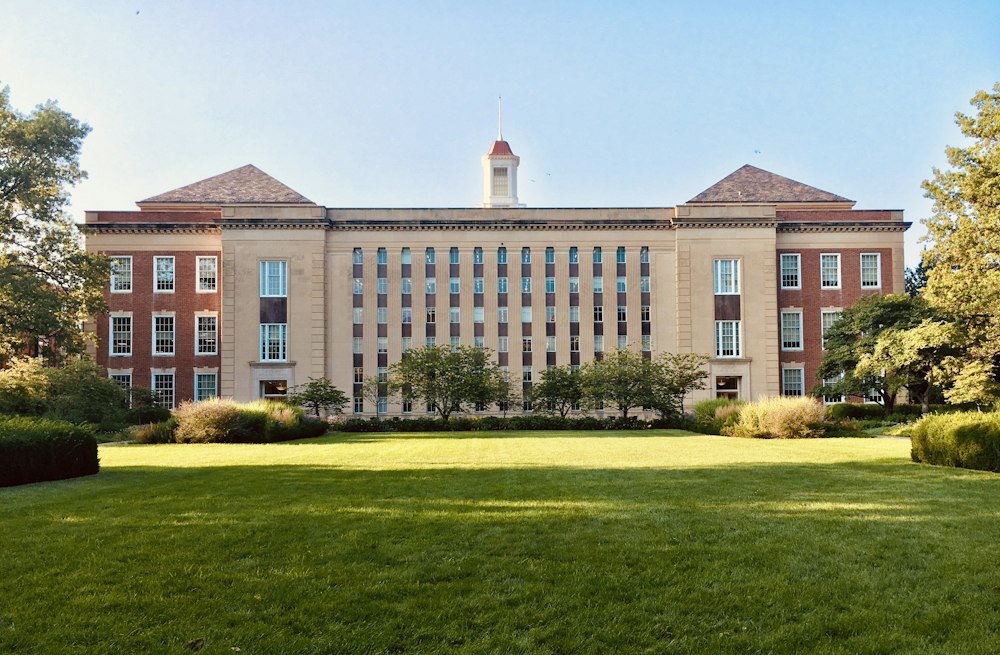
London, Ontario sits roughly halfway between Toronto and Detroit on Highway 401. About 550,000 people live in the metropolitan area. It was named in 1793 by John Graves Simcoe, who wanted it to be the capital of Upper Canada on a Thames River of his own — the Thames does run through downtown, there is a Covent Garden Market, and neighbourhoods are called things like Blackfriars and Old North. York (now Toronto) ended up with the capital instead, but the borrowed names stayed.
It's an insurance town and a medical-research town. Three large insurance companies are headquartered here, the hospitals are the largest single employer, and Western University, in the city's north end, is the dominant cultural and economic force. London is also a quietly good live-music city — Guy Lombardo was born here, and so were a long list of more recent rock acts including the Killjoys, Alanis Morissette (who grew up in nearby Ottawa but recorded her first records here) and the post-rock band Do Make Say Think. The London Music Hall and the Aeolian Hall both punch above their weight on the touring circuit.
The downtown is currently in the middle of a long, halting recovery. Dundas Place, redesigned as a flexible-street pedestrian zone in 2019, has filled in with restaurants and small bars, and the Covent Garden Market remains a popular gathering point. The waterfront along the Thames Valley Parkway, a 40-kilometre paved cycle and walking trail, is the city's strongest recreational asset.
Post-secondary education in London
Western University is the second-largest university in Ontario by enrolment after Toronto, with around 39,000 students. The Ivey Business School is the country's flagship case-method MBA program; the Schulich School of Medicine & Dentistry is a respected research medical school; the engineering faculty has had a strong international student draw for two decades. Tuition for domestic students is in line with Ontario averages (around $7,000–$13,000 a year); residence and meal plans run about $14,000–$17,000.
King's, Huron and Brescia — three affiliated colleges — offer smaller-class alternatives within the Western system. Fanshawe College, with roughly 21,000 full-time students across multiple campuses, is the city's polytechnic and a major source of skilled trades graduates for southwestern Ontario.
Housing & cost of living in London
London is one of the more affordable larger cities in Ontario. A one-bedroom rents for roughly CAD $1,450–$1,750. A detached home in a desirable older neighbourhood like Old North or Old South lists at around $650,000–$900,000; comparable houses in newer subdivisions in the north end and the east go for $550,000–$750,000. A trade-off is that London's rental supply runs heavily towards student-oriented housing, which means non-students often find the available options dated.
Cultural scene, food & tourist attractions
The Thames Valley Parkway is the main draw for casual visitors — 40 km of paved trail along the river, threading the parks system from south London up to the university. Fanshawe Pioneer Village, in the city's east, is a 33-building open-air museum of 19th-century Ontario life. Museum London on the river has the city's best collection of Canadian art. For day trips, the Stratford Festival (one of the largest classical theatre festivals in North America) is 50 minutes north on Highway 7, and the long Lake Erie shoreline at Port Stanley is 35 minutes south.
Food is good rather than world-class. The Idlewyld Inn, the various restaurants in the Wortley Village strip, and a handful of well-run South Asian, Vietnamese and Salvadoran kitchens in the city's east end are the main reasons local food writers stay busy.
Sports & recreation
The London Knights of the OHL are the city's central sporting institution — a Memorial Cup-winning junior hockey team that has produced an unusual number of NHL stars (Patrick Kane, Mitch Marner, John Tavares all spent time at Budweiser Gardens). The arena downtown is one of the busiest in the OHL by attendance. London also has a Frontier League baseball team (the London Majors), a National League rugby club, and a thriving golf scene that benefits from a long growing season relative to the rest of southern Ontario.
The honest take
London is the kind of city that gets described as "underrated" so often it has stopped being underrated. It will not deliver the cultural intensity of Toronto, but it offers a credible mid-sized-city life: a top-tier university, a decent food scene, a long river trail, hospital-anchored job stability and housing prices that make sense. For Western alumni who never quite left, and for relocating professionals from larger Canadian cities, it works.
Most Popular Museum: Museum London
Museum London occupies a striking concrete building at the fork of the Thames River — yes, London Ontario has a Thames River, and a Covent Garden Market, and a general determination to be the other London in ways that Londoners here find perfectly reasonable. The museum houses the most significant public art collection in southwestern Ontario, with particular strengths in historical and contemporary Canadian painting. Its Group of Seven holdings are substantial, and the rotating exhibitions tend toward ambitious rather than safe curatorial choices.
The museum also holds extensive historical collections related to the region's Indigenous heritage and settler history. The Huff and Puff Gallery keeps children engaged while adults linger over the fine art — a practical family museum design that more institutions should adopt. Admission is free on Thursdays, which has made it a genuine community resource rather than just a tourist destination. If you're visiting on a weekday, the terrace overlooking the Thames fork is a lovely spot to sit before moving on.
Your Best 5 Days in London
London Ontario is often underestimated as a destination, dismissed as a mid-sized university city that people pass through on the way to somewhere else. Those who stop find a city with genuine character — good food, strong culture, and easy access to the farmland and lake shores of southwestern Ontario.
Downtown & the Thames Valley
Start at Covent Garden Market for breakfast — the Saturday market is the obvious choice but the Tuesday-to-Friday indoor market is equally good. Walk south along the Thames River trail to Springbank Park, one of the best urban parks in Ontario, with mature trees, riverside picnic spots, and the Storybook Gardens attraction for families. Return along the opposite bank for different river views.
Museum & Victoria Park
Spend the morning at Museum London, especially if it's a Thursday. Walk a few blocks north to Victoria Park, the city's central park and the site of various civic events throughout the year. The park's mature elms and oaks make it beautiful even in winter. Lunch on Richmond Row, London's main entertainment street, which comes alive in the evening but has decent midday options as well.
Port Stanley & Lake Erie
Drive south about forty minutes to Port Stanley on Lake Erie, one of the finest small beach towns in Ontario. The beach is wide and sandy, the water genuinely swimmable in summer, and the main street has excellent fish and chips and ice cream shops that have been serving generations of London families. The Little Theatre on the lake has been staging productions since 1923.
Western University & Old North
The Western University campus is one of the most beautiful in Canada — a collection of Gothic revival stone buildings set among wide lawns and mature trees. Walk the campus freely; the McIntosh Gallery on campus has its own interesting contemporary art program. Afterward, explore the Old North neighbourhood's Victorian streets, which contain some of the finest residential architecture in southwestern Ontario.
Fanshawe Pioneer Village
Spend your last day at Fanshawe Pioneer Village, a living history museum with over thirty historic structures relocated from across the region to re-create a 19th-century Ontario settlement. Interpreters in period dress demonstrate everything from blacksmithing to baking. The adjacent Fanshawe Conservation Area has good trails and lake swimming. It's the kind of day that feels unhurried and genuinely educational in the best sense.
Niagara Falls & Niagara-on-the-Lake
- Niagara Falls (city) population
- ~94,000
- Falls drop (Horseshoe)
- ~57 metres
- Wineries in the region
- ~100+
- Distance from Toronto
- ~130 km (90 minutes by car)
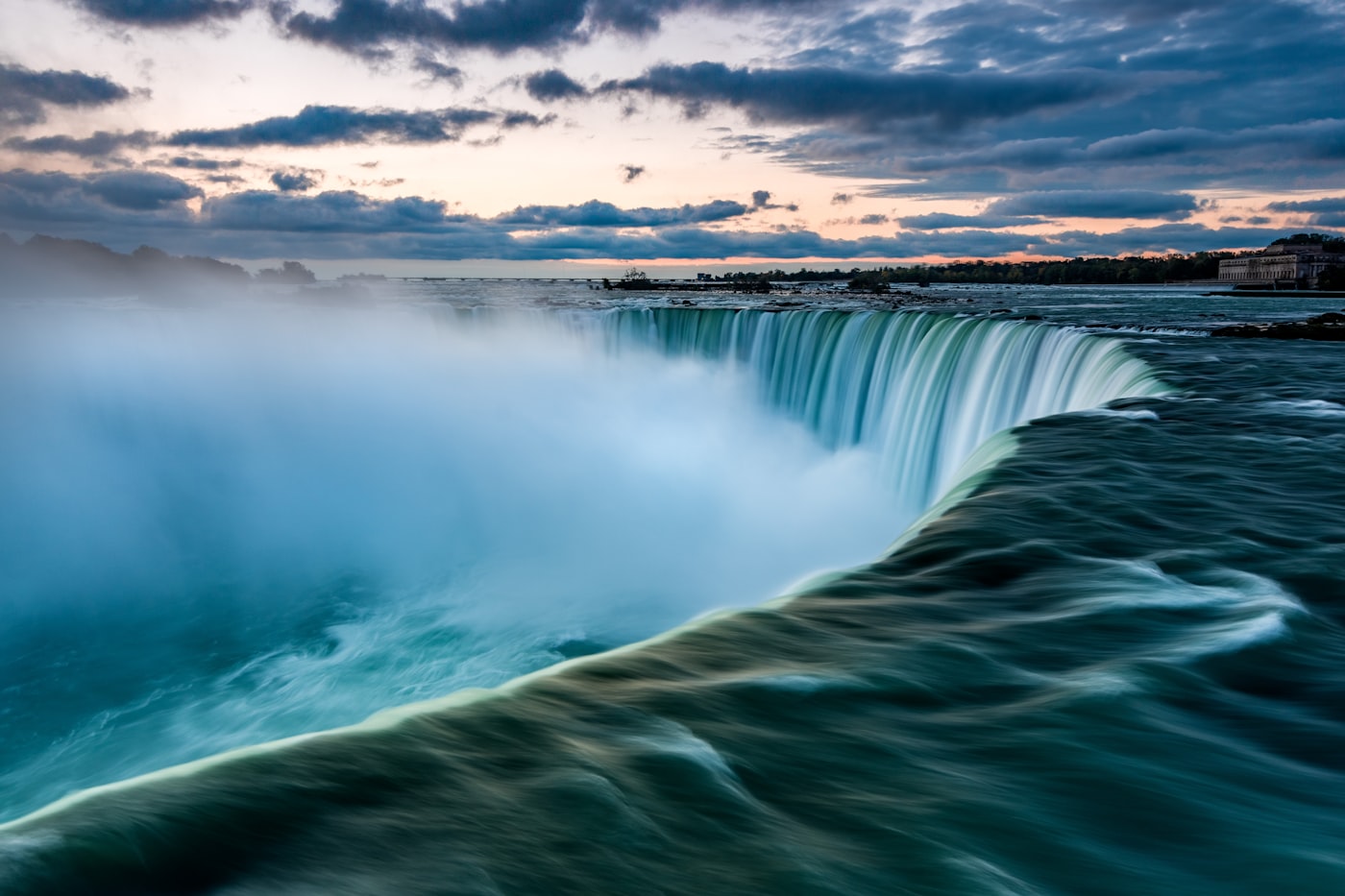
The town of Niagara Falls, on the Canadian side, is built around the view. The Horseshoe Falls — the big curved one on the Canadian side — drops about 57 metres and carries roughly 2,400 cubic metres of water per second during the summer tourist season. The American Falls is smaller, straighter, and (most Canadians will tell you) less impressive from any angle. Together they pour water from four of the five Great Lakes towards the fifth, Lake Ontario.
The Canadian side gets the frontal view of both falls; the American side gets the top of its own. Where the Canadian side lets itself down is the strip of wax museums, haunted houses and themed restaurants on Clifton Hill just above the falls, which feels like an outlet mall for kitsch. Walk past it and hug the riverside Niagara Parkway instead — Sir Winston Churchill's "prettiest Sunday afternoon drive in the world" remains accurate, particularly between Niagara Falls and Niagara-on-the-Lake.
Most visitors do Niagara Falls as a day trip from Toronto (about 90 minutes by car, or two hours by GO Train plus a connecting WEGO bus from the station). That is enough to see the falls, ride the Niagara City Cruises boat (formerly Maid of the Mist) into the spray, walk the Journey Behind the Falls tunnels, and have lunch. If you want a proper weekend, drive 25 minutes north to Niagara-on-the-Lake, a beautifully preserved 19th-century town of about 19,000 people with the Shaw Festival theatre, dozens of wineries, and a waterfront that looks out across Lake Ontario to Toronto on a clear day.
Post-secondary education in the Niagara region
Brock University, in St. Catharines, is the region's main university. Its Goodman School of Business and the cool-climate oenology and viticulture program are the standouts — the latter is probably the best wine-science degree in Canada and supplies a substantial share of the region's working winemakers. Niagara College has a winery and a brewery on its Niagara-on-the-Lake campus, both run as teaching operations and both producing genuinely good wine and beer that you can buy at the campus shop.
Housing & cost of living in the Niagara region
Niagara has been one of the more aggressively heated housing markets in southern Ontario in the 2020s, partly because of its proximity to Toronto and partly because retirees from across Ontario have been moving here. A one-bedroom in St. Catharines or Niagara Falls rents for roughly CAD $1,400–$1,750 in 2026; in Niagara-on-the-Lake itself the rental market is small and expensive (often $2,200+ for a one-bedroom). House prices in the wine-country villages are well above what you might expect for the size of town: a heritage cottage in NOTL frequently exceeds $1.2 million.
Cultural scene, food & tourist attractions
Niagara is Canada's most important wine region after the Okanagan and produces almost all of the country's icewine. The wineries cluster in three sub-regions: the Niagara-on-the-Lake bench (Inniskillin, Peller, Stratus, Trius), the Twenty Valley near Vineland (Tawse, Cave Spring, Henry of Pelham), and the Beamsville Bench (Malivoire, Hidden Bench, Thirty Bench). A guided wine tour leaves from most Niagara hotels in season; a designated driver of your own is the better option if you want to set the pace. The Shaw Festival in NOTL runs from April through October and stages roughly 12 productions a season at three theatres.
The Niagara Glen, a forested gorge below the Whirlpool Rapids, is a hidden secret — a 90-minute hiking loop with class-V whitewater roaring through it that almost no tourists ever find. The Bruce Trail, which finishes at Queenston Heights, gives you a 25-km headwall above the Niagara River from there north.
Sports & recreation
Recreation here is mostly cycling and hiking. The 56-km paved Niagara River Recreation Trail runs from Fort Erie to Niagara-on-the-Lake along the river and is one of the prettiest rides in the country. The Niagara IceDogs of the OHL, in St. Catharines, are the region's main spectator sport; the Toronto Blue Jays' Class A affiliate played here for years before relocating, and a new affiliated team is rumoured for 2027.
The honest take
Niagara Falls itself is a one-day visit, not a destination. The wine country to its north is a two-night, three-day region: stay in a B&B in NOTL or Jordan, do a Shaw matinee, eat at Pearl Morissette or Backhouse, and ride the river trail in the morning. Skip the hotels on Clifton Hill if you can.
Most Popular Museum: Niagara Falls History Museum
When the falls themselves are the main event, choosing a museum is nearly irrelevant — and yet the Niagara Falls History Museum on Zimmermann Avenue earns its place on the itinerary. The building is a civic treasure: the old Niagara Falls Memorial Arena, converted into a museum that traces the city's remarkable history from its geological formation some twelve thousand years ago to the daredevil barrelists and tightrope walkers who made Niagara Falls an international spectacle in the nineteenth century. The Battleground: The War of 1812 gallery is particularly strong, contextualizing a conflict that shaped the Canada-US border as we know it.
For those who prefer the natural history angle, the White Water Walk and the Journey Behind the Falls experience are arguably more educational about the falls themselves. But the history museum offers what those experiences don't: context, narrative, and the chance to understand why this particular geography produced such a strange and vivid human story. The admission is modest and the crowds — unlike at Table Rock — are manageable.
Your Best 5 Days in Niagara Falls & Niagara-on-the-Lake
Most people allot a day to Niagara Falls, see the falls in a light mist, eat a mediocre meal on Clifton Hill, and leave. The people who stay longer discover one of Ontario's richest corridors: the Niagara Escarpment wine country, one of Canada's finest small towns, and a waterfall that genuinely repays repeated viewing.
The Falls, Every Angle
You need a full day to experience the falls properly. Start at Table Rock at sunrise before the crowds arrive — the Horseshoe Falls in the early morning light are otherworldly. Book the Journey Behind the Falls for mid-morning. Take the Hornblower/Niagara Cruises boat at midday to get as close as the falls permit. In the afternoon, walk the Niagara Gorge trail north toward the whirlpool. Evening: the illuminated falls from the Canadian side are spectacular and free.
Niagara-on-the-Lake
Drive the scenic Niagara Parkway north through the fruit-growing belt to Niagara-on-the-Lake, frequently called the prettiest town in Canada. The main street, lined with Victorian storefronts and flowering gardens, makes the claim plausible. Visit Fort George National Historic Site in the morning and spend the afternoon exploring the wineries of the Niagara-on-the-Lake appellation. The town's restaurants, clustered near the Shaw Festival Theatre, are among the best in the region.
Wine Country
The Niagara Peninsula wine region is the most productive in Canada and its icewine production is world-famous. Spend a day on the wine route, visiting four or five estates — Inniskillin, Jackson-Triggs, Peller Estates, and Château des Charmes are all excellent and offer strong tours. The Brock University Cool Climate Oenology and Viticulture Institute winery is also worth a visit for the academic perspective on what makes this micro-climate so unusual.
Niagara Glen & Queenston Heights
Hike the Niagara Glen Nature Reserve, where the trail descends to river level through ancient gorge rocks for the most dramatic perspective of the Niagara River outside of a boat. Pack a lunch and take your time. In the afternoon, walk Queenston Heights Park, where Brock's Monument marks the site of a pivotal 1812 battle, and the escarpment views over the fruit farms below are magnificent.
Welland Canal & St. Catharines
Drive to the St. Catharines Museum and Welland Canals Centre at Lock 3 to watch massive lake freighters being raised and lowered through the locks — one of the more quietly astonishing pieces of engineering in Ontario. The interpretive centre explains the canal's history and the whole spectacle is free to watch. Finish with dinner in downtown St. Catharines, which has quietly become one of the better dining cities in the Golden Horseshoe.
Kingston

- Population
- ~170,000
- Was capital of
- Province of Canada (1841–1844)
- Distance from Toronto/Montreal
- ~260 km / ~290 km
- Anchor institution
- Queen's University
Kingston is a limestone city of about 170,000 on the north shore of Lake Ontario, where the lake drains into the St. Lawrence River and the Thousand Islands begin. It was briefly the capital of the Province of Canada (1841–1844) before the capital moved on, and the 19th-century core is unusually intact — partly because Kingston's economy stagnated in the late Victorian period and partly because the military and the penitentiary gave it something to do while industrial cities pulled ahead. The result, today, is one of Ontario's prettiest small cities and one of the most walkable downtowns in the province.
The old downtown can be walked in an afternoon. City Hall, Market Square, Confederation Basin, the Murney Tower, the Queen's University campus, and the Thousand Islands cruise dock at Crawford Wharf are all within a 25-minute walk of each other. Fort Henry, on the hill above the harbour, is a national historic site and stages a "Sunset Ceremony" performance with the Fort Henry Guard most Wednesday evenings in summer.
Post-secondary education in Kingston
Queen's University, founded in 1841, is the academic anchor. Smith School of Business, the law faculty, and the medical school are the most internationally visible programs; the engineering faculty maintains the country's most-watched orientation traditions. Total enrolment is around 28,000, which gives Queen's an unusual ratio — for a large slice of the year, students are roughly 1 in 6 of the people in Kingston, which shapes the city's rhythm.
The Royal Military College of Canada, on a peninsula across the harbour, is the country's military academy and is open to the public on certain weekends. St. Lawrence College, with a campus on King Street, supplies the region's college-level training in nursing, business, and the trades.
Housing & cost of living in Kingston
Kingston is more affordable than Ottawa or Toronto but has been climbing. A one-bedroom rents for roughly CAD $1,450–$1,750 (more in the immediate downtown core because of student demand). A detached home in an inner neighbourhood like Sydenham or the Williamsville student strip lists for around $700,000–$900,000; comparable suburban homes in the city's west end go for $600,000–$750,000. The city's status as a retirement destination — Kingston has one of the older median ages of any city in Ontario — keeps demand for smaller homes elevated.
Cultural scene, food & tourist attractions
The Thousand Islands cruises that leave from the waterfront are the most photographed activity. The Kingston Penitentiary, decommissioned in 2013, runs guided tours from May through October and is one of the most fascinating heritage sites in eastern Ontario. The Agnes Etherington Art Centre at Queen's holds an unexpectedly strong collection including a Rembrandt that was authenticated only in 2018. For day trips, the Sandbanks Provincial Park beaches in Prince Edward County are 90 minutes west, and the wine region around Picton has emerged in the last decade as Ontario's third wine country.
Sports & recreation
The Kingston Frontenacs of the OHL play at the Slush Puppie Place arena downtown, where Don Cherry once coached. Beyond that, recreation here is on the water — Kingston has been called Canada's "freshwater sailing capital" without much competition. The 1976 Olympic sailing events were held here, and CORK (Canadian Olympic-training Regatta, Kingston) draws international fleets every August.
The honest take
Kingston is the most attractive small city in Ontario by some distance, and it has worked out how to be one. It will not give you a major employer outside the university, the military and the prison system, and winters along the open lake are sharper than they look on a map. But for a weekend break from Toronto or Montreal, and increasingly for a remote-work relocation, it is hard to beat.
Most Popular Museum: Fort Henry National Historic Site
Fort Henry is not a museum in the conventional sense — it is a fully operational mid-nineteenth-century British garrison brought back to life through some of Canada's most committed living history interpretation. Perched on a hill above Kingston Harbour, the fort was built between 1832 and 1836 to defend the Royal Military College and the mouth of the Rideau Canal. Today, in summer months, it is populated by the Fort Henry Guard: students who have trained to a remarkable standard in Victorian military drill, musket firing, artillery demonstrations, and period music.
The Fort Henry Guard Retreat, performed on summer evenings, is one of the finest outdoor spectacles in Ontario — the sunset gun, the precision drill, the full ceremony against the backdrop of the St. Lawrence. Inside the fort, the restored barrack rooms, cookhouses, and artillery magazines tell the story of garrison life with intelligence and specificity. Kingston's position at the intersection of the Rideau Canal, the St. Lawrence, and Lake Ontario made it the most strategically significant town in early Canada, and Fort Henry explains why better than any book.
Your Best 5 Days in Kingston
Kingston is the kind of small city that holds you longer than you expected. The limestone architecture, the heritage waterfront, the proximity to the Thousand Islands, and Queen's University's campus all conspire to make it one of the most walkable and liveable cities in Ontario.
Waterfront & Fort Henry
Walk the Kingston waterfront from Confederation Park to City Hall — the latter is one of the finest examples of neoclassical civic architecture in Canada, built in 1844 when Kingston was briefly the capital of the united Canadas. Cross the causeway to Fort Henry in the afternoon for a self-guided tour, and if timing allows, stay for the evening Retreat ceremony. The views of the St. Lawrence from the fort's ramparts are superb.
Thousand Islands Cruise
Take a morning cruise through the Thousand Islands archipelago, one of the most beautiful freshwater landscapes in North America. The Islands cruise out of Kingston Harbour passes Boldt Castle on Heart Island (technically American territory but visible from metres away), summer estates of the Gilded Age wealthy, and thousands of rocky pine-covered islands. Take the full three-hour tour rather than the shorter version — the outer islands are the most spectacular.
Queen's University & Market
Explore Queen's University campus, whose limestone buildings blend almost seamlessly with the city's historic streetscape. Grant Hall and Convocation Hall are particularly beautiful. Walk north to the Kingston Public Market, which has operated continuously since 1801, making it one of the oldest in Canada. Browse the local produce, artisans, and food vendors, then spend the afternoon walking Princess Street's independent shops and galleries.
Rideau Canal & Gananoque
Drive north along the Rideau Canal system to visit some of its eight locks between Kingston and Ottawa. The Lockmaster's House Heritage Museum at Jones Falls provides good context for the canal's 1832 construction — a massive engineering project that employed thousands of labourers, many of whom died. In the afternoon, drive east to Gananoque, the other gateway town to the Thousand Islands, for dinner on the river.
Penitentiary Museum & Limestone District
The Kingston Penitentiary Museum, housed in the former administration building of North America's oldest federal penitentiary, is one of Canada's most unusual museum experiences. The building tours (offered seasonally) take visitors through the cell blocks, segregation range, and yard of the 1835 prison. It's sobering, fascinating, and thoroughly researched. Spend your last afternoon wandering the Sydenham Street limestone district — some of these nineteenth-century homes have scarcely changed in 150 years.
Windsor

- Metro population
- ~425,000
- Across the river from
- Detroit, Michigan (USA)
- Average 1-bed rent (2026)
- CAD $1,300 – $1,650
- Big employer
- Stellantis (Chrysler), Ford engine plant
Windsor sits across the river from Detroit, Michigan — one of the few places in Canada where the United States is north of you. (Look at a map. It is true.) Population is about 425,000 in the metropolitan area. The auto industry defines the economy: Stellantis (formerly Chrysler) has its assembly plant here, Ford operates engine and casting plants, and a thick supply chain of parts manufacturers feeds both companies. The new NextStar electric-vehicle battery plant, a Stellantis-LG joint venture that began production in late 2024, is the largest manufacturing investment in the city in two generations and is reshaping the local economy.
Windsor is also one of the most diverse small cities in Canada, with significant Lebanese, Italian, Iraqi, Filipino, Indian and East African communities. Erie Street — the Italian heart of the city — was filled in by Lebanese restaurants in the 1980s and is now one of the best mid-priced eating streets in southern Ontario.
Post-secondary education in Windsor
The University of Windsor, with around 16,000 students, is the city's main university. Its Faculty of Law operates a respected dual-degree program with the University of Detroit Mercy; the engineering faculty has long-standing partnerships with the auto industry; the Odette School of Business and the nursing program round out the strengths. St. Clair College, with two campuses, is the area polytechnic and has a particularly strong skilled-trades enrolment relative to most Canadian colleges.
Housing & cost of living in Windsor
Windsor is one of the cheapest medium-sized cities in southern Ontario and remains so even after the post-pandemic price climb. A one-bedroom rents for roughly CAD $1,300–$1,650; the benchmark detached-home price is around $580,000, low for an Ontario city of its size. Property taxes are higher than the provincial average, which buyers from out of province should price into their calculations. Auto-industry wages are unionised and substantial — senior assembly-plant workers can earn in the high $90,000s with overtime — which props up the middle of the local market.
Cultural scene, food & tourist attractions
The Canadian Club Heritage Brand Centre at the Hiram Walker distillery offers the most underrated tour in southwestern Ontario — a guided walk through the 1894 Italianate office building where Canadian Club whisky was blended for over a century. The waterfront sculpture park along the Detroit River, with its 30+ outdoor sculptures, has the best view of the Detroit skyline from any angle. The Art Gallery of Windsor, on the riverfront, has a strong Inuit and Group of Seven collection. For an unusual day trip, drive 30 minutes south to Point Pelee National Park, the southernmost point of mainland Canada and one of North America's premier birdwatching sites during the May warbler migration.
Food in Windsor is, perversely, one of the city's best assets. The Erie Street strip mixes Sicilian (Spago, Mezzo) with Lebanese (Mazaar), and the city's pizza style — Windsor pizza, with shredded pepperoni, canned mushrooms, and a thinner crust than Detroit's — has its own loyal fan base. Caesar's Windsor, the casino on the riverfront, draws weekend tourists from Detroit; in the other direction, Detroit's restaurants are a tunnel-bus ride and a passport away.
Sports & recreation
The Windsor Spitfires of the OHL play at the WFCU Centre and have won the Memorial Cup three times since 2009. Beyond junior hockey, recreation is mostly along the Detroit River cycle path (the Windsor section of the Trans Canada Trail) and at the regional parks system. Detroit's professional teams — Tigers, Lions, Pistons, Red Wings — are a 15-minute tunnel ride away and many Windsor families hold Detroit-side season tickets.
The honest take
Windsor sells itself short. It has cheaper housing than any other city of its size in southern Ontario, a credible regional university, two professional sports cities at the end of a tunnel, the Erie Street food scene, and the new NextStar plant promising a generation of skilled-trades work. The downsides are real — some of the highest summer humidity in the country, a downtown core still recovering from a long stretch of disinvestment, and a job market heavily concentrated in one industry — but on balance it deserves more attention than it gets.
Most Popular Museum: The Windsor Community Museum (Chimczuk Museum)
Windsor's main community museum, located in the historic François Baby House — one of the oldest surviving buildings in southwestern Ontario — has been reimagined and expanded over the years into a genuine civic treasure. The François Baby House dates to the 1790s and served as American military headquarters during the War of 1812; its walls have absorbed more history than most structures in the region. The museum's core collection traces Windsor's transformation from a fur-trade river crossing into one of North America's most important automotive manufacturing cities.
The Detroit border connection pervades everything here in the best way: Windsor is the only Canadian city south of the contiguous United States, and its cultural identity — jazz, soul food, cross-border families, Prohibition-era rum-running — is unlike anywhere else in the country. The museum's Windsor-Detroit relationship galleries are particularly fascinating, documenting the underground railroad terminus, the jazz clubs that predated Chicago's scene, and the rum-running trade that made certain Windsor families extremely comfortable in the 1920s.
Your Best 5 Days in Windsor
Windsor is genuinely different from any other Ontario city. The river here runs south into the United States, Detroit's skyline glitters across the water, and the city's character — Black heritage, automotive history, jazz, and market gardens — resists easy categorization.
Riverfront & Detroit Views
The Windsor Riverfront Parkway offers the most dramatic view of a foreign city from Canadian soil. Walk or cycle the waterfront from Dieppe Park east toward Coventry Gardens — the Peace Fountain here is the only floating fountain of its kind in North America. Watch the freighters navigating one of the world's busiest commercial waterways. The Ambassador Bridge, when lit at night, makes for remarkable photography from the Canadian side.
Museum Day & Walkerville
Visit the Chimczuk Museum in the morning for the city's deep history, then drive east into Walkerville — the model company town built by Hiram Walker around his distillery in the 1850s. The neighbourhood's Tudor revival architecture, the Hiram Walker distillery (still operating as Canadian Club), and the beautiful Walkerville streets make it one of the most intact Victorian planned communities in Canada. The Willistead Manor, built in 1906, is open for tours.
Essex County Wine Country
Windsor sits at the heart of the Lake Erie North Shore wine appellation, Canada's warmest and sunniest wine region. Drive along County Road 50 through Amherstburg and Kingsville to visit several of the region's wineries — Pelee Island Winery, Sprucewood Shores, and the wineries around Kingsville represent the local character well. Kingsville itself is a well-preserved small town worth an afternoon stroll.
Point Pelee & Pelee Island
Point Pelee National Park — the southernmost point of mainland Canada — is a migratory bird and Monarch butterfly corridor of international significance. Walk the Tip, Canada's southernmost footpath, and watch spring or fall migration from the observation platforms in the marsh. If time and scheduling allow, take the ferry from Leamington to Pelee Island, the most southerly inhabited point in Canada, for a day of cycling, wine, and Lake Erie sunsets.
Fort Malden & Amherstburg
Drive south to Amherstburg to visit Fort Malden National Historic Site, the British fort that played a central role in the War of 1812 and the Underground Railroad. The town itself has a beautifully preserved main street and the North American Black Historical Museum, which documents the freedom-seekers who crossed the Detroit River to liberty in Canada. It's a moving and important final day in the region.
Kitchener-Waterloo

- Combined metro population
- ~625,000
- Anchor institution
- University of Waterloo (computer science)
- Average 1-bed rent (2026)
- CAD $1,650 – $1,950
- Distance from Toronto
- ~110 km west
Kitchener and Waterloo are technically two cities and a regional municipality (Cambridge is the third), but functionally they are one place. About 625,000 people live in the combined area. The region's economy was rebuilt in the 2000s around technology — BlackBerry's headquarters in Waterloo, the University of Waterloo's co-op program funnelling graduates into Silicon Valley and back again, OpenText, and a continuing wave of startups in fintech, AI and quantum computing have produced a tech corridor that is the densest in Canada outside Toronto and Vancouver.
The cities have a German cultural inheritance that survives in Oktoberfest (the largest Bavarian festival outside Germany, every October), the St. Jacobs farmers' market north of Waterloo, and the Mennonite community in the surrounding countryside. The ION light rail line, opened in 2019, connects Conestoga Mall in north Waterloo to Fairview Park Mall in south Kitchener and has been a quiet success in shaping the region's growth.
Post-secondary education in KW
The University of Waterloo is the most internationally recognised institution in the region and arguably the most internationally recognised English-Canadian university for engineering and computer science. The co-op program, in which students alternate four-month school and work terms throughout their degree, places students at Google, Microsoft, Apple, Amazon, every Canadian bank, and roughly every startup in the corridor. Wilfrid Laurier University, a kilometre away, is a smaller comprehensive university with a particularly strong School of Business and Economics. Conestoga College, the regional polytechnic, has grown rapidly and now enrolls more international students than either of the universities.
Tuition for domestic students at Waterloo runs around $9,000–$17,000 a year for engineering and computer science, on the higher end of Ontario's range. International tuition for the same programs is in the $60,000–$80,000 range, reflecting the international demand.
Housing & cost of living in KW
Housing in KW has caught up sharply with Hamilton. A one-bedroom apartment rents for roughly CAD $1,650–$1,950 in 2026; a detached home in a desirable Kitchener or Waterloo neighbourhood lists at $850,000–$1.1 million. The student rental market in north Waterloo near the university distorts pricing — "purpose-built student accommodation" buildings rent rooms for $900–$1,300 per person and crowd out conventional rental supply.
Cultural scene, food & tourist attractions
The Kitchener-Waterloo Symphony, the THEMUSEUM in downtown Kitchener, and the Centre In The Square performance hall are the larger institutions. Belmont Village in Kitchener and Uptown Waterloo each have a credible mid-priced restaurant strip; the Waterloo Park area has a small but serious craft-brewery cluster (Block Three, Gosling, Innocente). The St. Jacobs farmers' market, 10 km north of Waterloo, is the largest year-round market in Canada and is genuinely worth the drive.
Sports & recreation
The Kitchener Rangers of the OHL are a perennial league contender. The Waterloo Warriors and Laurier Golden Hawks both compete in U Sports and have produced a long list of CFL players. Beyond spectator sport, the region is good for cycling (the Iron Horse Trail and the Walter Bean Grand River Trail combined give you 40 km of paved trail) and for cross-country skiing on the Ontario Trillium Trail north of St. Jacobs.
The honest take
Kitchener-Waterloo is the only mid-sized city in Canada that has built a credible technology economy. For a software engineer or a product designer who does not want to live in Toronto or Vancouver, this is essentially the only domestic option, and it has worked out well for two decades of Waterloo graduates who chose to stay.
Most Popular Museum: The Waterloo Region Museum
The Waterloo Region Museum, located within the Doon Heritage Village complex just south of Kitchener, is the primary civic museum for a region whose history is genuinely fascinating and underappreciated. The Mennonite settlement story is the most distinctive thread: the Pennsylvania Germans who came north in the early 1800s built an agricultural civilization that still shapes the landscape of Wellington and Waterloo counties. The museum's permanent collections address Haudenosaunee and Anishinaabe history, the Mennonite and Amish communities, the successive waves of German, Polish, and Portuguese immigration that defined Kitchener's character, and the wartime trauma of a German-named city during two world wars.
The adjacent Doon Heritage Village — a living history complex with over thirty historic structures — brings the Mennonite and early settler experience to life in a manner that is genuinely engaging rather than merely educational. Costumed interpreters demonstrate traditional crafts, the schoolhouse is open, and the general store is stocked as it would have been in 1914. For families especially, this is a full half-day commitment and worth every minute.
Your Best 5 Days in Kitchener-Waterloo
The twin cities of Kitchener and Waterloo have rebranded themselves as Canada's Technology Triangle — and the tech sector is real — but the deeper story involves Mennonite farmland, an unmatched Oktoberfest, and two excellent universities within walking distance of each other.
Uptown Waterloo & the Universities
Start in Uptown Waterloo, which has transformed into one of the most walkable and stylish urban villages in southwestern Ontario. Walk to the University of Waterloo campus — the engineering and mathematics faculties here have produced a remarkable concentration of Silicon Valley engineers and local tech founders. Cross into Wilfrid Laurier University's smaller, more intimate campus. The Laurier campus gallery has rotating exhibitions worth catching. Evening: the restaurants along King Street North are excellent.
Mennonite Country
Drive west into Waterloo County's Mennonite heartland. The villages of St. Jacobs and Elmira are gateway communities where horse-drawn buggies still share the road with cars. The St. Jacobs Farmers' Market — open Thursday and Saturday — is one of the finest in Ontario, with Mennonite vendors selling exceptional preserves, baked goods, and produce. Drive further into the countryside along the Mennonite Heritage Route to understand the agricultural landscape that defines the region.
Waterloo Region Museum & Doon Heritage Village
Spend the morning at the museum for historical context, then spend the afternoon in Doon Heritage Village. The combination tells the full story of the region's settlement far better than either element alone. In the evening, return to downtown Kitchener for dinner along King Street West, which has developed a strong independent restaurant scene quite distinct from Uptown Waterloo's vibe.
Cambridge & the Grand River
Drive south to Cambridge, the third city in the regional municipality and the most architecturally rewarding. The historic Galt core — built on spectacular Dumfries sandstone — has one of the most beautiful main streets in Ontario, with stone commercial buildings lining the Grand River. Walk the Cambridge trail along the river south to the old textile mills. The Cambridge Butterfly Conservatory, a year-round tropical conservatory, is an unexpected delight.
Elora & the Gorge
Drive north to Elora, a nineteenth-century mill village built on the edge of a spectacular limestone gorge cut by the Grand River. The Elora Gorge Conservation Area allows tubing through the gorge in summer — an experience unique to this part of Ontario and completely exhilarating. The village itself, with its stone buildings and independent shops, is consistently voted one of the most beautiful in Ontario. Return to Kitchener via Fergus, another handsome limestone mill town worth a brief stop.
Thunder Bay & the North
- Thunder Bay population
- ~120,000
- Distance to Toronto / Winnipeg
- ~1,400 km / ~700 km
- Notable park
- Sleeping Giant Provincial Park
- Anchor institution
- Lakehead University
Thunder Bay, on the north shore of Lake Superior, is the only city of any size in northwestern Ontario. About 120,000 people live there. It is a long drive from anywhere — 1,400 km from Toronto, 700 km from Winnipeg — and that remoteness is part of the point. The Sleeping Giant peninsula, visible across the bay from downtown, is one of the most photographed natural features in the province; the trail to its top is a 22 km out-and-back that takes a full day. The city has a large Finnish heritage (Finnish-language signage still appears on some Bay Street businesses), a major port handling grain and potash bound for the Atlantic, and a substantial Indigenous population that includes the largest urban Anishinaabe community in Canada.
Sudbury, 1,000 kilometres east, is an old nickel-mining city that spent the 1970s reclaiming the moonscape the smelters had made; it is now surprisingly green, with Science North (the country's second-largest science centre, set partly inside an old mine), a big Franco-Ontarian population, and Laurentian University, currently rebuilding after a 2021 financial restructuring. Sault Ste. Marie, halfway between Thunder Bay and Sudbury along the lake, anchors the locks on the St. Marys River and is home to a steel mill, a casino, and the start of the Algoma Central Railway tour through the Agawa Canyon.
Post-secondary education in northern Ontario
Lakehead University, in Thunder Bay, is the largest university in northwestern Ontario, with around 9,500 students; its forestry, engineering and natural-resources programs are the regional strengths. Confederation College, also in Thunder Bay, is the polytechnic. In Sudbury, Laurentian University has rebuilt enrolment back to around 7,000 after the 2021 restructuring; the Northern Ontario School of Medicine, jointly run with Lakehead, is the country's first medical school built specifically to train doctors who will practice in northern, rural and Indigenous communities.
Housing & cost of living in the North
Housing is dramatically cheaper than southern Ontario. In Thunder Bay a one-bedroom apartment rents for roughly CAD $1,100–$1,400, and a detached home costs around $360,000. Sudbury is similar. The cost-of-living advantage is partly offset by higher heating costs (winters are noticeably colder than Toronto's) and higher driving costs — the region's economy assumes everyone has a car. Food prices, particularly fresh produce, are higher than in southern Ontario because of the trucking distance.
Cultural scene, food & tourist attractions
The Terry Fox Memorial, on the Trans-Canada Highway just east of Thunder Bay, marks the spot where the Marathon of Hope ended in 1980. Fort William Historical Park, on the city's west side, is one of the most ambitious living-history reconstructions in Canada — a re-creation of the early 19th-century inland headquarters of the North West Company. Eat the Persian (a local cinnamon-and-pink-icing pastry, found nowhere else) at the Persian Man, and the Finnish pancakes at the Hoito co-operative restaurant if it has reopened (it has been struggling and intermittently closed since 2020).
Sports & recreation
The North's sporting calendar is shaped by the seasons rather than by professional teams. Sleeping Giant in summer (hiking, swimming in 5°C water if you are brave), Loch Lomond Ski Area in winter, the Sibley Peninsula's interior canoe routes for the patient. Junior hockey — the Sudbury Wolves of the OHL, the Soo Greyhounds in Sault Ste. Marie — is the closest the region gets to professional sport.
The honest take
Northern Ontario is not a city break. It is for people who want to live near or visit large, raw landscapes. The drive from Thunder Bay to Sault Ste. Marie along Lake Superior is the most beautiful stretch of the Trans-Canada Highway east of the Rockies. The towns themselves can feel left behind by the rest of the province, and they often are; the medical school in Sudbury and the harbour in Thunder Bay are real bright spots, but the region's politics are dominated by a sense of being an afterthought to the south. Visit knowing what you are visiting.
Most Popular Museum: Thunder Bay Museum
The Thunder Bay Museum, housed in the former courthouse and jail building at Donald Street East, is one of the most geographically specific museums in Ontario — and in a city as remote and historically distinctive as Thunder Bay, that specificity is a virtue. The collections cover Anishinaabe and Métis history, the fur trade era when Fort William was the inland headquarters of the North West Company, and the grain trade that made Thunder Bay the largest grain-handling port in the world at its peak. The recreated fur trade exhibits are solid, but the most powerful galleries are those addressing the contemporary Indigenous experience and the city's ongoing relationship with its roots.
For the natural history side, the Science North satellite in Sudbury offers a good comparison point, but in Thunder Bay specifically, Old Fort William — the living history recreation of the North West Company's inland headquarters — is arguably the more immersive experience. The fort, located twenty minutes south of the city, reconstructs the 1815 fort complex with forty-two period buildings and an extraordinary program of hands-on living history. Taken together, the downtown museum and Old Fort William give a thorough picture of one of Canada's most consequential fur-trade cities.
Your Best 5 Days in Thunder Bay & the North
Thunder Bay is the gateway to northern Ontario's wilderness and one of the most interesting small cities in the country — a place where Finnish sauna culture, Anishinaabe heritage, and grain elevator silhouettes produce something entirely its own.
The Waterfront & the Sleeping Giant
Thunder Bay's harbour, with its massive grain elevators rising from the lakeshore and the Sleeping Giant Provincial Park promontory visible across the bay, is one of the great views in Ontario. Walk the waterfront promenade, then drive or take a boat to the Sleeping Giant — the mesa formation of rock that resembles a reclining figure and dominates Thunder Bay's visual identity. The Top of the Giant trail rewards hikers with views over Lake Superior that are among the finest anywhere.
Old Fort William
Spend the full day at Fort William Historical Park — one of the most ambitious living history sites in Canada. The reconstructed North West Company headquarters employs over a hundred costumed interpreters in summer, and the demonstrations of canoe-building, fur grading, blacksmithing, and Indigenous-trader relationships are genuinely sophisticated. The Grande Hall feast (book in advance) provides the complete immersive experience. This is not a children's attraction — it's rigorous and fascinating for adults.
Kakabeka Falls & the Northwest
Drive west to Kakabeka Falls Provincial Park, where the Kaministiquia River drops forty metres over a broad limestone escarpment — a waterfall sometimes called the Niagara of the North. The interpretive centre documents the Anishinaabe legend of Green Mantle, who led an enemy war party over the falls. In the afternoon, continue northwest to the Shuniah area and the beautiful farm country of the Sibley Peninsula Road for a view of Thunder Bay from the north shore.
Lake Superior's North Shore
Drive east along Highway 17 — one of the most spectacular road trips in Ontario. The Canadian Shield meets Lake Superior in a series of headlands, bays, and ancient rock formations that humbles the imagination. Stop at Amethyst Mine Panorama for gemstone hunting (Thunder Bay is surrounded by the largest amethyst deposits in North America), then continue to Ouimet Canyon for a look into one of the most dramatic geological formations on the Shield.
Finlandia & the City
Thunder Bay has the highest concentration of Finnish Canadians of any city outside Finland. Explore this legacy through the Scandinavian-influenced architecture, the remaining public saunas (Kangas Sauna on Bay Street is a local institution), and the Finlandia Club, which has served Finnish food and community events since 1910. Visit the Terry Fox Memorial, just east of the city where Fox was forced to end his Marathon of Hope — one of the most moving roadside monuments in Canada.
Ontario FAQs
What is the legal drinking age in Ontario?
19. It is the same across every Ontario city. (Alberta, Manitoba and Quebec are 18; everywhere else in Canada is 19.) Alcohol used to be sold only through government-run LCBO stores and The Beer Store; since 2015 you can also buy it in grocery stores, and since 2024 in convenience stores. Restaurants can serve until 2 a.m.
What is HST and how much is it?
13 percent. It is the Harmonized Sales Tax, a combination of the 5 percent federal GST and the 8 percent Ontario provincial portion. It applies to almost everything you buy. Prices in Ontario are quoted before tax, unlike in some countries, so the sticker price is not what you pay at the till.
How do I get between Toronto and Ottawa?
Fastest and easiest is the VIA Rail train, which takes about 4 hours 20 minutes and runs eight or nine times a day. Driving is about 4.5 hours on Highway 401 and then 416 — straightforward but boring. Flying makes sense only if you are connecting elsewhere; Pearson-to-Ottawa is technically an hour in the air, but the total door-to-door time is roughly the same as the train.
Is Ontario safe for solo travellers?
Yes. Toronto, Ottawa, Kingston and Niagara are all comfortably walkable for a solo traveller at night. The usual big-city caution applies — do not leave a bag unattended, avoid empty subway cars late at night — but violent crime against visitors is rare. Hitchhiking is not recommended anywhere in northern Ontario; distances are long and assistance is slow to arrive.
Is Niagara Falls worth a full day?
A full day is enough. Two days is too much unless you are also doing Niagara-on-the-Lake and a winery tour. An early start from Toronto (catch the 8 a.m. train), two hours at the falls, an afternoon on the boat and the Journey Behind the Falls tunnels, and you are home for dinner.
What is cottage country?
It is the collection of lake districts north of Toronto — Muskoka and the Kawarthas are the best known — where Ontarians have built second homes for more than a century. From the Friday afternoon of Victoria Day (the last Monday before May 25) to the Thanksgiving Monday in October, the 400-series highways north of Toronto are clogged with cottage traffic. Renting a cottage for a week in July will run you anywhere from CAD $2,500 to $12,000 depending on size and lake.
Can I drive from Toronto to Hudson Bay?
No, at least not on public roads. The northernmost Ontario community with a road connection is Pickle Lake, 530 kilometres north of Thunder Bay. Further north, communities like Fort Severn on Hudson Bay are reachable only by air, or by winter ice road when it is cold enough.
Where should I move to in Ontario as a newcomer?
It depends on your job. Toronto remains the largest landing pad for newcomers because of job density and existing diaspora communities, but housing costs are the highest in the country. Ottawa is the best value for federal-sector or biotech work. The Waterloo region is the best fit for tech, Hamilton for healthcare, London for insurance and academia, Windsor for skilled-trades manufacturing. Outside the big cities, Kingston and the Niagara region attract a steady flow of remote-work relocators.
Which Ontario university should I apply to?
For computer science and engineering, Waterloo. For medicine, Toronto, McMaster, Western, Queen's or NOSM (Sudbury/Thunder Bay) depending on your match. For business, Ivey at Western or Rotman at Toronto for case-method MBA-style programs; Smith at Queen's, Schulich at York, DeGroote at McMaster, Goodman at Brock and Telfer at Ottawa fill out the next tier. For law, Toronto, Osgoode (York), Western, Queen's, Ottawa and Windsor are the main faculties.
Is Ontario a good place to retire?
For Canadians from elsewhere, increasingly yes — Niagara, Prince Edward County, the Kawarthas and Kingston have all attracted significant retiree migration in the 2020s. Ontario's healthcare system, while strained, has the deepest specialist coverage in the country. The main negatives are property taxes (higher than Alberta or BC) and the cold winters; the main positives are family proximity for retirees with children in the GTA, year-round culture, and a long warm-weather season by Canadian standards.
Education & Post-Secondary Institutions
Ontario is home to the largest and most diverse post-secondary system in Canada, with over 40 universities and colleges serving more than 800,000 students. From world-ranked research universities in Toronto and Waterloo to specialized colleges and bilingual institutions, Ontario's post-secondary landscape is unmatched in scope.
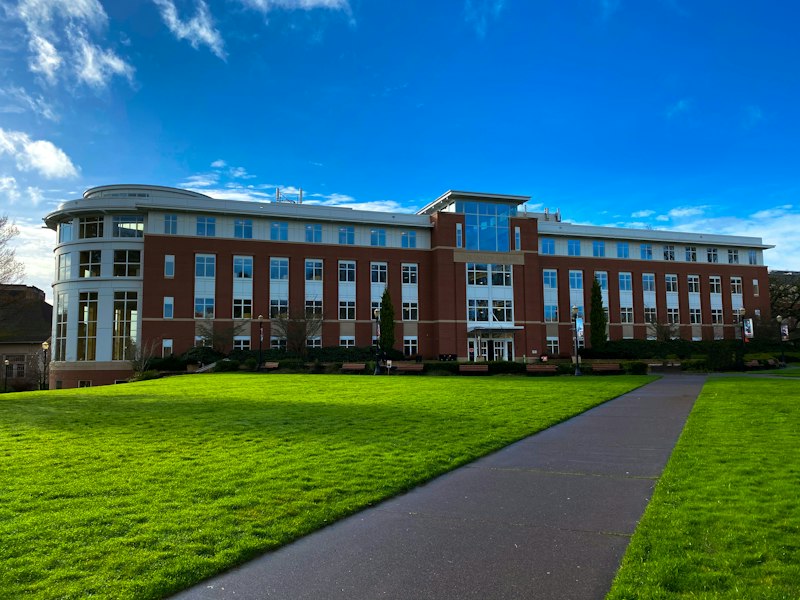
University of Toronto (U of T)
Canada's top-ranked university and among the world's top 25, U of T is a global powerhouse in medicine, law, computer science, philosophy, and business (Rotman School of Management). Its three campuses — St. George (downtown), Scarborough, and Mississauga — collectively enroll over 90,000 students. Pioneering research includes the discovery of insulin and the development of deep learning AI.

University of Waterloo
Canada's innovation and technology university, home to the world's largest cooperative education program. Waterloo's computer science, engineering, mathematics, and quantum computing programs are globally elite. The David R. Cheriton School of Computer Science produces more startup founders per capita than almost any university in the world.

McMaster University
A world leader in health sciences and medical education, McMaster pioneered the problem-based learning model of medical education now used around the world. Also renowned for engineering, business, and nuclear science (it operates Canada's largest university-based nuclear reactor).

Western University
Known for the Ivey Business School (one of Canada's top-ranked business schools), medical and dental schools, law, and social sciences. Western is also known for a vibrant campus life and strong research culture, with particular excellence in geophysics and space science.
Queen's University
One of Canada's most selective universities with an intense school spirit and alumni loyalty. Queen's is known for its Smith School of Business (top-ranked MBA), engineering, law, and medicine. The limestone campus in Kingston is among the most architecturally beautiful in the country.
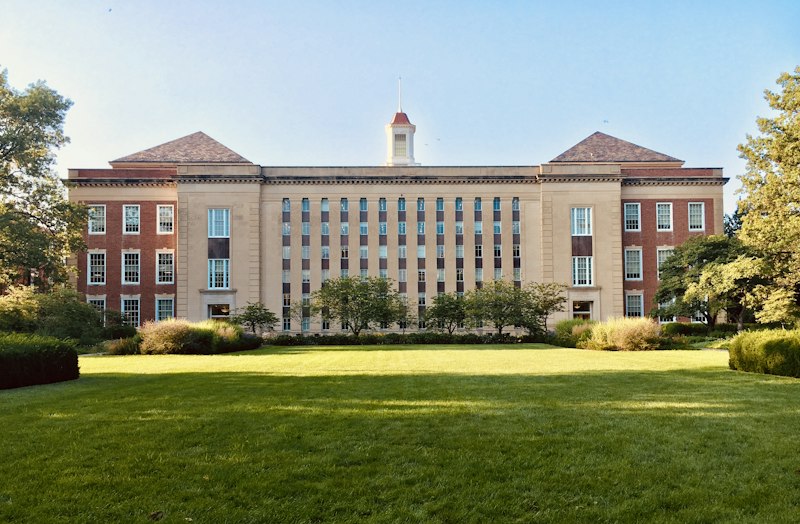
York University
Ontario's third largest university, known for Osgoode Hall Law School (one of Canada's top law schools), the Schulich School of Business, and strong programs in arts, media, and social sciences. York's diverse and international campus reflects the multicultural character of Toronto.

Humber College / Seneca Polytechnic / George Brown
Toronto's major colleges of applied arts and technology offer post-secondary diplomas and degrees in media, business, hospitality, health, technology, and trades. George Brown's culinary and hospitality programs are among the best in Canada; Humber's media and film programs feed Toronto's thriving production industry; Seneca's aviation program is nationally recognized.
Sports Teams & Athletic Culture
Ontario is the heart of Canadian professional sport. Toronto alone fields teams in four major North American leagues, and the province's sports ecosystem — in media, youth development, and stadium culture — is the largest in the country.
 LEAFS
LEAFS
Toronto Maple Leafs
The most valuable franchise in the NHL and the centre of Toronto's sporting universe. The Leafs have not won the Stanley Cup since 1967 — a drought that has become cultural mythology — but Scotiabank Arena sells out every night and the media ecosystem around the team rivals any major European football club.
 SENS
SENS
Ottawa Senators
The Sens play at Canadian Tire Centre in Kanata and have been through a full rebuild since 2017, emerging with a young, competitive roster. The long-discussed downtown arena at LeBreton Flats would transform the franchise if built.
 RAPS
RAPS
Toronto Raptors
Canada's only NBA team won the 2019 championship with Kawhi Leonard and Kyle Lowry. "We The North" became genuine civic identity. The Raptors draw fans from across Canada who have no other NBA option, creating a national following unlike any other franchise in the league.
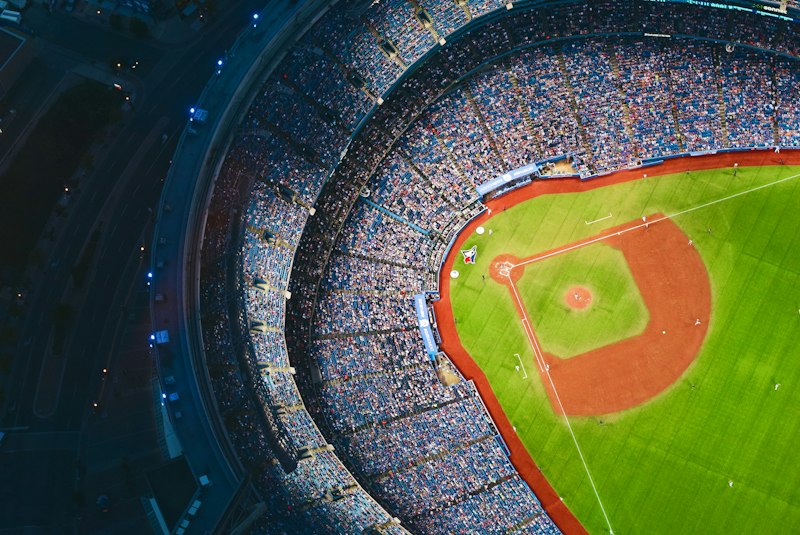 JAYS
JAYS
Toronto Blue Jays
Back-to-back World Series champions in 1992 and 1993 — the only Canadian MLB franchise. Rogers Centre is not the most atmospheric ballpark, but a winning Jays team fills it with fans from Windsor, London, Hamilton and everywhere in between.
 ARGOS
ARGOS
Toronto Argonauts
The oldest professional sports franchise in North America, founded in 1873, with more Grey Cup victories than any other team. BMO Field on the waterfront seats 30,000.
REDBLK
Ottawa Redblacks
The Redblacks joined the CFL in 2014 and immediately became competitive, reaching the Grey Cup Final in their second season and winning in 2016. TD Place at Lansdowne Park is one of the better CFL venues.
TI-CATS
Hamilton Tiger-Cats
The Tiger-Cats play at Tim Hortons Field in Hamilton with one of the most passionate atmospheres in the CFL. The Ticats have appeared in multiple recent Grey Cup Finals and their black-and-gold colours are visible across the Golden Horseshoe on game weekends.
 TFC
TFC
Toronto FC
TFC won MLS Cup in 2017 in a dramatic penalty shootout. BMO Field is one of the better soccer venues in North America and the Red Patch Boys supporters section creates European-style atmosphere that has influenced MLS supporter culture continent-wide.
Culture, Arts & Identity
Ontario is too large and too varied to have a single culture. Toronto is genuinely multicultural in a way that few cities in the world match — over half the population was born outside Canada. Ottawa is bilingual and government-shaped. Hamilton is post-industrial and arts-driven. Northern Ontario has a character rooted in mining, boreal wilderness and Indigenous communities that has almost nothing to do with the 905-area-code suburbs.
Toronto's Multicultural Reality
More than 140 languages are spoken in Toronto, which is statistically among the most demographically diverse cities on the planet. Neighbourhoods like Kensington Market, Little Portugal, Greektown on the Danforth, Little India on Gerrard East, Chinatown on Spadina and Scarborough's South Asian corridor aren't cultural theme parks — they're working communities where the restaurants, grocery stores and community organizations reflect genuine daily life. The St. Lawrence Market, operating in some form since 1803, is one of the oldest and best public food markets in North America.
The Toronto Arts Scene
The Toronto International Film Festival (TIFF), held every September, is the largest publicly attended film festival in the world and regularly launches Oscar campaigns. The National Ballet of Canada, the Canadian Opera Company and the Toronto Symphony Orchestra all operate from the Four Seasons Centre and Roy Thomson Hall at a level comparable to their counterparts in major European cities. The Art Gallery of Ontario (AGO), redesigned by Frank Gehry (who grew up in Toronto), has one of Canada's finest collections.
Ottawa and Federal Culture
Ottawa's identity is shaped by being the capital: the National Gallery, the Canadian Museum of History across the river in Gatineau, the National War Memorial on Confederation Square, and the canal that becomes the world's largest naturally frozen skating rink in winter. The city's bilingual character means that French is genuinely in daily use — less than Montreal, but enough that Ottawa is a different experience from Toronto.
Northern Ontario
Everything north of a line drawn from Georgian Bay to the Quebec border is a different world from the densely populated south. Sudbury, Timmins, Sault Ste. Marie, Thunder Bay — mining and forestry cities that grew fast and contracted sharply — have their own culture of resourcefulness and distance. The Group of Seven painted the Canadian Shield north and west of Toronto, and that landscape still rewards the painter and the traveller who gets off the Trans-Canada.
Ontario's Hall of Icons
Ontario produces more than its share of Canadian icons — partly because it's home to a third of the country, partly because Toronto has been the centre of the English-Canadian publishing, broadcasting and music industries for a century. The names below stretch from Stratford's Tom Patterson, who invented a Shakespeare festival out of nothing, to a basketball-revival prime minister.
Margaret Atwood
Two Booker Prizes, the Giller, the Governor General's Award, the Arthur C. Clarke. The Handmaid's Tale remade dystopian fiction; Alias Grace remade the historical novel. Atwood is, by any reasonable measure, the most internationally read Canadian writer alive.
Drake
Forest Hill–raised, Degrassi graduate, Grammy-winning rapper, OVO label founder, Toronto Raptors global ambassador. Drake didn't invent the city's "the 6" mythology, but he made it international shorthand. The CN Tower lit up "Toronto Raptors World Champions" in 2019 in part because of him.
Wayne Gretzky
The Great One. He scored his first goal at three, broke Bobby Orr's records by twenty, and finished his career as the only player to score more than 200 points in a single NHL season — four times. The Wayne Gretzky Sports Centre in Brantford and a downtown statue mark the hometown.
Alice Munro
Nobel Prize for Literature, 2013 — the first Canadian to win the prize. Munro's Huron County stories transformed the short story as a form, and the small towns of southwestern Ontario she wrote about (Wingham, Goderich, Clinton) remain places her readers visit on slow weekends.
Lester B. Pearson
Ontario's most consequential political export: 14th Prime Minister, Nobel Peace Prize laureate (1957), inventor of UN peacekeeping during the Suez crisis. Universal health care, the Canadian flag and the Canada Pension Plan all date to his minority governments.
Steve Nash & the Raptors generation
Toronto's basketball boom — Andrew Wiggins, Jamal Murray, Shai Gilgeous-Alexander, Tristan Thompson, RJ Barrett — has produced more NBA stars per capita over the last decade than any other city outside the United States. Brampton in particular has become a quiet basketball factory.
Neil Young
Born at Toronto General, raised partly in Omemee (immortalized in "Helpless"), and the most enduring Canadian voice in American rock. Young still performs occasionally at Massey Hall, the room he loves most, and his memoir Waging Heavy Peace reads as a long love letter to small-town Ontario.
Jim Carrey
The most successful Canadian comedian of his generation — Ace Ventura, The Mask, Dumb and Dumber, then a serious turn in The Truman Show and Eternal Sunshine. Carrey grew up in suburban Toronto, dropped out of school in Grade 10 to support his family, and got his start at Yuk Yuk's downtown.
Frederick Banting & Charles Best
The team that isolated insulin in a Toronto laboratory in the summer of 1921. Banting received the Nobel Prize in 1923, the youngest medicine laureate in history at the time. The patent was sold to the University of Toronto for one dollar each — a decision that shaped global diabetes care for a century.
Regional Cuisine: What Ontario Actually Eats
Ontario's food culture is impossible to summarize honestly because it's really five or six food cultures stacked on top of one another. Toronto is one of the most genuinely globalised eating cities on Earth. Niagara is wine country. The Mennonite belt around Waterloo cures sausage and bakes pies the way it has since the 1820s. Northern Ontario is a fishing-and-foraging culture that overlaps with Indigenous food traditions. Below, the dishes that travellers should make a point of trying.
Peameal Bacon Sandwich
Toronto's signature breakfast: lean back bacon, rolled in cornmeal, sliced thick, fried, and stuffed into a Kaiser roll with mustard. Carousel Bakery at the St. Lawrence Market has been serving the iconic version since the 1980s and the line at 9 a.m. on a Saturday is part of the experience.
Butter Tarts
The Ontario tart, fiercely defended by region. Runny or set? Raisins or no raisins? The Kawarthas hold an annual tour of butter-tart makers; Doo Doo's Bakery in Bailieboro and the Maid's Cottage in Newcastle are the benchmarks. The runny-with-raisins camp will fight you. So will the no-raisins camp.
Wood-Fired Wings, Hamilton-Style
Hamilton claims more wings per capita than any city in the world. The dry rub, the exact post-deep-fry sauce-toss, and the small-pub tradition all matter. The Cannon — at the corner of Cannon and Sherman — is the local benchmark. Order them medium and a pint of something local; a thousand bar arguments are won this way.
Niagara Ice Wine
The wine Ontario is most famous for. Niagara's freezing winters allow vintners to leave grapes on the vine until they're frozen solid; the small amount of concentrated juice produces a syrupy, intensely flavoured dessert wine. Inniskillin and Peller Estates lead the export market; Henry of Pelham and Stratus do excellent table wines worth tasting alongside.
Chinatown Dim Sum
Toronto's Chinatown on Spadina, and the suburban Chinatowns of Markham and Richmond Hill, do dim sum at a level rivalled in North America only by Vancouver. Lai Wah Heen at the Metropolitan Hotel is the upscale pick; Rosewood in Markham is where Cantonese-Canadian families actually celebrate weddings.
Sugar Shack & Maple Syrup
Eastern Ontario, the Bruce Peninsula and the Mennonite country produce most of Ontario's maple syrup. In March and early April, sugar shacks open for the season — taffy poured on snow, eggs cooked over wood fires, pancakes drowning in fresh syrup. Fulton's Pancake House in Lanark, west of Ottawa, has been at it since 1840.
Whose Land Are You On?
Ontario is home to 134 First Nations and Métis communities, more than any other province. The land has been continuously inhabited for at least 12,000 years, and the names of its rivers, lakes, cities and the province itself are Indigenous: Toronto, Ottawa, Mississauga, Kapuskasing, Niagara — and Ontario itself, from a Wendat word for "great lake."
The Dish With One Spoon
Toronto sits within the territory covered by the Dish With One Spoon Wampum Belt — a treaty between the Anishinaabe, Haudenosaunee and allied nations to share the resources of the Great Lakes region peacefully. The treaty predates European arrival and remains, in Indigenous law, the foundational agreement of the place we now call Toronto. The Toronto Purchase of 1787 (and its 2010 settlement) covers the land that became the city itself.
The Six Nations of the Grand River
Just southwest of Hamilton, the Six Nations of the Grand River is the largest First Nations reserve by population in Canada — about 12,000 residents, with another 15,000 members living off-reserve. The Woodland Cultural Centre in Brantford, on the site of the former Mohawk Institute residential school, is one of the most important Indigenous heritage centres in the country. Visit on a weekday, take the guided tour, and budget time for the full experience.
The Algonquin of Ontario
Ottawa, the national capital, sits on unceded Algonquin territory. The Algonquin of Ontario land claim — covering 36,000 km² of eastern Ontario — has been in negotiation since the 1990s and is now in the final-agreement-in-principle stage. Mādahòkì Farm, just outside the city, is the cultural centre to visit.
The North: Treaty 9 and Beyond
Most of northern Ontario falls under Treaty 9 (1905), the territory of Cree, Anishinaabe and Oji-Cree peoples. Many of the communities are accessible only by air or winter ice road. Pikangikum, Attawapiskat, Kashechewan — names that appear in national news cycles for boil-water advisories and youth crises — are also places where language, traplines and traditional governance remain unbroken. The James Bay Lowlands are an Indigenous landscape, not a vacant one.
Your Best 5-Day Stay in Ontario
The trick with five days in Ontario is to resist the urge to see everything. The itinerary below splits the time roughly between Toronto, the Niagara wine country, the capital region, and a slice of cottage-country Ontario. You'll need a rental car for at least three of the five days; the train can do the long-haul portion if you'd rather not drive.
Toronto — Downtown, the Lake, Kensington
Start at the St. Lawrence Market for breakfast (peameal sandwich at Carousel, espresso at Boulart). Walk west along Front Street to the Distillery District and the Harbourfront. Mid-morning: ride the ferry across to Toronto Islands for the skyline view from Centre Island.
Afternoon: the Art Gallery of Ontario (the Thomson Collection of Group of Seven paintings is the must-see). Late afternoon: walk Kensington Market and Chinatown. Dinner in Little Italy or on Ossington — Bar Raval, Pinkerton's, Sugo. End the night with the view from the Drake Hotel rooftop.
Niagara — Falls, Wine Country, the Lake
Drive south to Niagara Falls (90 minutes from downtown Toronto). The Hornblower boat ride is the experience that earns the falls their reputation; book the first ride of the morning to skip the line. Walk the Niagara Parkway north along the Niagara River — Winston Churchill called this "the prettiest Sunday-afternoon drive in the world."
Lunch and tasting at Ravine Vineyard or Two Sisters in Niagara-on-the-Lake. Afternoon: Walk Queen Street in NOTL, take in a play at the Shaw Festival if your timing is right. Drive back via the Welland Canal — the locks at St. Catharines are worth a stop.
Toronto to Ottawa — Via Train or 1000 Islands
The fastest way: Via Rail's Toronto–Ottawa corridor train (4 hours, business class is comfortable). The slower, prettier way: drive Highway 401 east to Kingston (3 hours), tour the limestone-built downtown, take an hour-long 1000 Islands cruise from Gananoque, and continue on to Ottawa for dinner.
In Ottawa, dinner in the ByWard Market — Beckta's tasting menu, Atelier for the experimental chef Marc Lepine. Walk the Rideau Canal afterwards. In winter, skate it.
Ottawa — Capital Sights and Cross to Gatineau
Parliament Hill at opening (free guided tours from the West Block in summer; the Centre Block is closed for restoration through 2030). The National Gallery of Canada — the Canadian and Indigenous galleries are world-class, the giant spider sculpture out front is iconic. Lunch in the ByWard Market (BeaverTails are mandatory, exactly once).
Cross the river to Gatineau and the Canadian Museum of History — easily the best general-history museum in the country and the architecture (Douglas Cardinal's curving sandstone) alone is worth an hour. Dinner back in Ottawa at Riviera or Fauna; nightcap at the Métropolitain.
Algonquin Park — Cottage Country, Returning to Toronto
Drive west to Algonquin Provincial Park (3 hours from Ottawa, 3 hours from Toronto). Hike the Lookout Trail or paddle a rented canoe at Canoe Lake. The autumn colour from late September into mid-October is among the best in the world; in summer, the lakes are warmer than people expect; in winter, the Highway 60 corridor is quiet, snowy and dramatic.
Late afternoon: drive south through Huntsville and Bracebridge, Muskoka chairs and lake views the whole way. Dinner at one of the resort dining rooms — JW Marriott The Rosseau or Deerhurst — before the final two-hour drive back to Toronto Pearson for an evening flight home.
Five Days in Toronto
Toronto is the country's biggest city, the most ethnically diverse on earth by some counts, and a place that confounds first-time visitors who expect a downtown skyline and not much else. Five days lets you cover the harbourfront, the islands, the gallery and museum quarter, the neighbourhoods (Kensington, Little Italy, Greektown, Roncesvalles), and a baseball or hockey night. Stay downtown along King West or in Yorkville for walkability; the TTC subway and streetcar network is the fastest way around.
The CN Tower, Harbourfront & the Distillery District
Start with the CN Tower (CAD $43 base, EdgeWalk if you have $225 and no fear). The glass-floored deck is the photo, but the view of the lake and the city laid out beneath is the actual reason to go up. Walk east through Harbourfront Centre, past the artist studios at Queen's Quay, and grab a lakeside lunch at Amsterdam BrewHouse.
Take the streetcar to the Distillery Historic District for the afternoon — Victorian industrial brick, galleries, the Soulpepper Theatre, and one of the country's better Christmas markets if you're here in December. Dinner at Cluny Bistro on Tank House Lane.
The ROM, Yorkville & the Annex
The Royal Ontario Museum opens at 10. Allow three hours; the dinosaur galleries, the Daphne Cockwell Centre of Indigenous Peoples, and the Bat Cave each warrant the time. The Crystal — Daniel Libeskind's controversial 2007 addition — is more interesting from inside than out.
Lunch in Yorkville (One restaurant in the Hazelton Hotel, Sassafraz on Cumberland) and an afternoon walk through the Annex, U of T's Hart House quad, and the Bata Shoe Museum (yes, really; it's better than it sounds). Dinner at Alo if you've planned ahead, or at Khao San Road for the Thai that locals queue for.
Toronto Islands & the West End
Take the 12-minute ferry from Jack Layton Terminal to the Toronto Islands. Centre Island has the beach and the kid amusement park; Ward's Island has the residential cottages and the boardwalk; Hanlan's Point has the clothing-optional beach and the quietest stretches. Pack a picnic or eat at the Rectory Café on Ward's. The skyline view from the islands is the city's best.
Back on the mainland, streetcar west to Trinity Bellwoods Park, then walk Queen West and Ossington for the strongest concentration of independent shops and restaurants in the city. Dinner at Bar Isabel on College, the Spanish small-plates room that quietly defined Toronto's last decade of dining.
Niagara Falls Day Trip
The 90-minute drive to Niagara is a Toronto rite. Hornblower Niagara Cruises takes you to the base of the Horseshoe Falls; Journey Behind the Falls puts you in the rock tunnels. Avoid the Clifton Hill carnival sprawl unless you have kids who'll forgive you. Lunch in Niagara-on-the-Lake at the Olde Angel Inn or in the Fairmont Royal York's terrace café.
Spend the afternoon on the Niagara Wine Route — Peller Estates, Trius, Inniskillin for icewine — then drive back via the Queen Elizabeth Way. Dinner at Edulis if you can land a reservation; otherwise, late tapas at Bar Raval on College.
Kensington, Little Italy & a Game
Sunday brunch in Kensington Market — Café Pamenar for coffee, Wanda's Pie in the Sky for breakfast pies. The market is the city's original immigrant patchwork and still the most interesting square kilometre in Toronto. The Art Gallery of Ontario is two blocks east; the Frank Gehry-redesigned spiral staircase and the Group of Seven holdings together justify the afternoon.
Catch a Blue Jays game at Rogers Centre (April–September), a Leafs or Raptors game at Scotiabank Arena (October–April), or a Toronto FC match at BMO Field if it's the season. Dinner before or after at Pai Northern Thai Kitchen on Adelaide. Pearson is a $30 Up Express train ride away from Union Station.
Five Days in Ottawa
Ottawa rewards visitors who treat it as a working capital rather than a theme park. Five days here covers the national museums, Parliament Hill, the canal (skating in winter, biking in summer), Gatineau Park across the river, and at least one weekend at the ByWard Market. The city is small, walkable, and the bilingual edge — half its residents speak French daily — gives it a texture other Anglo capitals lack.
Parliament Hill & the Rideau Canal
Start with the free Parliament Hill tour. The Centre Block is closed for restoration through the late 2020s, but the tour now runs through the West Block and the Senate's temporary chamber in the old Government Conference Centre — both arguably more interesting than the original. The Peace Tower observation deck is open with a free timed pass.
Walk the Rideau Canal — UNESCO-listed, the world's longest skating rink in winter, an easy bike route in summer. Lunch at the ByWard Market: the Côté Est café for a casual sit-down, or BeaverTails for the local pastry. Dinner at Riviera on Sparks Street, the room that elevated downtown Ottawa dining.
The Canadian Museum of History & Gatineau
Cross the Alexandra Bridge into Gatineau, Quebec, for the Canadian Museum of History — Douglas Cardinal's curving limestone building on the Ottawa River, with the Grand Hall of West Coast totem poles as its centrepiece. The museum holds Canada's largest Indigenous artefact collection. Allow four hours.
Lunch in Gatineau's Vieux-Hull. Afternoon at the Canadian Museum of Nature back across the river — its blue glass lantern over the original 1912 Tudor-Gothic stonework is the city's most beautiful interior. Dinner at Métropolitain Brasserie on Sussex.
The National Gallery & Sussex Drive
The National Gallery of Canada — Moshe Safdie's glass cathedral with Louise Bourgeois' giant spider Maman out front — is a half-day in itself. The Group of Seven, the Indigenous and Canadian galleries on the second floor, the Rideau Street Convent Chapel preserved within, and a strong rotation of contemporary work. Allow four hours.
Walk Sussex Drive to 24 Sussex (the prime ministerial residence, fenced and empty since 2015 due to needed renovations) and Rideau Hall, the Governor General's residence — free guided tours, the gardens are open year-round. Dinner at the Whalesbone Oyster House on Bank Street.
Gatineau Park Day Trip
Drive 25 minutes north into Gatineau Park — the Canadian Shield wilderness that begins almost at the city limits. The Pink Lake Trail is the easy showpiece; the Champlain Lookout has the panoramic Ottawa Valley view; Mackenzie King Estate, the bizarre former PM's collection of artificial ruins, is one of the strangest historic sites in Canada.
In autumn (late September to mid-October), this is the best fall colour in the National Capital Region. In winter, cross-country ski trails take over. Dinner back in town at Atelier on Rosemount, where chef Marc Lépine's tasting menu has held the city's most interesting dining experience for over a decade.
Aviation & Space Museum, Departure
The Canada Aviation and Space Museum, in a former hangar near Rockcliffe airport, has 130 aircraft including the only surviving Avro Lancaster bomber in flying condition and the Avro Arrow nose section — the half-mythic Canadian fighter cancelled in 1959. Allow three hours.
Brunch on the way back at Wilf & Ada's on Bank Street. If you have time, walk Lansdowne Park's TD Place stadium and the surrounding Glebe neighbourhood for one last coffee. The Macdonald-Cartier Airport (YOW) is small, well-organised, and 15 minutes from downtown.
Commerce & Industry
Ontario is Canada's economic engine, accounting for roughly 38 percent of the country's GDP and two in five of its workers. It is not the richest province per capita — Alberta, flush with oil royalties in boom years, often outperforms it on that metric — but it is the most economically complex, the most diversified, and the most consequential. Understanding Ontario's economy means understanding the difference between the Greater Toronto Area, which competes with Chicago and New York, and Northern Ontario, which competes with itself to avoid becoming a rust belt.
1. Financial Services
Bay Street is not a metaphor — it is a real street in Toronto's Financial District, and it is the address of the country's five big banks, the Toronto Stock Exchange (the TSX is the world's eighth-largest stock exchange by market capitalization), the major accounting and legal firms, and the insurance and pension fund headquarters that manage more than $2 trillion in assets. Toronto is as close to a global financial centre as Canada gets, and the clustering effect of finance, law, accounting, consulting, and ancillary services in the downtown core creates an economic density that generates disproportionate tax revenue and employment.
2. Automotive Manufacturing
The Windsor-Oakville-Oshawa-Cambridge corridor is the heart of Canada's auto industry, and that industry remains one of Ontario's largest manufacturing employers despite decades of restructuring. Honda (Alliston), Toyota (Cambridge and Woodstock), Stellantis (Windsor), and GM (Oshawa's recently reinvested assembly plant) together produce hundreds of thousands of vehicles annually. The shift to electric vehicles is reshaping the sector: Volkswagen's St. Thomas gigafactory, Honda's planned EV facility, and the battery supply chain being built around them represent the largest single manufacturing investment in Canadian history in the 2020s.
3. Technology
The Waterloo corridor — home of the University of Waterloo, BlackBerry's legacy, and dozens of software and hardware companies — is Canada's Silicon Valley equivalent. Toronto has become a genuine global AI hub, with the Vector Institute, the University of Toronto's machine learning research groups, and the presence of Google Brain, Microsoft, Samsung, and LG AI labs making the city one of the most important addresses in the world for applied artificial intelligence research. Shopify, headquartered in Ottawa, proved that world-scale technology companies can be built in Canada.
4. Real Estate & Construction
Greater Toronto's housing market is the most expensive in Canada and, on a price-to-income ratio, among the most unaffordable in the world. Construction is a perennial top employer — cranes define the Toronto skyline — driven by a population growth rate that has consistently exceeded housing supply growth. The economic activity around real estate, from architecture and engineering to real estate law and mortgage brokerage, is staggering in scale.
5. Healthcare & Life Sciences
Ontario produces approximately 65 percent of Canada's pharmaceutical output. Johnson & Johnson, Sanofi, AstraZeneca, and dozens of generics manufacturers operate plants in the Mississauga-Brampton-Toronto corridor. The MaRS Discovery District in downtown Toronto is one of the world's largest urban innovation hubs, with a health sciences cluster that translates University of Toronto and hospital network research into commercial applications.
6. Agriculture
The Golden Horseshoe — the arc of agricultural land around the western end of Lake Ontario — is one of the most productive per-hectare growing regions in Canada, producing tender fruits, grapes, vegetables, dairy, and poultry for the adjacent urban market. The Niagara Peninsula is Canada's second-largest wine region and the only area outside British Columbia producing world-competitive icewines. Eastern Ontario's dairy farms and the Ottawa Valley's mixed agriculture contribute a further rural dimension.
7. Tourism
Ontario generates roughly 40 percent of Canada's domestic tourism expenditure. Niagara Falls, Ottawa's parliamentary precinct and Byward Market, Toronto's cultural institutions (the AGO, ROM, TIFF, Harbourfront), Muskoka cottage country, Algonquin Provincial Park, and the Bruce Peninsula collectively attract tens of millions of visitor-trips per year. The tourism industry in Ontario employs hundreds of thousands, with the hospitality sector in Toronto alone being one of the city's largest employers.
8. Government & Public Administration
Ottawa is the national capital and home to the federal public service — the largest single concentration of white-collar government employment in the country. The Government of Ontario at Queen's Park, the City of Toronto's municipal administration, and the dozens of Crown corporations and agencies of both governments make the public sector a pervasive economic presence. The federal government's presence in Ottawa generates a service economy — consulting firms, lobby shops, think tanks, media organizations — that would not exist without it.
9. Retail & Consumer Trade
Ontario has roughly 40 percent of Canada's retail market, concentrated in the suburban shopping power of the 905 belt around Toronto — the Eaton Centre and Yorkdale in the city, and a constellation of major-box and lifestyle centres in Mississauga, Brampton, and Vaughan. The retail sector is transforming as e-commerce shifts spending from physical stores to distribution centres, and the logistics and fulfillment infrastructure around the GTA has become one of the fastest-growing industrial real estate sectors in North America.
10. Film & Television Production
The Greater Toronto Area is the second-largest film and television production centre in North America. Pinewood Toronto Studios, the Toronto Film Studios, and a dozen smaller facilities on the former industrial lands of the lakeshore host productions ranging from Marvel films to prestige television to commercials. Toronto stands in convincingly for any mid-size American city and has replaced Chicago and Pittsburgh as Hollywood's preferred affordable alternative to New York.
Politics
Ontario's political history has oscillated between long, stable periods of one-party governance and occasional sharp swings when the electorate's patience runs out. The NDP's Bob Rae government (1990–95) remains the province's most traumatic political memory for the business community; Mike Harris's Common Sense Revolution (1995–2002) remains the most traumatic for the left. Doug Ford's Progressive Conservative government, elected in 2018 and re-elected twice, represents the province's current political settlement — a fiscally conservative populism that has made pragmatic compromises where the evidence demanded them.
The Progressive Conservative Party & Premier Doug Ford
Doug Ford came to the premiership as a political outsider — former Toronto city councillor and brother of the late Rob Ford — with a profile defined more by personality than policy. His government has proved more interventionist and pragmatic than many expected. On housing, Ford's government has passed aggressive legislation to increase supply (Bill 23, zoning reforms, protections for gentle intensification) while simultaneously making decisions — removing greenbelt land from protection — that generated a major scandal and partial reversal. On transit, the government is funding the largest subway expansion in North American history, adding four new subway lines to the Toronto network in a project costing roughly $29 billion.
Ford has kept Ontario's tax levels stable, resisted ideologically motivated service cuts, and maintained the province's healthcare system at levels that avoid the crisis points of some other provinces, though Ontario still spends less per capita on health than the national average. His handling of the COVID pandemic, after a rocky start, earned him more credit than his political opponents wished to grant. The Ford government's approach to labour — back-to-work legislation for striking education workers, then reversal under court pressure — illustrated the tensions between his populist instincts and the institutional realities of governing a province of 15 million.
The Liberal Party under Bonnie Crombie and the NDP under Marit Stiles form the opposition. Ontario's political geography is stark: the 905 belt and the rural areas outside the GTA are PC territory; downtown Toronto, university towns, and labour-heavy urban areas vote Liberal or NDP. The outcomes of Ontario elections are largely determined by a band of suburban ridings — Brampton, Mississauga, Richmond Hill, Ajax — where each party believes the election is won or lost.
A Poem for Ontario
A poem for the heartland province
The Great Lakes hold Ontario in their arms —
Superior, Huron, Erie, and Ontario itself —
freshwater seas that give the province charms
of shoreline larger than you'd put on any shelf

of maps at reasonable scale. The Shield
breaks through the farmland north of Barrie's line —
the pink and grey Precambrian revealed
beneath the soil, the oldest rock, the sign

that underneath the corn and wheat and soy,
the province rests on something Precambrian, old,
indifferent to the cities' noise and joy
and traffic, indifferent to what was sold

or built or argued in Queen's Park today.
Toronto fills the lake's north shore with light —
a million windows on the afterplay
of sunset, the CN Tower bright

above the haze. The 401 goes west
through Mississauga, Milton, Kitchener,
through London and the towns that did their best
to build a life on what the land was for.

And in the north the mining towns still hold
their shift rotations under northern lights,
and Moosonee sits at the end of the road
where James Bay opens to its winter whites.

Ontario: the argument that Canada
is possible — all that difference, still somehow
arriving at a province that can stand,
diverse and loud and mostly managing. Now.